
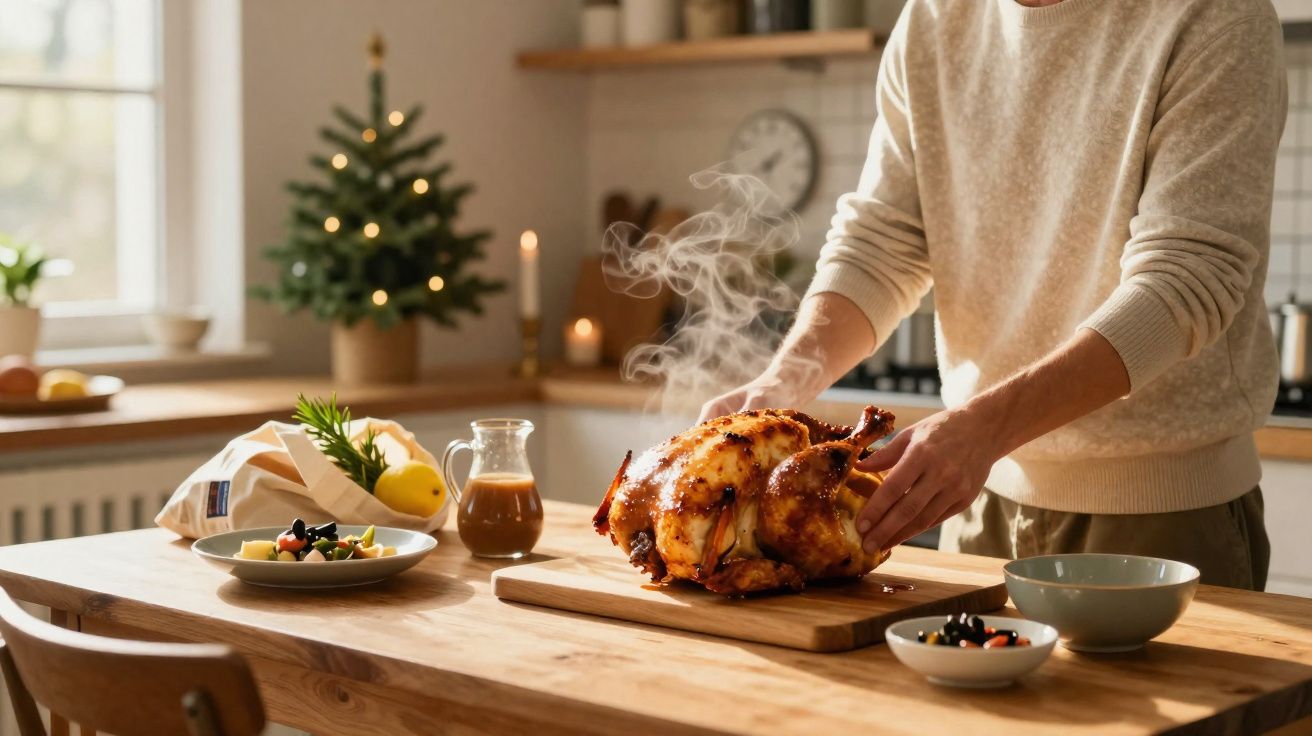
Christmas has a knack for turning “we’ll sort it later” into low-level panic-particularly when you still haven’t decided what the main course is.
By the time it dawns on you that the big day is effectively on your doorstep, the turkey aisle looks ransacked, the decent delivery slots have disappeared, and relatives are messaging to ask-casually-what time they should turn up. That hazy plan to brine a bird and make stuffing from scratch suddenly feels like it belonged to another version of you.
Why a chicken Christmas makes sense this year
In plenty of homes this winter, the classic turkey centrepiece is being quietly swapped for something far easier to manage: chicken. When turkeys sell out, supermarkets usually still have chickens available. A chicken roasts more quickly, works in a smaller oven, and is far less likely to create that familiar countdown-to-disaster feeling.
Food writers and supermarket buyers say the change is already underway. Tight budgets, smaller gatherings and last-minute organising are nudging people towards a bird that feels comforting and familiar rather than demanding.
A roast chicken Christmas offers the flavours people expect, without the stress, cost or logistics of a giant turkey.
For couples, flatshares, or families splitting the day between divorced parents or in-laws, chicken often suits the reality of 2024 better than a 6 kg turkey. It also produces less waste-useful when the fridge is already crammed with leftover cheese, desserts and half-finished bottles.
A calm, two-hour plan instead of a marathon
The strongest argument for a chicken-based Christmas dinner is time. A medium bird can be roasted in under 1 hour 30 minutes. That leaves space in one oven for roast potatoes, pigs in blankets, vegetables and trimmings-rather than juggling hot trays on every free surface you can find.
A sensible last-minute menu usually follows a straightforward template:
- One roast chicken as the centrepiece
- A tray of crisp potatoes and honey-roasted parsnips
- Pigs in blankets and packet stuffing, cooked in the oven together
- Cauliflower cheese (or another indulgent side)
- Pan-fried sprouts with bacon and chestnuts
- Bread sauce and shop-bought cranberry sauce
Every dish is there for a reason. There’s no water bath, no overnight brining, and no need for five different pans. You can get it all done with a standard oven, one roasting tin and a couple of baking trays.
Roast chicken Christmas: making the bird easy (and properly cooked)
A chicken Christmas stays relaxed when the basics are simple. Pat the skin dry, season generously, and add lemon, garlic and onion to the cavity if you like-easy flavour without extra effort. Roasting on a bed of onions or a rack helps the skin colour evenly while giving you better juices for gravy.
Food safety is part of the “less stress” promise too: cook until the thickest part of the thigh reaches 75°C (and the juices run clear), then rest the bird for 20–30 minutes. That rest isn’t wasted time-it’s when you finish the trimmings and let the meat relax so it stays juicy.
The one-trolley Christmas shop
If you’re heading to the supermarket in the final days before Christmas, a shorter list can feel like a genuine relief. You can fill a trolley in under 20 minutes and still cover all the classic flavours.
| Category | Key items |
|---|---|
| Meat | Whole chicken, sausages, streaky bacon |
| Dairy | Butter, milk, Cheddar |
| Veg & fruit | Potatoes, parsnips, sprouts, cauliflower, lemon, onion, garlic |
| Extras | Stuffing mix, chestnuts, cranberry sauce, stock |
| Cupboard | Flour, oils or fat, honey, mustard, spices, salt and pepper |
Shortcuts have shifted from guilty secret to everyday normal. Ready-made pigs in blankets, frozen roast potatoes and jarred bread sauce now sit quite happily on tables that once insisted everything had to be homemade.
The new rule of festive cooking: if it stops you dreading the kitchen, it earns its place on the list.
How a chicken menu keeps stress under control
Choosing a chicken for Christmas doesn’t just change what you buy-it changes how the day runs. After roasting, the bird can rest for a solid 20–30 minutes, freeing the oven for the high-heat jobs: crisping up stuffing, finishing pigs in blankets, or getting cauliflower cheese bubbling and golden.
Meanwhile, the hob takes care of the gentler tasks. Bread sauce can sit on the lowest heat without fuss. Sprouts can be pan-fried at the last minute with bacon and chestnuts. The whole schedule feels human rather than military.
Realistic timing, not restaurant service
Plenty of home cooks come unstuck by trying to match the precision of a professional kitchen. In real houses, guests turn up late, children need attention, and someone always chooses the wrong moment to misplace the carving knife.
A forgiving chicken-based menu is built around that reality. Roast potatoes keep their crunch in a low oven. Gravy often improves with a few extra minutes of simmering. Bread sauce can be loosened with a splash of milk if it tightens up.
That flexibility matters for wellbeing as well as organisation. Charities in the UK and US regularly note festive spikes in stress, with hosting pressures high among the triggers. Taking the highest-stakes item off the menu removes one of the biggest sources of worry.
What you still get: the full Christmas feeling
Opting for chicken doesn’t drain the day of its sense of occasion. Much of the “Christmas dinner” feeling lives in the trimmings, not the bird: the scent of roast potatoes, the sizzle of bacon-wrapped sausages, and the nutmeg warmth from a bubbling cheese sauce.
That’s why a smart last-minute menu still makes room for:
- Crisp, fluffy roast potatoes cooked in hot fat
- Honey-glazed parsnips that caramelise at the edges
- Sprouts cooked until golden (not grey) with salty bacon
- Stuffing that tastes nostalgic, even when it’s from a packet
- Gravy made from roasted chicken juices and stock
Change the bird and the day still feels like Christmas, as long as the plates carry familiar smells and textures.
For younger families and first-time hosts, a chicken Christmas can even become the tradition. Children often prefer the softer meat, and leftovers are easy to turn into sandwiches, pies or simple pasta when everyone is wiped out on Boxing Day.
Budget, energy and waste: the hidden arguments for chicken
Under the emotional side of tradition sits a quieter bit of maths. A large turkey costs more to buy, takes longer to cook, and eats up oven space. With energy bills still high, some households are watching the clock as closely as the thermometer.
A 2.0–2.2 kg chicken uses less energy, comfortably feeds four to six people, and leaves enough leftovers for the next day without taking over an entire fridge shelf. The shorter cooking time also suits rented flats with smaller ovens-or ovens that run hot, cold or unpredictably.
Food waste charities make another point: Christmas can create mountains of leftovers that never get used. A smaller bird, realistic portions, and a plan for using what remains can cut what ends up in the bin.
Turning a “backup plan” into a tradition
A last-minute chicken Christmas often begins as damage control: the turkey’s sold out, the delivery has been cancelled, or plans have changed at the eleventh hour. But plenty of cooks who switch once don’t switch back.
They remember a Christmas where the timing stayed manageable, the kitchen didn’t descend into chaos, and the host actually sat down with a drink before serving. That memory can be more persuasive than any attachment to a particular bird.
There’s also plenty of room to adapt in future years. Once the structure works, it flexes to different tastes:
- Swap cauliflower cheese for a rich macaroni bake.
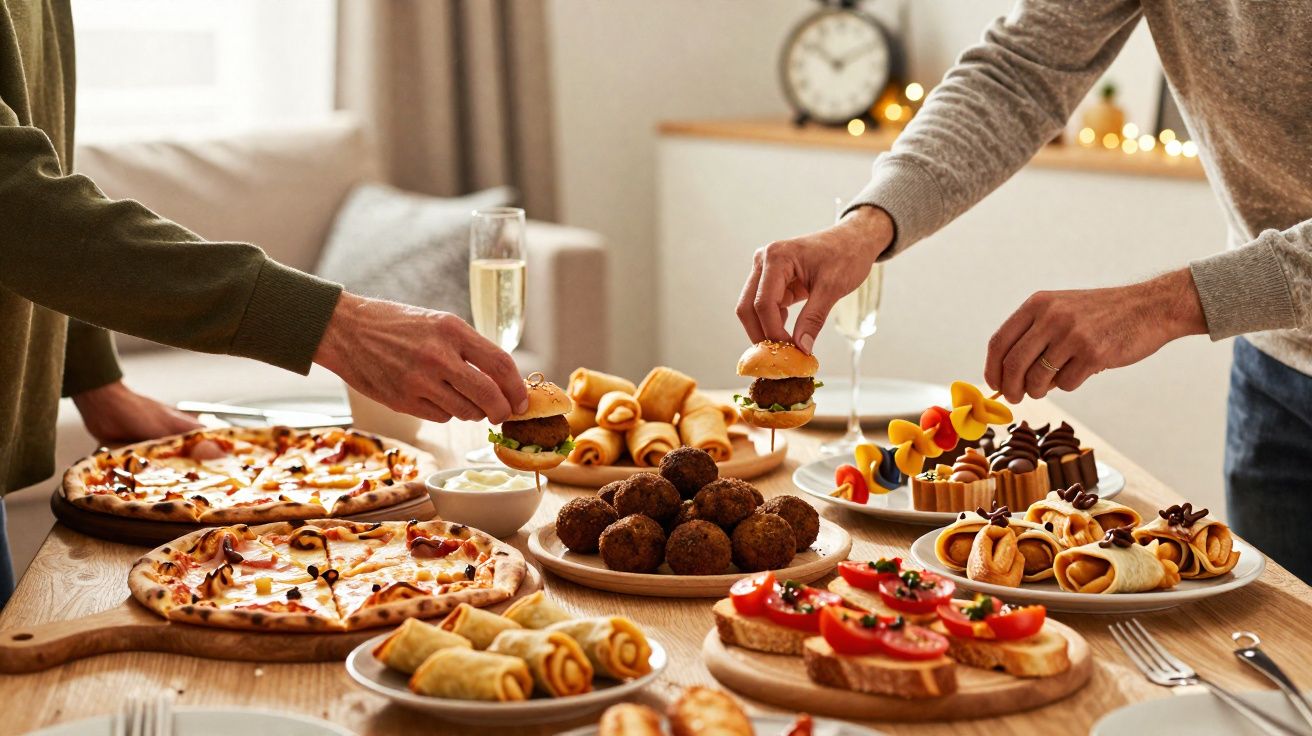
- Replace pigs in blankets with spiced meatballs or veggie parcels.
- Add a second tray of root vegetables with maple and mustard.
- Use the chicken bones for stock on Boxing Day, turning leftovers into soup.
Extra ideas for making the most of a chicken Christmas
The easy-going nature of a chicken menu carries straight into leftovers. Simmer the carcass with onion, carrot and herbs to make a light stock. That stock can become a simple noodle soup, the base for a risotto, or a ready-made gravy starter for another roast in January.
Leftover meat can be pulled into tacos with red cabbage and a sharp yoghurt dressing, baked into a pie with leeks and cream, or stirred through quick fried rice with frozen peas. Those second meals stretch the value of the original bird and bring the cost per portion down.
If you’re juggling multiple households or shared custody arrangements, you can even run two smaller celebrations with separate chickens rather than one huge turkey. Each meal still feels special, but nobody is stuck carving and reheating the same bird for days.
For anyone approaching Christmas with limited time, space or headroom, a simple roast chicken with the right sides isn’t a downgrade-it’s a reset: keeping the ritual, without handing the whole day over to the oven timer.

Comments
No comments yet. Be the first to comment!
Leave a Comment