
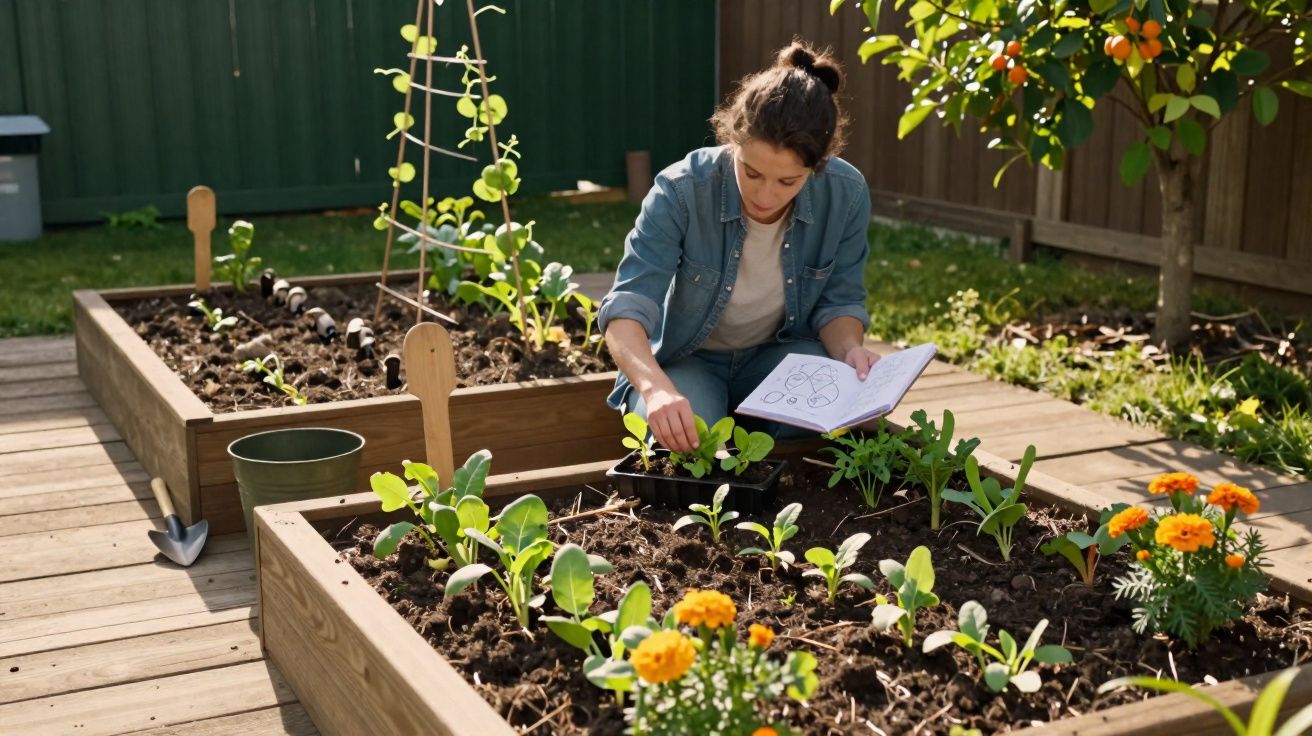
The fork slips into the ground with a soft, weary sigh.
It is the sound of soil that has been asked to give and give for too many seasons. In a small back garden on the edge of town, a gardener studies a raised bed that once overflowed with tomatoes. This year the plants are spindly, the leaves are yellowing early, and the fruit is undersized and stubborn.
The compost is sound, watering is careful, and the sun has done its part. Yet something fundamental is wrong. You can almost hear the earth muttering, “I’ve had enough.” A neighbour leans over the fence and blames blight. Someone on Instagram points a finger at the variety. The real explanation is quieter-and it is right under our boots.
It sits in the habit of putting the same crop in the same spot, year after year, and forgetting that soil has a long memory.
Why small gardens wear out faster than we expect
On a large farm, you can repeat a crop for a while before problems become obvious. In a small garden, the consequences arrive quickly. Grow tomatoes in the same 2 m² bed every summer and it feels foolproof-at first. Year one is abundant. Year two is respectable. By year three, the bed often starts to behave differently, and not in a way you will like.
The ground tends to tighten and compact. Water lingers on the surface rather than soaking in. Roots find it harder to push down. Slugs and aphids seem to appear earlier, and the same diseases return to the same patch as if they have bookmarked it. In a limited space, nature has far less room to balance out repetitive choices behind the scenes.
That little rectangle of soil becomes an archive: every plant that grew there, every pest that fed there, every stress the bed endured. Without crop rotation, a small garden effectively relives the same season on a loop-each repeat leaving it a bit more depleted.
You hear versions of this everywhere. A gardener in London insists her balcony beans “ran out of steam” after three summers in the same trough. A family in Austin, Texas watched cucumbers go from vigorous to limp over four seasons, despite using the same seeds and the same compost blend. In a survey by a UK allotment association, nearly 60% of home growers said their soil “felt weaker” after three years of growing the same crops in the same place.
The pattern is remarkably steady: yields tail off, foliage loses its sparkle, and plants succumb more easily. Many people blame the weather or decide they simply “can’t garden”. Often, though, the real culprit is below eye level-nutrients drifting out of balance alongside a slow, steady build-up of pests and pathogens that thrive on one plant family.
A retired gardener once showed me his planting notebook: eight years tracked across four raised beds. The first three years were a muddle of choices. After that he settled into a simple rotation. “That’s when the troubles stopped following me around,” he said. The plants and the pages agreed: rotating gave the soil space to recover.
There is an uncomplicated reason this works. Different plant families draw on the soil in different ways and are vulnerable to different problems. Tomatoes and peppers, for example, are heavy feeders that take substantial nitrogen and potassium. Put them in the same place repeatedly and you are steadily emptying one shelf of the pantry while leaving others untouched.
At the same time, the bed becomes a comfortable home for specialised enemies. Blight spores, nematodes, and root-rot fungi accumulate where their preferred hosts keep returning. Crop rotation interrupts that momentum. You follow heavy feeders with lighter demands-or with crops that actively contribute, such as peas and beans, which fix nitrogen through their roots.
And it helps to remember: soil is not just “dirt”. It is a living system. Microbes, fungi, worms and insects respond to what you grow and what you leave behind. Rotate crops and you create variety in that underground community; stick with one crop and you gradually tune the soil to serve a single master-until it starts to push back.
Crop rotation in small gardens: practical tricks for tight spaces
Crop rotation can sound like an agricultural practice awkwardly squeezed into a couple of raised beds, but it works in two beds just as surely as it works in two hectares. A straightforward approach is to rotate by plant families and shift each family to a different bed each year. For instance, grow tomatoes, peppers and aubergines (the nightshade family) in Bed A in year one; in year two, move them to Bed B and use Bed A for leafy greens or root crops.
If you have only one raised bed-or just a few containers-treat the space as zones. One zone grows fruiting crops this season (tomatoes, cucumbers, beans). Next year that same area switches to salads or roots. In the third year, give it legumes such as peas and beans, or a green manure like clover to rebuild structure and fertility. Then repeat. Think of it as a three-track playlist for your soil: fruiting → leafy/root → fixing/repairing.
You do not need a spreadsheet. A quick sketch in a notebook, a label on a pot, or a photo at the end of each season is enough. The goal is not flawless rotation; the benefit comes from not repeating the exact same pattern.
Balconies and patios count too. A friend in Paris grows in six large containers. One year her “tomato pot” became her “spinach pot”, and her spinach pot turned into her “bean pot”. The following season she noticed the beans climbed more quickly and stayed greener after tomatoes-helped by the leftover fertility and the deeper rooting channels the earlier crop left behind.
Even window boxes respond on this micro-scale. Grow basil in a box one summer, then swap to lettuce or radishes the next. Pests that settled in for a predictable meal are forced to start over. More than once, I have seen “cursed planters” recover simply by changing the crop family for a season and refreshing with compost.
Many small-space growers like a simple rotation cycle:
- Year 1: fruiting crops
- Year 2: leafy crops
- Year 3: roots and soil-builders
It does not always match the textbook perfectly, but the soil clearly benefits from not being kept in a rut.
One common trap is chasing quick cures while repeating the same planting habits: more fertiliser, more “miracle” amendments, more sprays, less patience. The bed ends up overloaded in some nutrients and lacking in others. Crop rotation is quieter and less dramatic, but it steadily restores balance.
To make rotation easier in a small garden, it helps to pair it with two simple habits: - Refresh rather than replace soil in containers. Each year, remove and replace the top 5–10 cm with fresh compost (where practical), and avoid putting the same plant family back into the same pot. - Keep residues sensible. Remove diseased foliage, but compost healthy plant material. This reduces pathogen carry-over while still feeding the soil food web.
Honesty helps: nobody wakes up each morning thinking, “How is my crop rotation strategy performing today?” Most of us focus on what we want to eat, then squeeze it in wherever there is room. The outcome is often uneven results and the feeling the soil is failing us-when, in reality, our planting patterns are the tired part.
The encouraging news is that you do not need guilt; you need attention. Identify the areas that look “worn out” and give them a different guest next season. If you always grow tomatoes there, switch to beans or leafy greens. If carrots struggled in one corner, try peas there next year and move roots elsewhere. Rotation is less a strict rulebook and more a gentle push towards diversity.
“Treat crop rotation like a conversation with your soil,” a market gardener once told me. “If you keep asking it the same question, don’t be shocked when the answers get shorter.”
- Keep an easy three-year loop: Year 1 fruiting crops (tomatoes, peppers, cucumbers), Year 2 leafy crops (lettuces, kale, cabbage), Year 3 roots and fixers (carrots, beetroot, peas, beans).
- Rotate by plant families, not just crop names. Tomatoes, potatoes and peppers are all nightshades-one “voice” in the rotation.
- If you remember only one rule: don’t grow the same family in the same spot two years running. It is basic-and surprisingly effective.
Let the soil set the tempo
At the end of the season, stand in front of your beds and simply look before you clear everything away. The tired patches, the thriving corners, the unexpected survivors-each is a clue about what the soil can handle next. It is subtle feedback, but once you start noticing it, you cannot ignore it.
On a wet October afternoon, a small-garden grower in Dublin showed me how she plans her rotations. She walks along her two beds with a cup of tea, points to each section, and says out loud what grew there this year. “Potatoes-so beans next year. Salad here-maybe onions. Peas there-so I can chance tomatoes again.” It sounded almost like a chant: memory turned into movement.
Rotation does not have to be strict. Some years you will break your own rules because you are obsessed with cherry tomatoes or you need far more basil than is sensible. The soil can cope, as long as the plot does not repeat exactly every season. In a small garden, crop rotation is as much about respect as it is about technique-a way of telling the ground, “I know you’re alive, and I’ll give you a rest.”
When you treat beds as living partners rather than empty boxes, something changes. Failures feel less like personal shortcomings and more like information. Success feels built, not accidental. And your small patch-balcony, courtyard, or strip behind the shed-starts to behave like a place with seasons and cycles again.
| Key point | Detail | Why it matters to you |
|---|---|---|
| Rotate plant families | Avoid planting the same family (tomatoes, potatoes, peppers, etc.) in the same place two years in a row | Cuts recurring disease and targeted nutrient exhaustion |
| Think in three-year cycles | Year 1: fruiting crops; Year 2: leafy crops; Year 3: roots + legumes | A simple framework that works even for a small garden or a handful of containers |
| Watch for “tired zones” | Note where plants struggled and plan a repairing crop there the following year | Helps you read the soil, correct imbalances, and protect future harvests |
FAQ
- How often should I rotate crops in a small garden?
Ideally every year. Even in the smallest space, avoid growing the same plant family in the same spot in consecutive seasons. A simple three-year loop is already a major improvement.- What if I only have one raised bed?
Split it mentally into two or three zones. Rotate what grows in each zone year by year: one area for fruiting crops, one for leafy crops, and one for roots and legumes, then swap them around.- Can I still rotate if I mostly grow tomatoes?
Yes, but you will need supporting crops. Alternate tomatoes with beans, peas, leafy greens or root vegetables in that area. You may grow fewer tomatoes in that single spot, but they are likely to be healthier.- Does container gardening really need rotation?
It helps enormously. Containers concentrate pest pressure and nutrient imbalances. Move plant families between pots, refresh part of the compost, and avoid replanting the same crop in the same container every year.- Is crop rotation enough to keep my soil healthy?
Crop rotation is a strong foundation, but it works best alongside compost, mulching and minimal soil disturbance. Together, these practices create richer, more resilient soil over time.


Comments
No comments yet. Be the first to comment!
Leave a Comment