
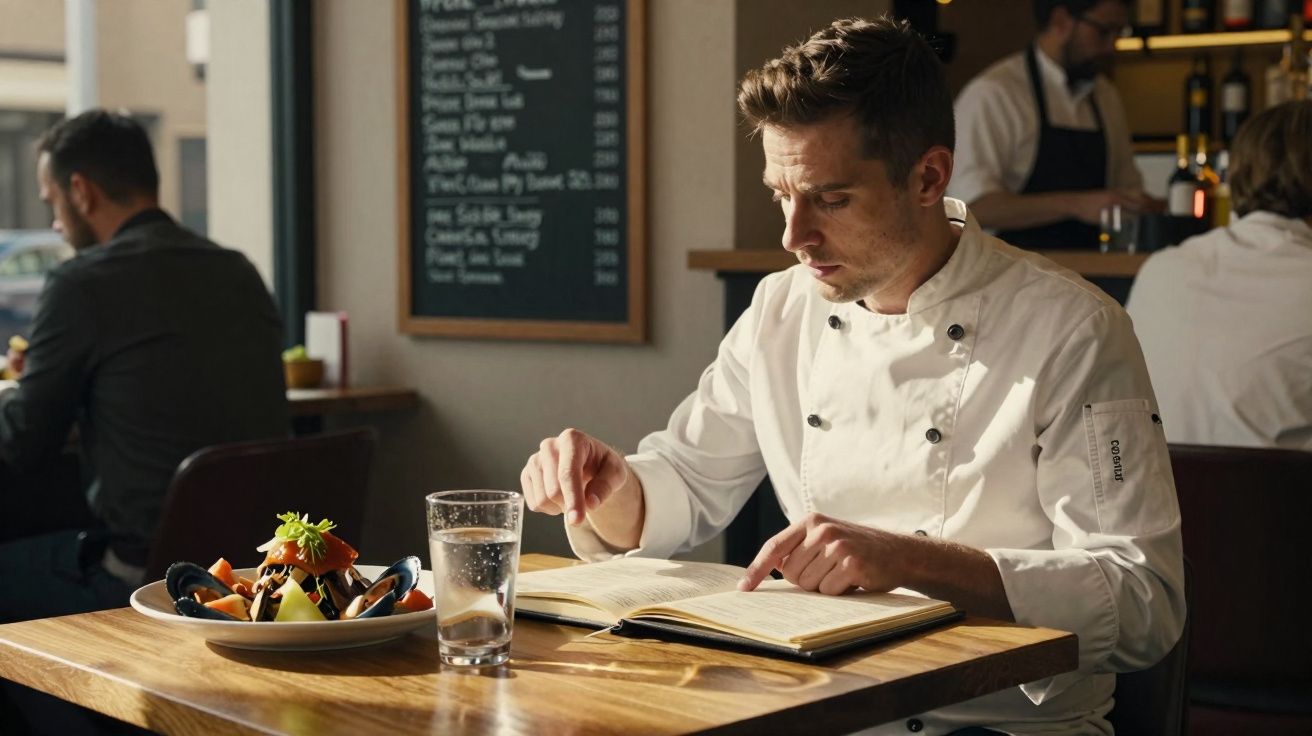
The dining room had almost cleared by the time the kitchen started speaking candidly. Service was tapering off, the dishwasher droned at the back, and the final table was lingering over espresso. Someone posed the question every keen diner has wondered at some point: “So… what do you never order when you eat out?” The chefs exchanged a look, then let out that exhausted laugh you only hear from people who’ve seen too much. A chef in his forties raised his beer and said, “Are you sure you want the answer to that?” Then he began naming dishes-one after another-that plenty of us order happily without a second thought.
A small, unspoken blacklist emerged.
And what they steer clear of tells you a great deal about what can really be happening behind a restaurant’s kitchen door.
The surprising “no-go” list chefs share after service
If you speak to enough professional chefs privately, the same “no-go” list crops up again and again. It’s rarely the fashionable tasting-menu dishes, but the everyday choices people order on dates or during family dinners-the items that look perfectly safe on the page. Some are familiar staples: a bargain-priced seafood mixed grill, the chicken Caesar that appears on nearly every menu, or brunch eggs that sound straightforward and reassuring.
Once chefs start comparing notes, you realise something uncomfortable: the dish you assume is the safest might be the very one they’re quietly avoiding.
A line cook I spoke to in London told me he would “never touch” the bargain mussels special in a place that isn’t busy. He’d seen trays of shellfish drag on through the week, refreshed with sauce, and sent out smiling. A chef in New York confessed he avoids chicken dishes in cheaper restaurants-not because chicken is inherently poor, but because it’s the meat most often mishandled. “Over-marinated, undercooked, left sitting too long. If anything’s going to be dodgy, it’s the chicken,” he said. These are the backstage details diners simply don’t get to see.
Chefs discuss these choices with a tired sort of realism. They know exactly where standards slip when margins are tight and rushes are relentless. Plates built around mixed proteins, dishes drowned in sauce, and sprawling brunch buffets can all become perfect territory for older ingredients, overworked prep, or sloppy temperature control. The plate that feels like comfort food to you can look like a warning sign to someone who’s worked that station. After you’ve cooked professionally, you read a menu the way you’d read a map-marking where the risks might be.
What chefs secretly scan for when they read a menu
The first thing many chefs look for is turnover. They ask themselves how quickly a dish sells and whether it depends on ingredients that spoil quickly. That’s why so many of them avoid raw oysters or mussels in a restaurant that looks half-empty-particularly early in the week. Instead, they lean towards dishes built on ingredients a kitchen uses constantly: a whole roast chicken, simply grilled fish, seasonal vegetables. Those staples are often prepared fresh because the business can’t afford to throw them away.
Low-turnover dishes, by contrast, are where forgotten ingredients can linger.
Next comes complexity. A seafood pasta featuring five different sea creatures, served in a small bistro far from the coast, at a suspiciously low price? Plenty of chefs will pass without comment. The same goes for overly busy salads piled with nuts, fruit, cheeses, croutons and “house” dressings that conveniently cover off flavours. One French chef told me he orders the plainest steak on the menu rather than the fussy one: “In one bite I can tell whether they know what they’re doing,” he said. And if the chips taste stale, he assumes other corners are being cut too.
Then there’s timing. Many professionals say they avoid poached eggs at chaotic brunch venues, fried calamari right at the end of the night, and “specials” that somehow never stop being special. The reasoning is almost clinical: dishes that are hard to hold at safe temperatures, or easy to pre-cook and reheat, become riskier when the kitchen is under pressure. A busy service means dozens of tickets at once-and, in truth, not every step gets done every single day exactly as the food-safety poster promises. So chefs practise their own quiet self-defence when ordering. You might want to do the same.
A UK-specific tip many chefs and experienced diners use is checking the Food Hygiene Rating before booking (or before you order). It won’t tell you which dish is best, but it can be a useful baseline: if the rating is poor, even the “safe bet” options deserve extra caution.
The dishes chefs dodge most (and how you can read the clues) - chefs’ never order patterns
A simple tactic chefs use is to ask the server what the kitchen sells the most of, then order from that shortlist. High volume usually means fresher stock and a team that knows the dish inside out. If the reply is uncertain or vague, chefs tend to pay closer attention-and that’s where the “never order” list starts to form: mussels in a dead dining room, all-you-can-eat sushi at rock-bottom prices, or mixed-seafood platters in inland towns where the supply chain is unclear.
It isn’t snobbery. It’s an understanding of how fragile food can be.
Chefs also pick up on tells that most of us overlook: a menu that feels sticky, an unpleasant smell near the loos, or a plate passing by with wilted herbs and watery tomatoes. Those little signals act like warning lights. If the basic chips arrive pale and limp, they’ll be cautious about anything deep-fried. If the bread is stale, they may start doubting the overall care in the kitchen. That doesn’t mean you must panic over every slightly browned basil leaf-it simply means you can read the room more like a professional and adapt your order accordingly.
Another helpful lens is delivery rhythm. Many restaurants receive fish and produce on particular days, and quality can vary depending on when you visit. Early-week shellfish in a quiet dining room is precisely the situation chefs mention most often, because slow sales plus highly perishable stock is a bad combination.
“People assume we’re fussy when we go out to eat,” an Italian chef told me. “We’re not. We just remember what corners we had to cut when we were exhausted and the owner wanted better margins. So we avoid the dishes where cutting corners does the most damage.”
- High-risk favourites
Seafood specials in quiet restaurants, endless brunch buffets, poached eggs in packed, disorganised places. - Suspicious bargains
Mixed-grill platters at unreal prices, all-you-can-eat sushi, huge “sharing” plates that don’t fit the restaurant’s usual style. - Low-movement items
Dishes that seem odd for the menu, or specials that appear to be “special” every single day. - Overly sauced plates
Heavy sauces that can disguise older meat, reheated pasta, or watery vegetables. - Safe chef bets
Simple grilled fish, seasonal veg sides, the steak everyone orders, or the dish the server genuinely brightens up about.
The quiet power of asking one or two honest questions
Once you start viewing menus this way, eating out shifts slightly-not into paranoia, but into clarity, as if you’ve put on a new pair of glasses. You begin asking small, practical questions: “What do you sell the most of?” “When did those oysters arrive?” “Is that sauce made in-house?” The content of the answer-and the confidence with which it’s delivered-often tells you everything. A specific, steady reply is reassuring. A shrug and a vague “oh, it’s all good” is exactly the kind of response that makes many chefs quietly rule out certain dishes.
There’s also something freeing about knowing what the pros tend to avoid. You can still order the fettuccine Alfredo or bottomless shrimp if that’s what you fancy-you just understand the trade-offs. You start noticing the restaurants that take pride in getting simple things right, and the ones that hide behind mountains of sauce and décor. You also spot the places where staff sound genuinely pleased to talk about the food; those are often the kitchens where chefs themselves can relax and order more freely.
You may even swap your own stories: the dubious brunch that ended badly, the tiny seafood shack that turned out to be the freshest meal you’ve ever had, or the neighbourhood spot where the cook came out to talk about tomatoes picked that morning. What we choose to order influences what survives in restaurant culture. The dishes chefs refuse to order function like a quiet warning label-but they’re also a roadmap. They aren’t secret rules, just patterns learned by people who’ve lived on the other side of the swinging door.
| Key point | Detail | Value for the reader |
|---|---|---|
| - | Ask which dishes sell the most | Helps you pick fresher, better-executed plates |
| - | Be wary of complex, cheap seafood combinations | Lowers the risk of poor-quality or mishandled ingredients |
| - | Check small details: chips, bread, staff answers | Quickly assesses overall kitchen standards and care |
FAQ:
- Question 1 Do chefs really avoid ordering certain restaurant dishes?
- Question 2 Which dish do chefs most often warn about?
- Question 3 Is it safe to order seafood in a non-coastal city?
- Question 4 What’s usually a “safe bet” on a menu?
- Question 5 Should I stop ordering my favourite risky dish completely?

Comments
No comments yet. Be the first to comment!
Leave a Comment