
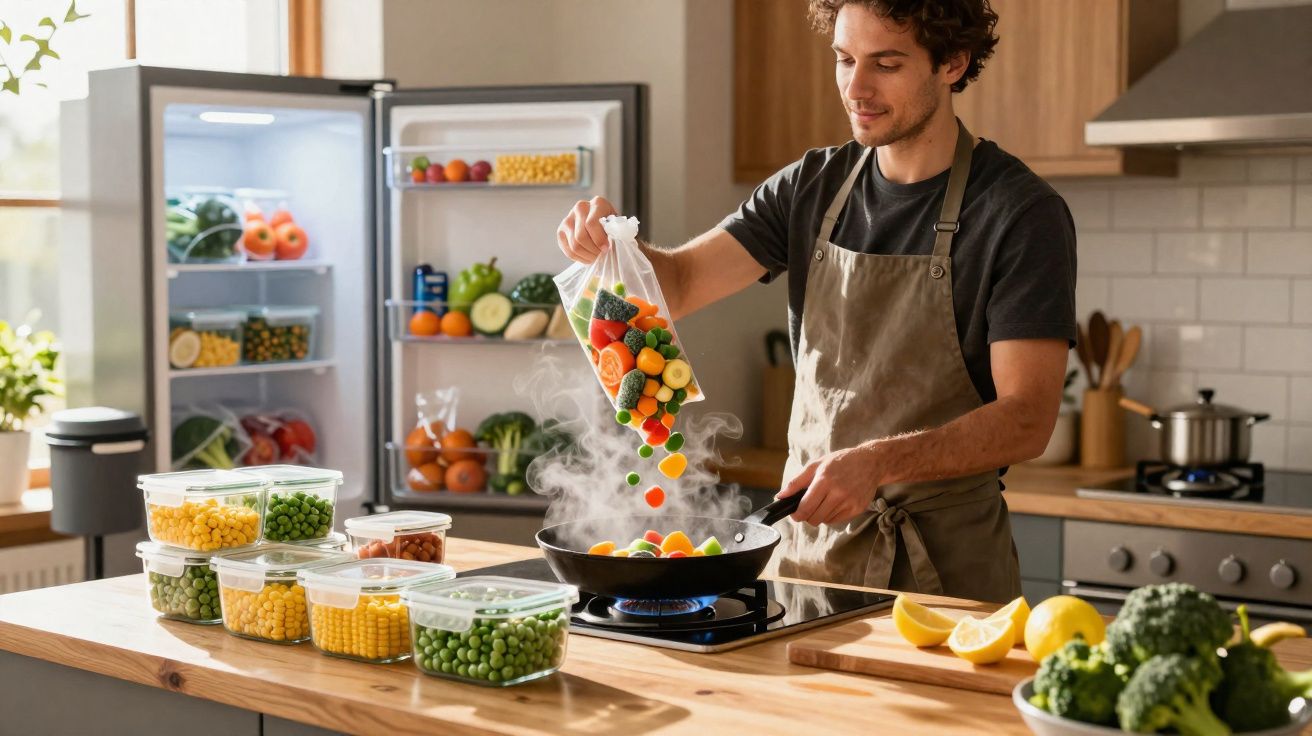
The plastic crinkled softly as the head chef tore it open. It wasn’t truffles. It wasn’t some hard-to-source Japanese citrus. It was simply a kilo of supermarket frozen peas, still rimmed with frost, spilling into a stainless-steel pan in a Michelin-starred kitchen. The junior cook beside him arched an eyebrow, braced for a sermon about cutting corners. The chef just gave a small shrug, dropped in a knob of butter, and said, “They’re spot on. Why would I argue with nature?”
Ten minutes later, those very peas were spooned next to roasted cod and a glossy, silky sauce, shining emerald under the pass lights. A critic lifted a phone for a quick photo, took a mouthful, and nodded-slowly.
The not-so-secret advantage of serious kitchens is sitting in your freezer drawer.
Frozen veg and the quiet confidence of real cooks
Step into a busy restaurant at 7.30 p.m. and the scene tells you everything: the calm choreography of people who cannot afford culinary myths. Burners blast, printers rattle out tickets, and amid the diced shallots and clarified butter someone reaches for a tray of neatly portioned frozen spinach or a bag of sweetcorn. There’s no embarrassment attached-only efficiency and control.
The storybook version of cooking insists everything must be fresh-from-the-market, sun-kissed that same morning. The reality of service runs on different rules.
A chef at a London bistro once described a night when snow derailed deliveries. The lorry with fresh produce didn’t arrive-no carrots, no beans, no peas-yet the dining room was full and the orders kept stacking up. “We did every veg side on the menu from the freezer,” she told me. “No one clocked it. What they did clock was that their food arrived hot and on time.”
Food science research quietly supports what chefs already practise. Frozen vegetables are commonly harvested at peak ripeness and frozen within hours, preserving vitamins and flavour that supposedly “fresh” produce can lose after days in transit and storage. The outcome is wonderfully unglamorous: steady, dependable quality.
So why do people still say “I only had frozen” as if it’s a confession? Part of it is nostalgia-the belief that competence means endless peeling, chopping and blanching, like a culinary monk. Part of it is guilt: the idea that shortcuts equal cheating. Yet professional cooks simply opt out of the guilt game. Their job is to deliver flavour and consistency, not to role-play as 19th-century kitchen servants. Frozen veg isn’t laziness; it’s planning, discipline, and respect for the clock.
A quick note on buying and storing frozen vegetables
If you want the restaurant advantage at home, choose plain bags with a single ingredient, and avoid packs that look clumped into one solid block (a sign they may have thawed and refrozen). Keep your freezer at -18°C or colder, and seal opened bags tightly to limit freezer burn. It’s not glamorous advice-but it is exactly the kind of quiet system that makes weeknight cooking feel easy rather than heroic.
The smart shortcuts chefs use with frozen vegetables
The real trick with frozen vegetables isn’t merely using them-it’s handling them properly. Watch a skilled chef with frozen green beans and one thing stands out: they don’t drown them. The method is brisk and deliberate-hot pan, a splash of olive oil, garlic, a quick toss over high heat. Salt goes in at the end, not at the start. The beans stay vivid and snappy, not the sad khaki mush many of us were served growing up.
The same logic applies to peas. Tip frozen peas straight into foaming butter, add a spoonful of stock and a pinch of sugar, and cook for about five minutes. Nothing showy-yet the flavour lands like spring with the volume turned up.
Home cooks often ruin frozen veg without meaning to. They boil it for ages “just in case”. They leave it to thaw on the worktop until it sits in its own icy puddle. They season too early, and the salt pulls out water until everything turns limp. Then comes the familiar disappointment: “See? Frozen is rubbish.” We’ve all had that moment where dinner looks more like a school canteen tray than the colourful plate we pictured.
The solution is simpler than it sounds: turn the heat up, keep the cooking time short, and use as little water as possible. Treat it as food you’re excited to eat, not as a task to endure.
Chefs tend to talk about frozen vegetables with practical fondness. There’s no drama-just gratitude.
“Frozen veg means we can cook like people, not robots,” says a Paris chef who runs a 60-cover restaurant with a tiny team. “We prep what genuinely benefits from being fresh and let freezing take care of the rest. That isn’t cheating. It’s respect for our energy.”
That’s the plain truth most of us forget when we’re staring at a pile of limp carrots at 8 p.m.
- Use frozen veg for consistency – reliable texture, reliable colour, and fewer nasty surprises than wilted “fresh” bunches.
- Save your energy for flavour – sauces, dressings, broths and roasts are where your creativity shows most.
- Keep 3–4 freezer staples – peas, spinach, mixed veg and corn cover most weeknight gaps.
- Cook from frozen, not thawed – better colour, less water, more control.
- Admit you’re busy – realistically, nobody makes everything from scratch every single day.
Why frozen vegetables can reduce waste (and stress)
There’s also a practical bonus that doesn’t get enough attention: waste. Because frozen vegetables keep for months, you can use exactly what you need and return the rest to the freezer, instead of discovering a forgotten bag of salad liquefying at the back of the fridge. That means fewer emergency trips to the shops, fewer guilty bin-bag moments, and more meals that happen even when the day has gone sideways.
What frozen vegetables say about the way we really live
There’s something quietly radical about recognising that frozen vegetables can signal competence rather than defeat. It suggests you plan ahead. You’re thinking like a professional about waste, time and what your future self will face on a random Wednesday when work runs late and you’re tired to the bone. The bag of frozen broccoli in the freezer isn’t a failure waiting to happen; it’s proof a proper meal is still within reach.
It’s also a small act of resistance against the glossy, all-from-scratch fantasy we scroll past every day. Chefs who feed people for a living don’t cook like that-certainly not night after night, and not without smart support.
Once that clicks, the stigma starts to look odd. Why is trimming a mountain of green beans considered “virtuous”, but using frozen green beans labelled “cheating”, when they often come from the same fields? Why do we tie pride to effort rather than results? A competent cook focuses on flavour, temperature, texture and timing-and frozen veg fits neatly into that puzzle. It buys you room to concentrate on crisp roast chicken skin, bright lemony pan juices, and the feeling of dinner arriving on time instead of an hour late.
What if cooking well had less to do with suffering, and more to do with choosing the right battles?
Next time you slide open the freezer drawer and your hand lands on a bag of peas, try viewing them the way a restaurant chef does: not as a compromise, but as equipment. A tool that frees your head and your hands so you can taste more, rush less, and actually sit down with the people you cooked for.
That shift in mindset may be the real marker of a skilled cook-not theatrical effort, not martyrdom, just a calm, confident: “This works for my life.” And if a plate of garlic-buttered frozen green beans gets you there tonight, that looks a lot like skill in action.
| Key point | Detail | Value for the reader |
|---|---|---|
| Frozen veg can be higher quality than “fresh” | Often harvested at peak ripeness and frozen quickly, which can outperform tired produce that’s travelled and sat around for days | Eases guilt and supports smarter choices in the supermarket |
| Technique matters more than the form | High heat, minimal water and short cooking times can lift frozen veg from soggy to restaurant-level | Practical, usable methods you can apply immediately |
| Using shortcuts is a sign of confidence | Chefs lean on frozen veg to protect time, energy and consistency during hectic service | Helps you feel capable-not “lazy”-when you cook from the freezer |
FAQ:
- Is frozen vegetables’ nutrition really as good as fresh?
Very often, yes. Because they’re frozen soon after harvesting, many frozen vegetables keep vitamins better than “fresh” produce that has been stored and transported for several days.- Do I need to thaw frozen vegetables before cooking?
Usually not. Most cook best straight from frozen in a hot pan, oven or steamer, which helps prevent wateriness and limp texture.- Are frozen vegetables full of additives?
Most plain packs contain one ingredient: the vegetable. Check the label, and if you avoid seasoned or sauced versions you’re generally buying a very clean product.- Can I serve frozen veg to guests without them noticing?
Yes. With proper cooking and confident seasoning, most guests won’t know-and what they will notice is flavour, temperature and timing.- Which frozen vegetables are best to keep on hand?
Peas, spinach, broccoli, green beans and mixed vegetable blends are among the most versatile and forgiving options for weeknight cooking.
Comments
No comments yet. Be the first to comment!
Leave a Comment