
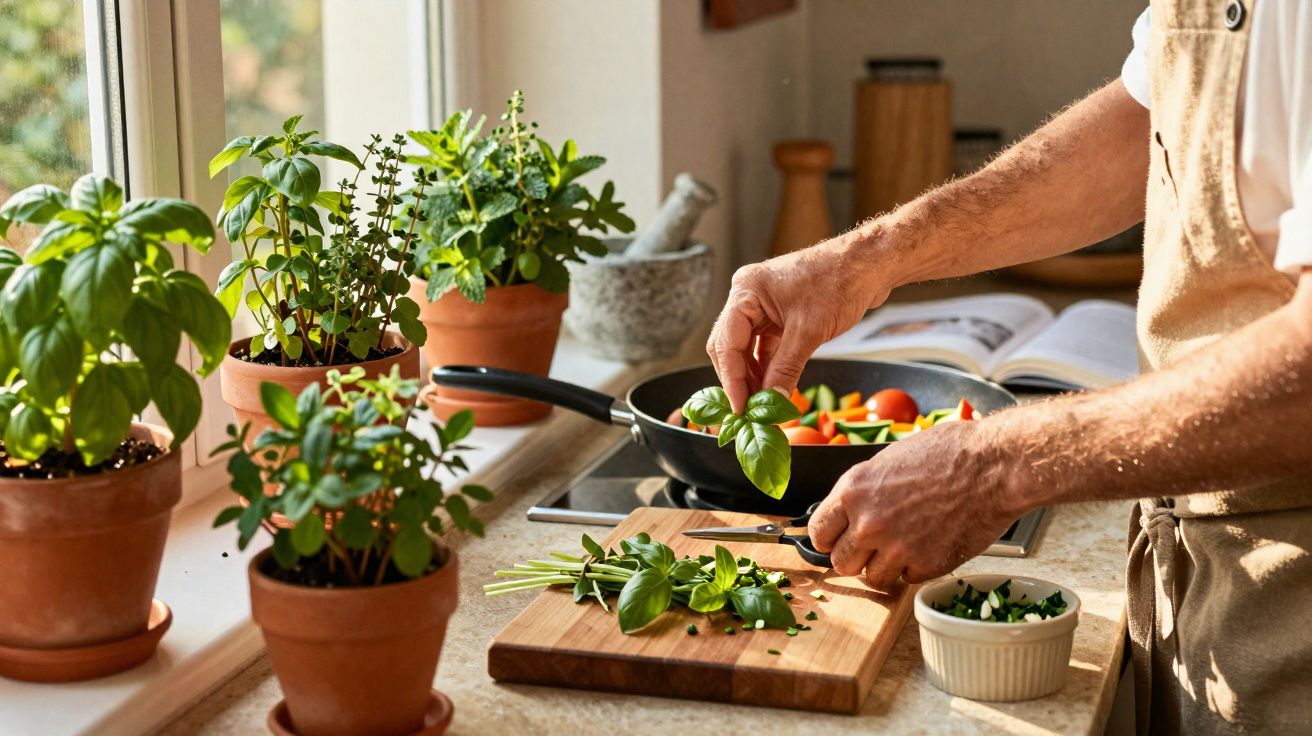
A misted-up windowpane, a terracotta pot with a chip missing, even a mug with a broken handle repurposed as a planter. From the kitchen side, though, it’s a pocket-sized jungle: basil, mint and parsley, their leaves almost neon against the street’s grey. As a pan of plain pasta gives off steam, you reach over, pinch off a few basil tips and tear them straight in. The aroma arrives first. Then it clicks: you’ve just upgraded an ordinary midweek supper from “decent” to “I’d happily pay for this”.
That tiny act-leaning over the sink with scissors or simply using your fingertips-is where home cooking quietly levels up. Not through pricey kit or fiddly recipes, but through a window, a bit of daylight, and understanding how to take what you need without wrecking the plant. The idea is straightforward; doing it well takes a little know-how.
Treat your window herb garden like a cook, not a botanist
When you face a window herb garden, it’s easy to register a line of pleasant ornaments rather than usable ingredients. Basil angling towards the light. Chives standing like a miniature woodland. Mint threatening a breakout from its pot. The change happens when you start looking at those pots the way you look at your fridge: as options for tonight, not something to “save”. At that point, harvesting stops feeling like damage and starts feeling like cooking.
On a rainy Tuesday after a shift, Emma-a nurse in London-told me she’d spent a week staring at a drooping coriander plant before she dared to cut it. “I was acting like it was a pet,” she said, laughing. Then one evening she finally snipped about half into a lentil soup. The soup turned bright and punchy. The coriander didn’t keel over; by the weekend it was throwing out fresh leaves. Her follow-up message was brief: “I’m basically trimming everyone now.” One confident cut unlocked the whole windowsill for her.
There’s no mystery-just plant behaviour. Herbs such as basil, mint and oregano respond to being cut by branching. If you pinch or snip a stem just above a pair of leaves, the side shoots below get the signal to grow. You aren’t “taking away”; you’re directing the plant. Leave herbs untouched and they often stretch upwards, flower, and the flavour can turn harsh or bitter. Harvest with intention and they stay low, leafy and aromatic. What’s good for dinner is usually what’s best for the plant too.
Window herb garden harvesting: pinch, cut, repeat for better flavour
For everyday picking, one rule beats most others: take the tips, not random single leaves. With basil, trace a stem up until you reach a point where two small leaves sit opposite each other, then pinch or cut just above that join. With mint, remove whole sprigs from the top third, keeping the lower part bushy. With chives, cut a full blade right down at the base rather than snipping halfway up like a bad haircut. Each action is small; the effect on the next flush of growth is huge.
Most of us cut herbs when we remember, not when the plant is at its peak. If you can choose, harvest in late morning-after any moisture has dried off but before the day turns hot. That’s when the essential oils (and therefore the flavour) are usually strongest. A home cook in Manchester tested this for fun, making the same tomato salad on three consecutive days and changing only the time she cut the basil. Her family tasted them without knowing which was which, and the late-morning version won every time. Same plant, same leaves, different moment.
There’s a “little and often” rhythm that plants respond to. Leave it a fortnight, take a severe cut, and the herb can stall. Take a modest handful every few days and it behaves more like it’s in training, building strength after each trim. As a guide, removing more than one-third in one go tends to slow recovery; keep under that and it bounces back quickly. Real life means nobody follows this perfectly, but even a loose routine-Sunday-night pesto, herbs in a midweek omelette-creates a pattern the plants can cope with.
It also helps to pay attention to the pots themselves. Many supermarket herbs come overcrowded, with lots of seedlings fighting for space and water. If your basil or parsley collapses a day or two after you bring it home, it may not be your harvesting at all. Splitting the clump into two pots, topping up with fresh compost, and ensuring drainage holes can make the difference between a week-long fling and a plant you can cut for months.
The mistakes nearly everyone makes (and how to avoid them)
The habit that finishes off more windowsill herbs than pests ever do is “nibbling”: taking a leaf here and there, usually the biggest and easiest to grab. It feels gentle, but it’s the opposite. Stripping individual leaves from the middle leaves stems tall and bare, leaving a confused, leggy plant that exhausts itself. Take stems instead. Remove a tip and stop. The plant stays compact, the windowsill stays full, and your food gets a proper handful rather than a token garnish.
The most common error, though, is more emotional than botanical: people get attached. Herbs are kept for a “special dinner”, left untouched for weeks, and then they bolt and decline right when life gets busy. A reader once admitted she had a basil plant she’d “never cut because it was doing so well”. When she showed it to me on a video call, it was a thin little tree with tiny leaves and flowers all over. She’d harvested nothing and lost the lot. The fix was a bold chop, pesto that night, and a decision to treat the next pot like a living spice rack, not a souvenir.
“Plants don’t understand ‘special occasions’,” an urban gardening coach told me. “They understand light, water, and whether you’re giving them a job to do.”
If you want a practical cheat sheet, keep these quiet rules in mind:
- Never harvest more than one-third of a plant at once.
- Cut just above a pair of leaves or a visible side shoot.
- For woody herbs like rosemary and thyme, use sharp, clean scissors to avoid tearing.
- Pick in late morning for the best flavour and fragrance.
- Alternate between plants so none of them gets overworked.
One more overlooked detail: cleanliness. If you’re using kitchen scissors, a quick wash and dry beforehand helps prevent spreading mould or sticky residue between pots. It’s a small habit, but in the warm, still air of a kitchen window it can reduce the chance of problems building up over time.
Let your window garden reshape the way you cook
Once you move past the anxiety of cutting, a surprising thing happens: your cooking starts to change. A tired supermarket bunch of parsley rarely sparks inspiration beyond decoration. A thriving pot on the sill suggests ideas every time you pass. You start adding mint to cold water, scattering chives over scrambled eggs, tearing basil onto leftover pizza. On quieter evenings, you may find yourself planning dinner around what’s ready to cut rather than what a recipe demands. It’s a subtle shift, but it runs deep.
There’s a stubborn little happiness in it as well. On a winter night, when the streetlights blur in drizzle, you can stand by the glass and harvest something green that hasn’t been wrapped in plastic or hauled across the country in a lorry. In summer, you can pluck a sprig of rosemary for potatoes before the oven has even heated. During a difficult week, when your phone feels like an endless feed of bad news, stirring a pot and dropping in a handful of fresh thyme can be oddly steadying-many of us know that moment when a plain meal makes the day feel slightly more manageable.
From a flavour perspective, the payoff arrives faster than you’d expect. Freshly cut herbs are full of volatile compounds that disappear quickly once they’re chopped and handled. Use them within minutes and the difference is dramatic. Pasta with butter and yesterday’s dried oregano is simply dinner. Pasta with butter and ten basil leaves cut 30 seconds ago feels like an occasion. That gap is why people keep buying new plants even after they’ve killed a few-and why learning to harvest properly is less about perfection and more about giving yourself a reliable, everyday upgrade.
| Key point | Detail | What it means for you |
|---|---|---|
| Cut stems, not single leaves | Choose tips and cut just above a pair of leaves | Denser plants and more generous harvests |
| Small but regular harvests | Take less than one-third each time | Consistent flavour and a windowsill that stays green |
| Timing matters | Late morning, before the strongest heat | More aromatic herbs and bolder-tasting food |
FAQs
- How often should I harvest herbs from a window herb garden?
Take small amounts every few days, provided you don’t remove more than about one-third of the plant in a single session.- Do I need special scissors or tools?
Not particularly. Clean kitchen scissors are fine for most herbs; they’re especially useful for woody stems such as rosemary and thyme so you don’t tear the plant.- Why does my basil grow tall and thin instead of bushy?
It’s usually caused by picking individual leaves or not cutting at all. Trim whole tips just above a pair of leaves and the plant will branch and fill out.- Can I keep harvesting all year round from a window?
Yes, within reason. In low light, growth slows, so take smaller, gentler cuts in winter and allow more recovery time.- Is it safe to eat herbs that have started flowering?
Yes, though the taste can be weaker or slightly bitter. Snip off flowers early (they can be used as a garnish) and encourage fresh leafy growth.




Comments
No comments yet. Be the first to comment!
Leave a Comment