
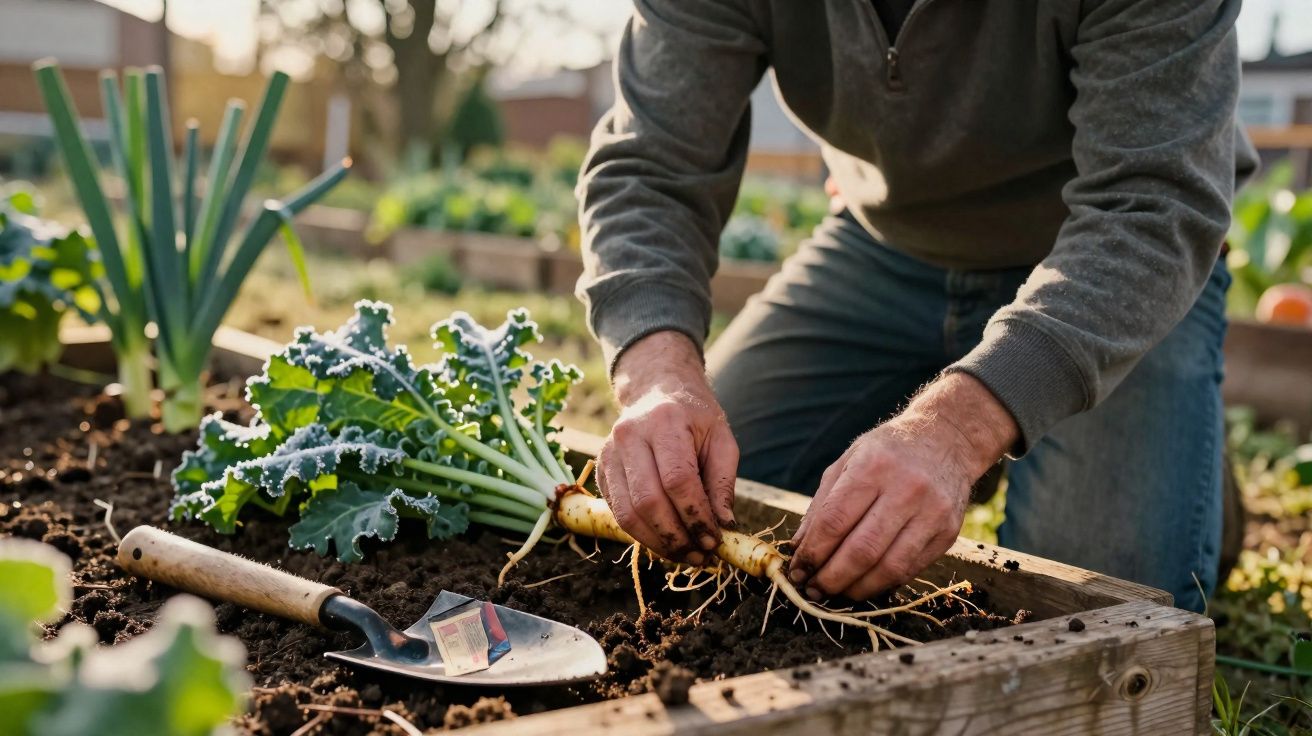
As winter loosens its grip and the garden beds look bare and worn-out, one traditional root vegetable is poised to bring a quiet, welcome revival.
Plenty of today’s growers hunt for unusual seeds and picture-perfect crops, but some of the best rewards are the ones that sit patiently underground, waiting for the coldest weeks to pass.
The return of an old favourite: salsify back in UK gardens
To many gardeners in Britain (and across the Atlantic), salsify can sound more like something from a restaurant menu than a practical plot staple. Yet in European cottage gardens it once held its place alongside carrots and parsnips, helping households through late winter when stored produce was dwindling and spring greens still felt a long way off.
Traditionally nicknamed “goatsbeard” for its shaggy seed heads, it doesn’t look especially dramatic in the soil: a slim, brown root, a small tuft of leaves, and little else to show for months. Its real strength is timing. When it is sown in October, it settles in beneath frosts and then produces pale, tender roots just as the harshest part of winter begins to ease.
Salsify turns the “hungry gap”-those lean weeks between winter stores and spring crops-into a chance for fresh, delicate picking.
The taste often catches newcomers off guard. People commonly describe it as somewhere between artichoke and asparagus, with a mild nuttiness and gentle sweetness that suits butter, cream or a lift of citrus. For earlier generations, that flavour meant comfort and variety during a season otherwise dominated by cabbage and turnips.
What sets salsify apart: taste, texture and nutrition
A modest-looking root with a refined flavour
Salsify forms long, slim roots-typically around 20–30 cm-with beige-to-brown skin and creamy white (almost ivory) flesh inside. Cooked with care, it stays smooth and fine rather than fibrous. Steamed or lightly fried, it keeps its shape and takes on sauces easily.
It shines with straightforward cooking: butter, a squeeze of lemon, salt, and a scattering of fresh herbs is often enough. Its mildness makes it especially useful:
- as a side with roast chicken or fish
- in creamy soups with potatoes and leeks
- baked in gratins with cheese and a touch of nutmeg
- cut into batons and roasted with carrots and parsnips
Salsify delivers winter comfort without feeling heavy: soft sweetness, a light texture, and genuine versatility in the pan.
Why nutrition-focused growers are planting it again
Flavour isn’t its only draw. Salsify contributes helpful nutrients to cold-season meals, including dietary fibre (handy when fresh fruit is less common), minerals such as potassium, and small amounts of vitamin E.
A notable part of its fibre is inulin, a prebiotic that can support a healthy gut microbiome. That’s one reason it appeals to gardeners looking to increase plant diversity in winter diets. Portions might be modest, but the variety it brings can feel significant when seasonal choices narrow.
Why sow in October: a traditional trick that still pays off
Autumn sowing for early, tender roots
While many root crops are usually started in spring, older growers in France and parts of Britain often sowed salsify in mid-autumn-frequently around October. The reasoning is simple: cooler soil encourages steady germination, and winter temperatures slow growth without harming the developing root.
For a reliable October sowing, gardeners usually:
- dig and loosen the bed deeply, removing stones to reduce forked roots
- make shallow drills about 2–3 cm deep
- leave 25–30 cm between rows
- water carefully, then add a light mulch so the surface doesn’t crust over
Salsify copes well with cold, wet weather and early frosts. Top growth may pause during severe cold snaps, but plants rarely suffer. When late winter brings milder spells, it naturally begins growing again and the roots bulk up to harvest size while many other crops are still slow to start.
Autumn sowing makes winter work for you, turning months that look “inactive” into steady root-building below ground.
Good neighbours in the vegetable bed
Although it prefers loose, stone-free soil, salsify is fairly relaxed about companionship. It’s often grown near other roots such as beetroot and carrots, or alongside onions and leeks, which like similar conditions.
Some experienced growers interplant by alternating rows of salsify with winter lettuces or spinach. The leafy crops help cover the soil, reduce wind stress on small seedlings, and make better use of limited space-keeping the bed feeling more “alive” through colder months.
Many gardeners avoid placing it straight after heavy-feeding legumes in tired ground. A straightforward rotation-roots after brassicas, then legumes, then fruiting crops-helps reduce soil-borne problems and keeps productivity steady year after year.
Winter resilience: how this root handles frost
A vegetable that actively suits the cold
Salsify stores its reserves safely in the root, well below the surface, which protects it from brief freezes and even a light blanket of snow. When temperatures drop sharply, growth simply stops; when they lift, the plant carries on, without a noticeable loss in quality.
That built-in “pause” is a real advantage. You can leave the crop in the ground and lift roots when needed rather than harvesting everything at once. If you pull them before flowering begins, the roots generally stay tender for weeks.
Rather than battling the weather, you can let frost protect your winter “pantry” right where it grows.
Sharing the October sowing period with other hardy crops
Salsify is rarely the only thing started in October. Many gardeners also sow or plant other tough crops to bridge the hungry gap-winter leeks, broad beans, spinach, and cold-tolerant salads-keeping beds occupied and preventing bare soil from washing away.
There are knock-on benefits: living roots support soil life through winter, and light leaf cover reduces nutrient loss during heavy rain. Upkeep is minimal-some weeding, an occasional check for slugs-then little more until late winter.
From soil to plate: lifting at the right moment
When (and how) to harvest for the best texture
Harvest timing makes a big difference. Gardeners often start lifting salsify from late March into early April, depending on the local climate. The aim is to pick before flower stems push up. Once the plant switches energy into flowering, the root can become tougher and lose some of its delicacy.
Because the roots are long, a border fork is usually safer than a spade. Loosen a wide column of soil around the plant and ease the root up carefully. Slightly damp soil is ideal: bone-dry ground encourages snapping, while waterlogged soil clings and compacts.
| Stage | What to check | Action |
|---|---|---|
| Late winter | Leaves still green, no flower stalks | Lift a few test roots to judge size and tenderness |
| Early spring | Central stem begins to thicken | Start the main harvest to capture peak flavour |
| Mid-spring | Flower stems clearly forming | Finish lifting; keep a few plants only for seed |
Kitchen ideas that let salsify shine
Once it’s out of the ground, the practical issue is speed: salsify browns quickly because the flesh oxidises in air. A common fix is to peel it straight into a bowl of water acidulated with lemon juice or vinegar.
Many cooks simmer peeled pieces for about 20–25 minutes in salted water until just tender. After that, it can be:
- finished in a frying pan with butter, salt and herbs
- baked as a gratin with cream, pepper and nutmeg
- mixed with potatoes for a lighter-tasting mash
- blended with stock and cream into a smooth soup
Buttered salsify with lemon can stand up to far richer dishes precisely because its flavour stays clean and understated.
Bringing salsify into modern gardens
Low-input growing for small and urban spaces
Despite its old-world reputation, salsify suits today’s practical, low-input gardens. It needs no specialist equipment, little watering once established (as long as the soil drains properly), and generally thrives in light, sandy or loamy ground. Heavy clay can work too, but usually benefits from generous compost and some grit or sand to reduce twisting and forking.
It also adapts well to raised beds and deep containers. Depth is the deciding factor: choose planters that allow at least 30 cm for the roots. An autumn sowing keeps those containers productive through winter rather than sitting empty after tomatoes and other summer crops are finished.
Pest pressure is usually modest. Slugs may nibble young foliage, but established plants tend to cope with minor damage-useful for gardeners trying to avoid chemical controls and keep maintenance realistic.
A quick note on storage and soil care (often overlooked)
If you do lift more than you can use straight away, keep the roots cool and damp rather than warm and dry. Many gardeners store them like carrots: in a box of slightly moist sand or compost in a shed or garage that stays frost-free. That helps preserve tenderness and reduces shrivelling.
It’s also worth taking a little extra time with soil preparation because the root’s shape reflects what it meets underground. Removing stones and breaking up compacted layers pays back later in straighter, easier-to-peel harvests-especially important in smaller plots where every root counts.
Seed swapping and the social life of “forgotten” vegetables
Salsify also carries a quiet cultural pull. Older growers may remember it from family allotments, Sunday dinners, or wartime cooking. When younger gardeners ask about it, the stories often come quickly: sowing after the first autumn rain, scrubbing roots at an outdoor tap, and the smell of a big pan simmering on the hob.
Community gardens and seed swaps increasingly keep this crop in circulation. A packet of salsify seed can spark conversations across generations-people exchanging not just varieties, but sowing times, recipes, and local tips-helping preserve diversity beyond what commercial catalogues choose to stock.
When a forgotten vegetable returns to the bed, it restores both biodiversity and shared memory.
Going further: related crops, risks and smart choices
Gardeners who take to salsify often try two close relatives as well. Scorzonera, often sold as black salsify, produces darker roots with similar culinary uses and even stronger tolerance of cold. If space allows, both can be grown in the same bed to widen the range of flavours and textures from one approach.
A few practical cautions are worth noting. Salsify seed doesn’t stay viable for long, so using fresh seed each year usually improves germination. Lifting long roots can be physically demanding, particularly for anyone with back problems, so narrower beds or raised rows can make harvesting easier. Some people find the latex-like sap irritating when peeling; gloves are a simple fix for sensitive skin.
Even with those considerations, the balance is compelling: a single October sowing asks for very little through winter and then provides fresh, unusual roots at a time when shops often offer the same limited selection. For gardeners hoping to extend the season, trim food costs slightly, and keep winter meals interesting, this quiet goatsbeard deserves a proper second look.





Comments
No comments yet. Be the first to comment!
Leave a Comment