
The first clue that something wasn’t quite right arrived in the cardiologist’s waiting room. A man in his late 40s sat there in running shoes, gym bag still in hand, scrolling through “healthy” recipes on his phone: salmon with olive oil, roasted veg with olive oil, even heart‑healthy olive oil brownies. When the consultant glanced at his results and said, calmly, “You may need to go easier on that bottle,” he looked genuinely floored.
Outside, the traffic droned on and he stood on the pavement clutching a print-out about fats and cholesterol as if it were a parking fine he didn’t deserve. Olive oil was meant to be the hero, wasn’t it? The Mediterranean miracle. The green‑gold protection for our arteries.
What the doctor explained next is what more and more dietitians are now willing to say plainly.
And it begins with rethinking that daily drizzle.
Why some dietitians say olive oil isn’t the heart hero you think it is
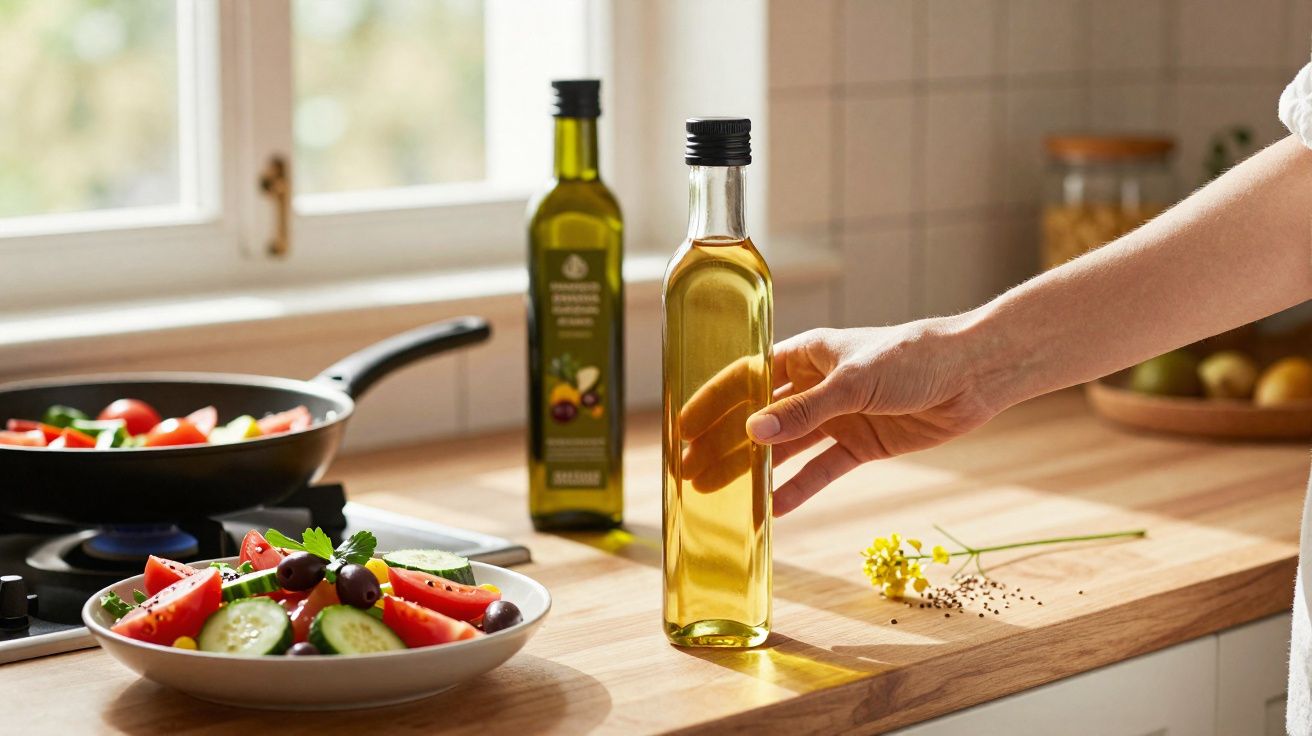
Step into any fashionable kitchen and you’ll spot it straight away: a tall bottle of extra-virgin olive oil by the hob, displayed like a badge of honour. We pour it into pans, slick it over salads, and sometimes even add it to soup because we’ve been told it counts as “good fat”.
But when dietitians move beyond the glossy marketing and focus on real eating patterns and real blood results, the picture can look less romantic. The issue is rarely olive oil itself-it’s the amount, the frequency, and what happens when a small drizzle quietly turns into a daily deluge.
In practice, most of us aren’t eating a traditional Mediterranean diet. We’re bolting olive oil onto a Western-style plate already heavy with ultra‑processed foods.
A dietitian in London described a client who announced, proudly, “I hardly touch butter now-only olive oil.” When they tracked his habits properly, he was using close to 6 tablespoons (about 90 ml) a day across meals. That’s roughly 720 kcal (about 3,010 kJ) from oil alone.
His cholesterol wasn’t alarming, but his LDL (the “bad” cholesterol) was edging upwards, and his weight had crept up by around 5 kg over the year. He couldn’t make sense of it; a decade of headlines had trained him to believe olive oil automatically meant heart protection. The lab numbers, however, weren’t interested in the halo effect around the bottle.
Here’s the quiet reality many dietitians come back to: olive oil is still a refined, concentrated fat. One tablespoon (about 15 ml) contains around 120 kcal (about 500 kJ) with no fibre and no protein. It isn’t poison and it isn’t a miracle-it’s simply very energy-dense.
On a classic Greek-style plate packed with beans, vegetables, whole grains and fish, those spoonfuls can make sense as part of the overall balance. On white bread, processed meats and cheese-then “made healthy” by soaking everything in olive oil-your arteries are dealing with something very different. That mismatch between the myth and modern eating is often where heart health starts to wobble.
The “surprising” oil dietitians now recommend for heart health: cold-pressed canola oil (rapeseed oil)
This is where the story shifts. Some heart-focused dietitians are increasingly guiding patients away from relying on olive oil for everyday cooking and towards a different staple: cold-pressed canola oil, better known in the UK as rapeseed oil.
Not the highly processed, industrial versions designed for deep frying, but cold-pressed rapeseed oil-naturally richer in omega‑3 and generally lower in saturated fat than olive oil. It doesn’t get the same glossy coverage, partly because it lacks the lifestyle imagery of sunlit Mediterranean groves. Yet when you ask cardiology dietitians what they actually use day-to-day, this “plain” option appears more often than you might expect.
A French dietitian shared the case of a 52‑year‑old woman with a strong family history of heart attacks. She loved olive oil and assumed that ditching butter had sorted the problem. Her LDL cholesterol remained stubbornly high-and her triglycerides were elevated too.
The dietitian suggested a small, specific trial: switch most of her cooking fat from olive oil to cold-pressed canola oil (rapeseed oil) for three months, while also nudging her towards more pulses, oats and vegetables. No supplements. No exotic powders. Just a focused change in fat choices, alongside more fibre-rich staples.
Three months later, her LDL dropped, her triglycerides improved, and she lost a couple of kilograms without “going on a diet”. She was surprised that such a meaningful shift started with something as ordinary as the bottle beside the hob.
So why does this swap matter for the heart? In simple terms, rapeseed/canola oil typically contains significantly less saturated fat than olive oil and offers a more favourable omega‑3 to omega‑6 balance. That mix can matter for inflammation, blood lipids and longer-term artery health.
Olive oil does contain polyphenols and has well-known studies supporting it-but those studies usually examine people eating an overall Mediterranean pattern, not people adding oil to burgers, cheese toasties and white pasta and calling it a health plan. On its own, olive oil is still “just” a fat.
When someone is trying to protect a vulnerable heart, the fat profile-rather than the branding-can quietly become the deciding detail.
How to switch today without ruining the meals you love
A practical way to start is to separate “cooking fat” from “finishing fat”.
Use cold-pressed canola oil (rapeseed oil) for most cooking: frying off onions, sautéing vegetables, roasting potatoes, making pancakes, and even baking. Keep your best extra-virgin olive oil for the occasional finishing touch-over tomatoes, a salad, or a bowl of beans.
This approach can reduce saturated fat and cut down excess calories over the week without forcing you into joyless food choices. You’re not banning olive oil; you’re simply moving it from everyday background habit to an occasional highlight. If you want a simple behavioural trick: each time your hand reaches for olive oil to use in a pan, pause and pick up the rapeseed bottle instead.
Many people worry the flavour will fall flat. They picture their roast veg turning into something bland and institutional. In reality, a neutral oil often does the opposite: garlic, herbs, lemon, chilli and spices come through more clearly because they’re not competing with a strong, fruity oil.
The bigger trap isn’t taste-it’s volume. We’ve normalised pouring oil straight from the bottle because it feels virtuous. That’s where the heart can pay the price. Use a tablespoon measure or a controlled pourer, and keep the bottle off the table so “just a bit more” doesn’t become a habit.
And yes-almost nobody measures every day. But measuring a few times a week recalibrates your eye, which alone can lighten your overall intake.
A quick note on cooking performance (and why it helps you stick with the change)
Cold-pressed rapeseed oil is generally well-suited to everyday cooking because its flavour is mild and it behaves predictably in the pan. That makes it easier to use less without feeling as though you’re sacrificing the meal. For dishes where the taste of olive oil is the point-fresh salads, tomatoes, warm bread dipped occasionally, or a finishing drizzle over soups-extra-virgin olive oil still has a place.
Don’t let the oil swap do all the work: build a more Mediterranean diet around it
The most consistent benefits in Mediterranean diet research come from the pattern: more pulses, vegetables, fruit, whole grains, nuts, and fish; fewer ultra‑processed foods; and sensible portions of fats. In other words, the oil choice helps most when it’s paired with more fibre and less processed food overall-because that’s when your blood lipids have the best chance of moving in the right direction.
“People think their heart only cares which brand of oil they buy,” a cardiology dietitian told me. “In reality, it cares about the mix: which oil, how much, and what else is on the plate. Choose a better oil, use less of it, and load up on plants-then we start seeing the blood results change.”
- Start with one simple switch
Replace your main cooking oil with cold-pressed canola oil (rapeseed oil) for about 80% of your meals this week. - Use olive oil like a condiment
Keep a small bottle of extra-virgin olive oil for salads and an occasional finishing drizzle, not for frying. - Watch the tablespoon, not the label
Even the “healthiest” oil can become unhelpful when free-pouring turns into a waterfall. - Pair fat with fibre
Build meals around beans, lentils, whole grains and vegetables so your heart isn’t handling a “fat-only” situation. - Speak to your clinician if you have heart concerns
This isn’t a cure-all-just one meaningful lever alongside movement, medication (when needed) and sleep.
Rethinking the bottle on your worktop-quietly, consistently, for your heart
Most people have had the moment: looking at a plate and realising that “healthy eating” has been shaped more by headlines and hopeful labels than by the unglamorous reality of portions and patterns. The olive oil by the hob can feel like part of your identity-proof you’re someone who eats well. So changing it, even partly, can feel oddly personal.
But lasting change usually begins without drama: one stubborn decision about something you do every day. Which oil you heat. How much you pour. What you’re pouring it over.
Dietitians who suggest more rapeseed oil aren’t saying you were silly. They’re saying nutrition science has more nuance than slogans. And if your heart has already sent a warning-an ambulance scare, a blood test that unsettled you-the small, repeatable details start to matter most. The bottle on your worktop. The spoon in your hand. And the story your next results will tell.
| Key point | Detail | Value for the reader |
|---|---|---|
| Olive oil isn’t a free pass | It’s calorie-dense, still a refined fat, and often overused on Western-style plates | Breaks the “health halo” and explains why blood results don’t always match the marketing |
| Cold-pressed canola oil supports heart health | Lower saturated fat and a better omega‑3 profile than olive oil for everyday cooking | Offers a realistic swap that may help improve LDL cholesterol and triglycerides |
| Small daily habits move the needle | Change the cooking oil, reduce quantity, and pair fats with fibre-rich foods | Shows what to do today without extreme diets or pricey products |
FAQ
Is olive oil suddenly “bad” for you?
No. Extra-virgin olive oil can fit into a healthy diet, especially within a genuine Mediterranean diet pattern. The common problem is overuse on top of a Western diet, which can dilute benefits while adding excess calories and saturated fat.Why do some dietitians favour canola oil over olive oil?
Cold-pressed canola oil (rapeseed oil) is typically lower in saturated fat and higher in omega‑3, which can support heart health and help with cholesterol management-particularly for people at higher cardiovascular risk.Does this mean I should never use olive oil again?
No. Many experts suggest using olive oil occasionally as a finishing oil-on salads, vegetables or whole grains-while relying on rapeseed/canola oil for most everyday cooking to improve your overall fat profile.What if I’m concerned about “processed” seed oils?
Choose cold-pressed or minimally refined canola/rapeseed oil from reputable brands. Online panic often doesn’t match mainstream cardiology and nutrition guidance, which still regards it as a useful, heart-friendly option.Will switching oils really change my cholesterol?
For many people, yes-especially alongside more fibre (oats, beans, vegetables), less ultra‑processed food, and regular movement. It’s not magic, but it’s a practical lever that can show up in your next blood test.
Comments
No comments yet. Be the first to comment!
Leave a Comment