
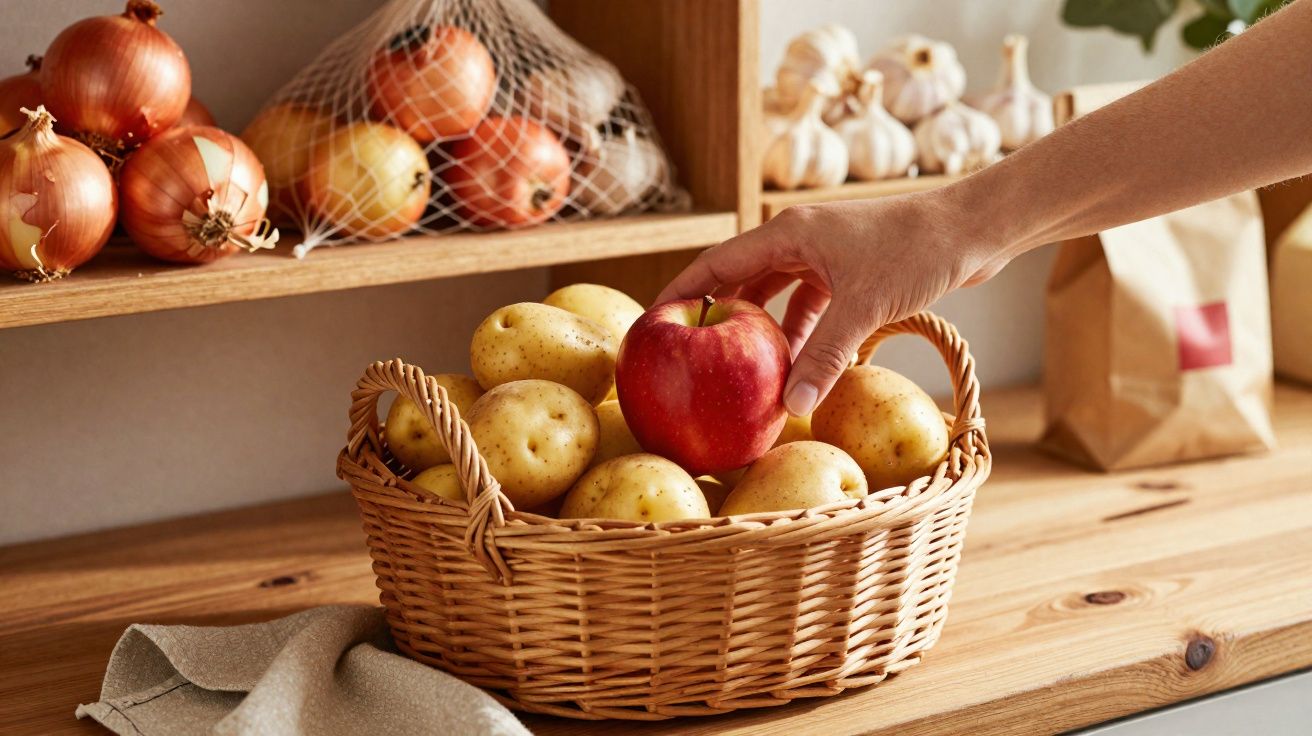
A quick rummage in the cupboard, and the potatoes have already started showing green shoots.
Annoying, unappetising - and a bit wasteful. A simple trick borrowed from professional kitchens puts a stop to it.
Anyone who buys potatoes to keep in stock knows the problem: all of a sudden you’re staring at wrinkled tubers with long, pale green sprouts in the bag. Many end up in the bin, even though potatoes have become more expensive. The good news is that sprouting can be slowed dramatically with a straightforward household trick - no chemicals and no special storage box required.
Why potatoes sprout in the first place
Potatoes aren’t “dead” produce; they’re living storage organs. Each tuber contains tiny buds ready to grow as soon as conditions say “go”. If a potato gets that signal - warmth, light, or simply being stored too long - it starts pushing out shoots.
Three factors matter most:
- Temperature: Anything above 8–10 °C speeds up sprouting.
- Light: Bright light “activates” the tuber and encourages chlorophyll and solanine.
- Moisture: A damp environment softens the skin and makes sprouting more likely.
If you keep those three points under control, you’ll prevent a large share of unwanted shoots. The biggest difference, however, comes from one widely shared kitchen trick that’s been used in households for years.
The kitchen trick for potatoes: one fruit that slows sprouts
The most effective anti-sprouting trick starts in the fruit bowl: apples. Ripening apples release ethylene - a natural ripening gas. In higher amounts, ethylene can trigger undesirable changes in many vegetables, but with potatoes it can be useful when applied correctly.
A single apple in the potato box can noticeably slow down sprout formation - provided the storage spot and quantities are right.
The practical tip used in many homes (and by plenty of hobby gardeners) is simple: put a fresh apple in with the potatoes in a dark storage container. In a small, enclosed space, the gas disperses and influences the tuber’s internal processes. The result: potatoes stay firmer for longer, and the typical pale shoots appear later and less aggressively.
How the apple trick works in practice
To get reliable results, pay attention to the details:
- Use one fresh, undamaged apple with no bruises.
- Store potatoes in a dark, fairly cool container, such as a wooden crate, paper sack, or earthenware pot.
- Place the apple on top of the potatoes, not buried at the bottom, so air can circulate.
- Replace the apple every 10 to 14 days, before it starts to spoil.
The combination of darkness, moderate coolness and a targeted ethylene effect helps keep the tubers “resting” for longer. It’s clearly helpful, but it isn’t magic: you’ll extend freshness by weeks, not indefinitely.
Store potatoes properly: how to keep them good for months
An apple on its own won’t fix poor storage. If you want to treat your potatoes the way they’d be handled in the cool stores of old farm cellars, it’s worth recreating a few basic conditions.
| Factor | Recommended range | Effect on the potato |
|---|---|---|
| Temperature | 4–8 °C | Sprouts grow slowly, flavour stays stable |
| Light | As dark as possible | No greening, less solanine formation |
| Humidity | 50–70% | Skin stays firm, mould risk stays moderate |
| Container | Wooden crate, earthenware, fabric, or paper | Air can circulate, little condensation builds up |
A classic mistake in many kitchens is leaving potatoes in the thin supermarket plastic bag and keeping them in a warm, bright corner. That creates ideal conditions for sprouting - and sometimes even mould.
What to avoid when storing potatoes
A few simple “don’ts” make a big difference:
- Don’t store in the fridge: Below 4 °C, starch converts to sugar and the potatoes can taste oddly sweet.
- Avoid direct sunlight: It accelerates greening and solanine production.
- Don’t use airtight plastic boxes: Moisture gets trapped and both sprouting and rot spread faster.
- Don’t store with onions in the same container: Each gives off its own gases, and the combination can be unhelpful.
When sprouting potatoes become genuinely risky
A lot of people are unsure: can you still eat potatoes with sprouts? It depends on how advanced the sprouting is and what the tuber looks like.
If the sprouts are short, the skin isn’t green, and the potato is still firm, it’s usually enough to cut away the shoots generously.
It becomes more concerning in three situations:
- The potato has obvious green patches under the skin.
- The sprouts are longer than 1–2 cm and there are lots of them.
- The potato is wrinkled, soft, or smells musty.
In those cases, the solanine level rises noticeably. Solanine is a natural defence chemical produced by the plant and, in higher amounts, can cause nausea, vomiting and headaches. If you see these warning signs, it’s better to put the potato in the food waste caddy than in the pan.
More practical tricks to prevent sprouting potatoes
Alongside the apple trick, several everyday habits have proven effective in many households:
- Buy smaller quantities: If you choose 2.5 kg instead of a 5 kg sack, you’re more likely to use them in time.
- Separate “use soon” from “storage” potatoes: New potatoes generally keep for less time than late-season varieties.
- Use borderline tubers first: Slightly sprouted potatoes should be cooked next - don’t bury them at the bottom.
- Check regularly: Sort through once a week and remove any damaged potatoes so rot doesn’t spread.
If you have a cool cellar or a utility area against an outside wall, set up a simple potato crate there. Even an old fruit box with a tea towel draped over it can work surprisingly well.
Typical scenarios - and how the apple trick helps
A common situation: a one-person household grabs a big sack of potatoes because it’s on offer. The first week is fine, then the potatoes get forgotten. Three weeks later, half the bag is covered in shoots. Here, the apple trick - paired with consistent checking - can extend the usable period significantly.
Another example: a family with two children doing a weekly big shop. The potatoes sit on a warm kitchen shelf next to the onions. Within ten days, the first sprouts appear. Move the box into a pantry, add an apple and keep it out of the light, and the potatoes usually stay stable until the next weekly shop.
Key terms worth knowing
If you take food storage seriously, you’ll keep running into two technical terms:
- Solanine: A natural toxin from the glycoalkaloid group. It occurs in higher concentrations in green patches, sprouts and the skins of older potatoes.
- Ethylene: A gaseous plant hormone that controls ripening processes. Apples, bananas and tomatoes release it in larger quantities.
Understanding how these substances interact explains why an apple behaves differently near potatoes than it does near lettuce or cucumbers. While delicate leafy veg can age faster next to apples, apple emissions can help potatoes stay balanced for longer - as long as temperature and darkness are right.
Practical everyday combinations for longer-lasting potatoes
When reorganising your food cupboard, you can combine several useful effects at once: put potatoes into a breathable crate, cover it with a cloth, and place it in the darkest corner. Lay an apple on top. Store onions separately in a net bag, also cool but not right beside the potatoes. Keep tomatoes and bananas in an open bowl, away from both.
That way you create a simple, well-thought-out storage system where each food has a sensible spot. Many households not only see less sprouting in their potatoes, but also reduce food waste overall - because when staples last longer, fewer half-used bags end up being thrown away.
Try the apple trick once and you’ll quickly see why it’s popular: almost no effort, a noticeable result, and a much lower chance of discovering nothing but shrivelled, sprouting potatoes just as you’re about to start cooking.


Comments
No comments yet. Be the first to comment!
Leave a Comment