
The rosemary always met the same fate on my kitchen worktop: a fresh, vivid green bunch bought with the best intentions, used once on a roast chicken, then forgotten at the back of the fridge. A fortnight later it would be nothing but limp, grey needles-straight into the bin. No melodrama, no guilt. Just another “never mind, I’ll use it properly next time” as the lid came down.
One afternoon a neighbour saw me do it and gave me a look. “Do you realise you’re chucking away a little super-plant?” she said, half laughing, half appalled. I laughed too, but her words stuck.
Because this is not really about a herb.
It is about how much hidden usefulness we throw away without even clocking it.
You think rosemary is just for potatoes. It’s not.
Step into any supermarket and you will find it by the parsley and thyme, sealed in plastic, waiting. For a lot of people, rosemary is “that Christmas herb”: the one you buy once a year for roast potatoes or lamb. After the big meal it sits in the fridge door, gradually drying out, until you decide it has “gone off” and you bin it. Story over.
But that tough little sprig has had a long life before it ever reached your basket. Mediterranean grandmothers treated it the way many of us reach for aspirin or a strong coffee. Chefs rely on it for flavour, of course, but also for texture, helping food keep longer, and even for presentation. In other words, you are holding a compact, hard-working toolkit-and using it like it has only one setting.
Imagine a very ordinary scene: a 68-year-old woman in southern Italy leaning over a pot at a gentle simmer. She drops in not one but three branches of rosemary, each thicker than a pencil. Later she lifts them out, rinses them, and hangs them above the stove to dry. Those same branches will be used again to flavour grilled vegetables tomorrow, to perfume her washing-up water, and finally to make a simple infusion she drinks when her stomach feels heavy.
No waste. No “oh well”.
Modern research has put numbers to that old wisdom. Some studies suggest rosemary’s compounds-rosmarinic acid, carnosic acid, and natural antioxidants-may help protect cells, support digestion, and keep oils fresher for longer. In everyday terms: it can improve your food, and gently support your body, without a glossy label or a marketing campaign.
The trouble is we often shrink ingredients down to a single job. Lemon? For fish. Vinegar? For salad. Rosemary? For potatoes. It is a convenient mental shortcut, but it also quietly limits us. Once we decide something has only one use, we stop paying attention. We stop experimenting. The herb becomes a prop rather than a resource.
And that is how rosemary turns from a multi-talented plant into fridge decoration.
The logic is simple and a bit harsh: if you do not know what it can do, you do not value it. If you do not value it, you throw it away without thinking twice.
Three simple ways to unlock the real power of that “leftover” rosemary
Next time a slightly tired bundle of rosemary looks accusingly at you from the fridge, do not bin it. Turn it into a flexible, multi-use base you can rely on all week. One of the easiest moves is rosemary-infused oil.
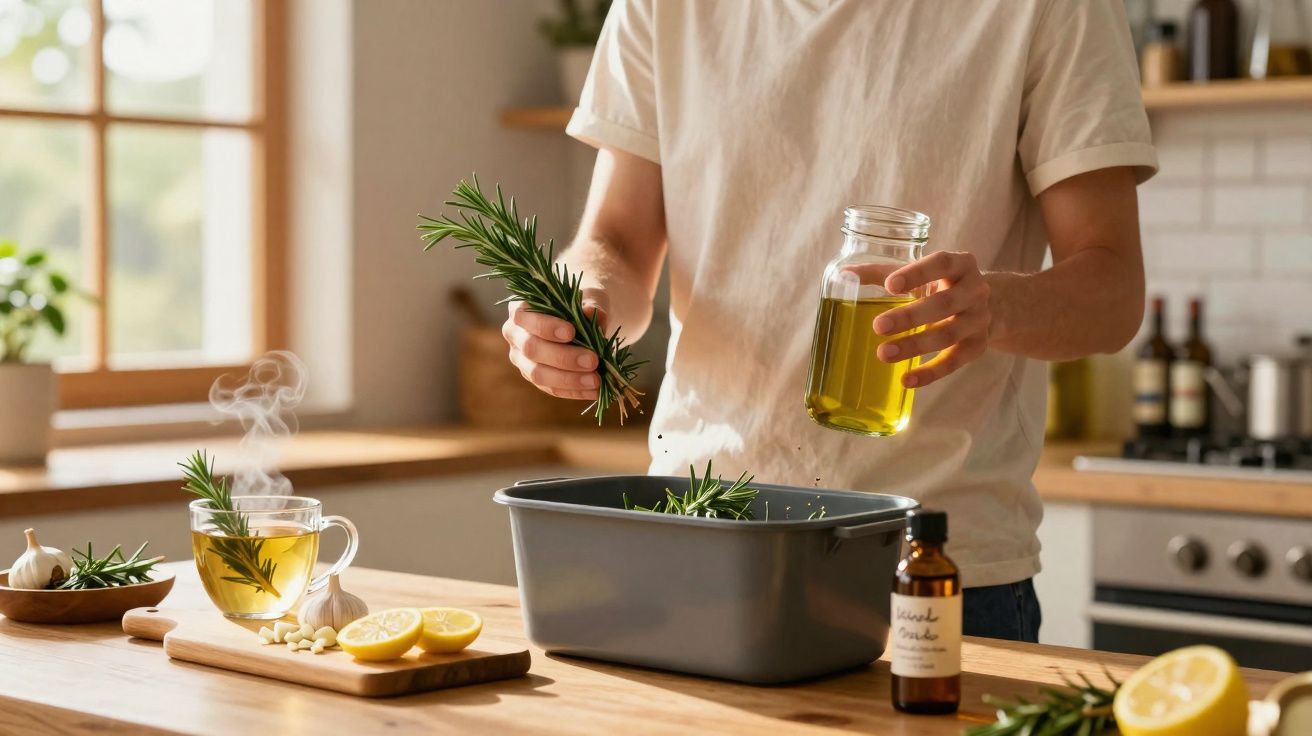
Take a clean glass bottle, fill it with olive oil, then add 2–3 sprigs that have been washed and dried completely. To bring the aromas to life, stand the closed bottle in a bowl of hot tap water for a few minutes, then store it somewhere cool and dark. In a few days you will have a fragrant oil you can drizzle over vegetables, stir into soups, or use to lift a simple slice of toast. Suddenly the “extra” rosemary becomes a daily shortcut to flavour.
A second low-effort option is rosemary steam. Bring a pan of water to the boil, add a few sprigs, then turn off the heat. Lean over it-not too close-put a towel over your head, and breathe slowly for a few minutes. That sharp, resinous scent can help clear your head, cut through a heavy day, and give even a small flat kitchen a hint of woodland.
Everyone knows the feeling: your brain like a laptop with too many tabs open-loud, crowded, and jumpy. A rosemary steam will not solve your life, but it can nudge your mood in a better direction. That is a far better outcome than a mouldy bunch in the bin.
And, honestly, hardly anyone does this every day. Most people only discover rosemary’s range when someone shows them-like a useful kitchen secret passed between friends.
“Rosemary is the herb people underestimate the most,” a French chef once told me in a tiny bistro. “They think it’s aggressive. The trick is to use it often, but in small touches, across your whole life-not just on one special dish.”
Here are a few quiet, practical uses that can stretch one bunch into a week of small wins:
- Add a sprig to gently simmering beans or lentils to make them easier to digest and more flavourful.
- Put dried needles into a small fabric bag and slip it into your wardrobe as a light, herbal sachet.
- Steep a spoonful of dried rosemary in hot water for 5 minutes to make a simple after-meal herbal tea.
- Freeze chopped rosemary in ice cubes with olive oil to create instant seasoning “blocks”.
- Use cooled rosemary infusion as a final hair rinse for a clean, slightly invigorating feel.
Rosemary, waste, and the kitchen mindset: small habits, big change
Once you stop automatically throwing away rosemary, something subtle changes. You start seeing your kitchen differently: carrot tops, lemon peel, the last half an onion left in the salad drawer. You begin asking a more useful question: “What else can this do for me?” That one question is where creativity starts.
This is not about becoming a zero-waste hero or turning Sundays into a marathon of DIY potions. It is about noticing the quiet richness you already have, and giving it a second life instead of a quick death in the bin.
A practical note: if you want rosemary to last longer in the first place, treat it like the living plant it is. Keep fresh sprigs loosely wrapped in a slightly damp piece of kitchen paper inside a container in the fridge, and only wash what you are about to use. If you have more than you can manage, dry it deliberately (hung somewhere airy) or freeze it chopped in oil, rather than waiting for it to fail on its own.
It also helps to buy rosemary with a plan beyond one recipe. Choose one “cooking” use (such as beans, lentils, roast vegetables) and one “non-cooking” use (a steam, a sachet, or a rinse). When an ingredient has two roles, it is far less likely to become waste.
| Key point | Detail | Value for the reader |
|---|---|---|
| Use rosemary beyond cooking | Turn leftover sprigs into infused oils, herbal steams, teas, and simple household tricks | Transforms a “throwaway” herb into a multi-purpose daily ally |
| Think in small, repeated gestures | Integrate tiny uses across the week rather than one big, perfect recipe | Fits real life and busy schedules while still unlocking rosemary’s benefits |
| Shift from waste to resource mindset | Seeing rosemary’s power trains you to value other overlooked ingredients | Reduces waste, saves money, and brings more creativity into everyday cooking |
FAQ:
- Can I use dried rosemary instead of fresh?
Dried rosemary is excellent for teas, marinades, and slow-cooked dishes. For infused oil or steam, fresh sprigs tend to smell brighter, but dried rosemary still does the job.- How long does rosemary-infused oil keep?
If your sprigs are fully dried and you use a clean bottle, it will usually keep for 2–3 weeks in a cool, dark place. If it turns cloudy or smells rancid, do not use it.- Is rosemary tea safe every day?
For most healthy adults, one mild cup a day is fine. If you are pregnant, breastfeeding, or taking medication, speak to a health professional before having it regularly.- Can I grow rosemary at home easily?
Yes. Rosemary likes sun, needs good drainage, and hates waterlogged soil. A small pot on a balcony or a bright windowsill is often enough to keep a plant going for years.- My rosemary tastes too strong and bitter. What am I doing wrong?
Use less, let it cook longer in liquid-based dishes, and remove woody stems before serving. For a family meal, one or two small sprigs are often plenty.






Comments
No comments yet. Be the first to comment!
Leave a Comment