
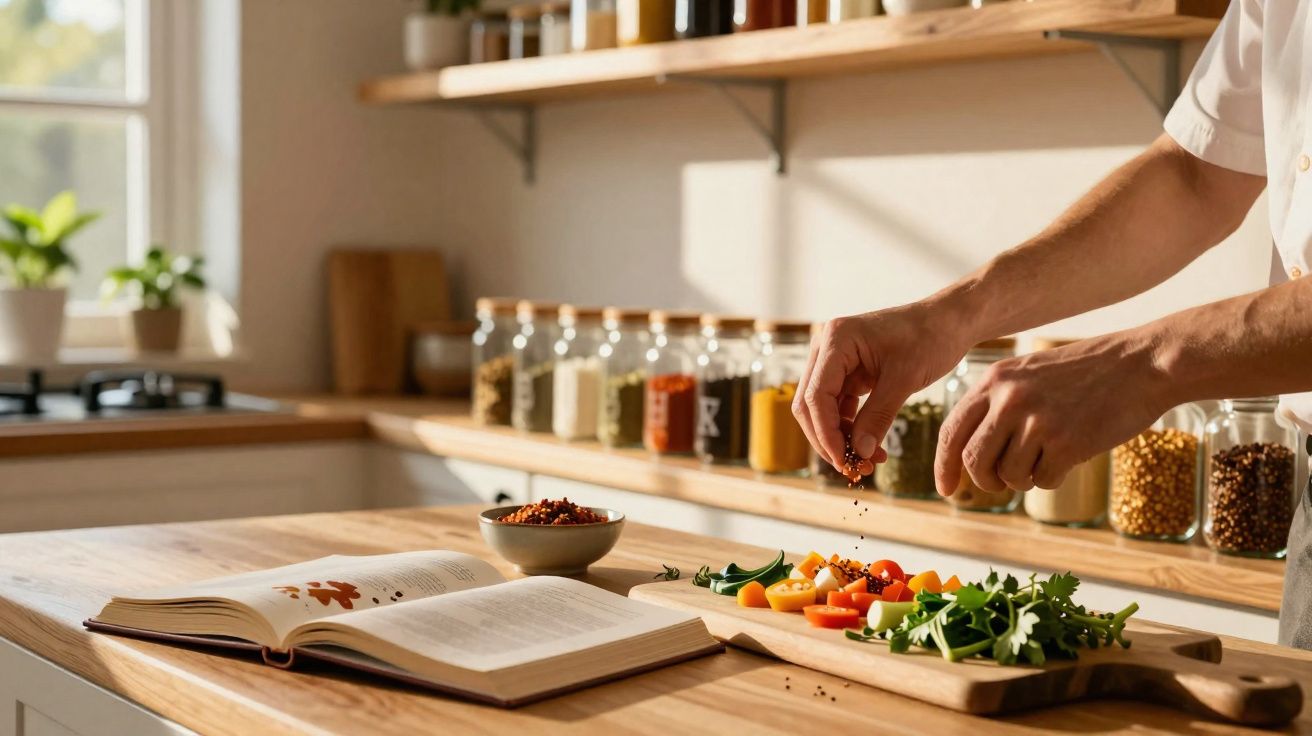
The chicken is already sizzling in the pan when the dread sets in. The smoked paprika has vanished again - somewhere behind three half-used tubs of cumin and one suspicious, unlabelled “mixed seasoning”. The oven timer is ticking, the oil is spitting, and you’re rummaging through a chaotic spice graveyard that looks like a gift shop has been shaken upside down.
You can taste the flavour you’re aiming for. The problem is you can’t actually find it.
Five frantic minutes later you locate the paprika, the garlic has gone a shade too far, and the sauce has picked up that faintly burnt edge. You exhale, tell yourself you’ll “sort this cupboard out properly one day”… then shut the door and carry on.
One tiny change can dismantle that whole mess at the root.
Why alphabetical spices turn chaos into flow
Open a cupboard where the spices are organised alphabetically and something unexpectedly calming happens. Your mind quietens. Instead of darting between random shapes and colours, your eyes follow a simple route: A… B… C… paprika under P… found.
You’re no longer scavenging - you’re navigating.
That subtle switch matters. Alphabetizing spices isn’t just a neat trick for a photo. It removes micro-delays, reduces the constant “Where on earth is it?” irritation, and returns a bit of mental space. Suddenly, your brain has room for scent, taste and timing again. The enjoyable, creative side of cooking can finally breathe.
Imagine a Tuesday evening in a small flat kitchen. One parent is managing boiling pasta water, half-listening to a work call, and helping a child with homework at the same time. Dinner has to be quick, but it can’t be dull - everyone is bored of the same three meals.
They reach for basil: B. Then their eyes flick to C and land on chilli flakes.
“That could work.” Two seconds, no stress. Alphabetical order encourages those quick little detours - a glance here, a small idea there. A few shakes later the meal has some warmth, and dinner feels less like a grind and more like a small win. All because the shelf runs from A to Z.
There’s a reason this feels like quiet magic. Your brain has practised the alphabet for years - with indexes, contact lists, and everything else that runs A–Z. It’s almost like a built-in search function.
When you use alphabetized spices, you hand the “finding” job to that automatic system. That’s why people who switch to alphabetized spice storage often say they “just know” where everything is. It isn’t about being cleverer, and it doesn’t require a bigger kitchen. It’s simply aligning your environment with the way memory naturally works.
Less searching leads to less stress. Less stress creates space for curiosity. And curiosity is where better cooking begins.
The method: from messy jars to a kitchen library
Begin with one straightforward rule: keep spices in same-size jars where possible, label them clearly, and line them up strictly from A to Z with labels facing the same direction. An apothecary look. It can seem a bit fussy at first - and then it becomes strangely satisfying.
Empty the cupboard or drawer completely. Bin anything out of date, throw away mystery powders, and accept that the rock-hard nutmeg you bought in 2012 isn’t doing you any favours. Put what’s left on the worktop, then arrange it in alphabetical order.
Next, assign the collection a clear “home”: a drawer with labels on the lids, a narrow shelf, or a stepped riser. The important part is that your hand always searches in one consistent direction - left to right, or front to back - the same way you read.
It’s easy to fall into the trap of building a “perfect system”, then feeling guilty when real life messes it up again. Skip that.
Alphabetical spices are a tool, not a belief system. If you use paprika, cumin and oregano several times a week, they’ll creep towards the front - and that’s not a failure. Once a month, while you’re wiping the sides down or waiting for water to boil, nudge everything back into place. Two minutes, tops.
Let’s be realistic: hardly anyone maintains this daily. The aim isn’t museum-grade precision; it’s dependable access. When you know thyme sits near turmeric, your mind relaxes. You scan the shelf with your eyes like you scroll your phone.
One extra tweak makes this system even smoother: add a “filled on” date (month and year) to each jar, and keep the collection away from direct sunlight and the cooker’s hottest spots. Heat, light and steam dull spices quickly, so a slightly cooler, darker cupboard preserves flavour - and saves money in the long run.
If you share your kitchen, consider a label style everyone can read at a glance: large print, high contrast, and consistent wording (for example, “Chilli flakes” rather than switching between “Chilli” and “Crushed chilli”). The simpler the language, the stronger the habit - especially on busy evenings.
“Putting my spices in alphabetical order didn’t magically make me an amazing cook,” a home baker in London told me. “But it stopped me feeling lost in my own kitchen. Once that stress went, I had the headspace to think, ‘What if I try something different?’ without dreading a ten-minute hunt for the right jar.”
- Alphabet as a map
Your shelf becomes a familiar route - from anise to za’atar - always in the same sequence. - Visual inspiration built in
While looking for one spice, you automatically notice nearby options you usually overlook. - Faster weekday cooking
Saving 30–60 seconds per recipe quietly adds up over months of dinners. - Fewer duplicate purchases
When every item has an obvious place, you can see immediately what’s actually missing. - Confidence boost
A tidy, logical spice set-up makes you feel more like “someone who cooks”, which subtly shifts how you approach recipes.
How A–Z spices quietly spark creativity
Once your shelf is sorted, everyday cooking starts to change in a surprising way. You reach for one flavour and “bump into” others en route. Looking for coriander? Your eyes pass cinnamon, cloves and cumin. Each jar becomes a tiny suggestion.
With time, those suggestions turn into low-stakes experiments: cinnamon in tomato sauce, smoked paprika over roasted carrots, cardamom stirred into morning oats. None of this requires a cookbook epiphany - it happens in a two-second pause with the drawer open.
The structure of A–Z spices avoids choice overload while still expanding your options. Instead of facing a random crowd of jars, you’re strolling down a familiar street with interesting shopfronts on either side.
This arrangement also removes one of the biggest creativity killers: the fear of getting it wrong when you’re rushed. When spices feel “lost”, every new idea feels risky because you’re already tense. When they’re easy to locate, the risk shrinks.
You’ll try a pinch of fennel seeds in a pan of sautéed greens because you know exactly where fennel lives. If it’s not brilliant, no harm done - you didn’t waste time searching. If it works, that tiny trial becomes part of your own style. That’s how signature dishes appear at home: quietly, midweek, without fanfare.
Spice order won’t cook dinner for you. It simply removes enough friction for your taste to take the lead.
Over a few weeks, that ease can shift how you see yourself. You stop thinking of yourself as someone who “only follows recipes” and start behaving like someone who plays with them. A neat A–Z line-up is almost like a bookshelf: not just storage, but a reflection of what you’re curious about.
You also become bolder about buying something new because you already know where it will go. Sumac slips in near sesame. Ras el hanout settles between rosemary and saffron. Your flavour world expands without the kitchen feeling cluttered.
And yes - guests tend to notice. They open the cupboard, spot the A–Z row, and say, “Blimey, you mean business.” That small moment feeds back into your confidence. Without grand plans or dramatic resolutions, you start cooking like someone who trusts their own judgement.
| Key point | Detail | Value for the reader |
|---|---|---|
| Alphabet = autopilot | Spices follow A–Z, matching how your brain already searches lists | Cuts down time and stress during cooking, especially on busy days |
| Order sparks ideas | Scanning for one spice exposes you to nearby options you’d usually ignore | Encourages low-risk flavour experiments and more creative meals |
| Simple system, easy upkeep | Same-size jars, clear labels, quick monthly reset instead of daily perfection | Long-term organisation that feels realistic, not overwhelming or fussy |
FAQ
Question 1: Do I really need to re-jar all my spices for this to work?
Not at all. Matching containers helps, but you can begin by lining up what you already have in alphabetical order. As jars run out, you can gradually move to more uniform containers if you enjoy that kind of tidy satisfaction.
Question 2: Should I sort by spice type instead of alphabetically, like “baking” or “savoury”?
You can, but category systems are subjective and harder to recall when you’re in a rush. Alphabetical order works like a universal code your brain already knows, so it stays practical on chaotic evenings.
Question 3: What about spice blends with long, confusing names?
File them under the word you naturally say. If you call it “taco mix”, put it under T. If it’s “herbes de Provence”, place it under H. Consistency matters more than technical perfection.
Question 4: How do I stop the system falling apart over time?
Do tiny resets whenever you notice drift. While the kettle boils or the oven heats up, slide a few jars back where they belong. Those micro-maintenance moments stop full chaos returning.
Question 5: Does organising spices really change how creative I feel in the kitchen?
Most people are surprised by how much it helps. When finding flavours is effortless, you’re more willing to try combinations, less worried about “wasting time”, and more tuned in to your own preferences. The system is simple; the ripple effect is big.



Comments
No comments yet. Be the first to comment!
Leave a Comment