
The slump always arrives at about 10:47 a.m.
Your inbox is overflowing, the meeting notification keeps flashing, and suddenly your brain feels as if it’s trudging through treacle. You reach for a second coffee, then something sugary. A muffin. A cereal bar. Anything that might jolt you awake.
You get ten minutes of lift, and then the familiar fog drifts back in.
There’s a small choice you can make at breakfast that can quietly rewrite that whole pattern.
Why your morning coffee sets you up for a crash
When people fade mid-morning, they often put it down to “just being tired”. Quite often, the real driver is what’s sitting at the bottom of the mug: sugar. Between flavoured syrups, sugar sachets and milk-based creamers, a drink that starts out gentle can quickly become a sugar bomb. Blood sugar rises fast, your energy follows, and then both drop away.
That up-and-down is why 9 a.m. can feel brilliant and 11 a.m. can feel like walking through wet cement.
Think about the usual routine. You wake up, immediately start scrolling on your phone, drift into the kitchen and pour a large mug of coffee. In goes two teaspoons of sugar, perhaps a flavoured creamer, a quick stir, done. It feels like a tiny treat.
Then, roughly an hour later-halfway through a Teams call-your hands start looking for a snack. Another hour passes and you’re staring at your screen, reading the same sentence five times. That isn’t laziness; it’s straightforward physiology responding to what you poured into your cup before the day properly started.
Here’s the mechanism. A sugary coffee enters your bloodstream quickly, prompting your pancreas to release insulin to deal with the glucose surge. Insulin can overshoot a little, your blood sugar then falls sharply, and your brain-powered largely by glucose-starts to protest. You feel tired, unfocused and oddly hungry even if you’ve already had breakfast.
If you answer that feeling with more sweet coffee or a pastry, the cycle simply restarts. You’re not “bad at mornings”; your body is reacting to a rhythm it’s been trained into.
The tiny cinnamon in coffee habit that can change the whole morning
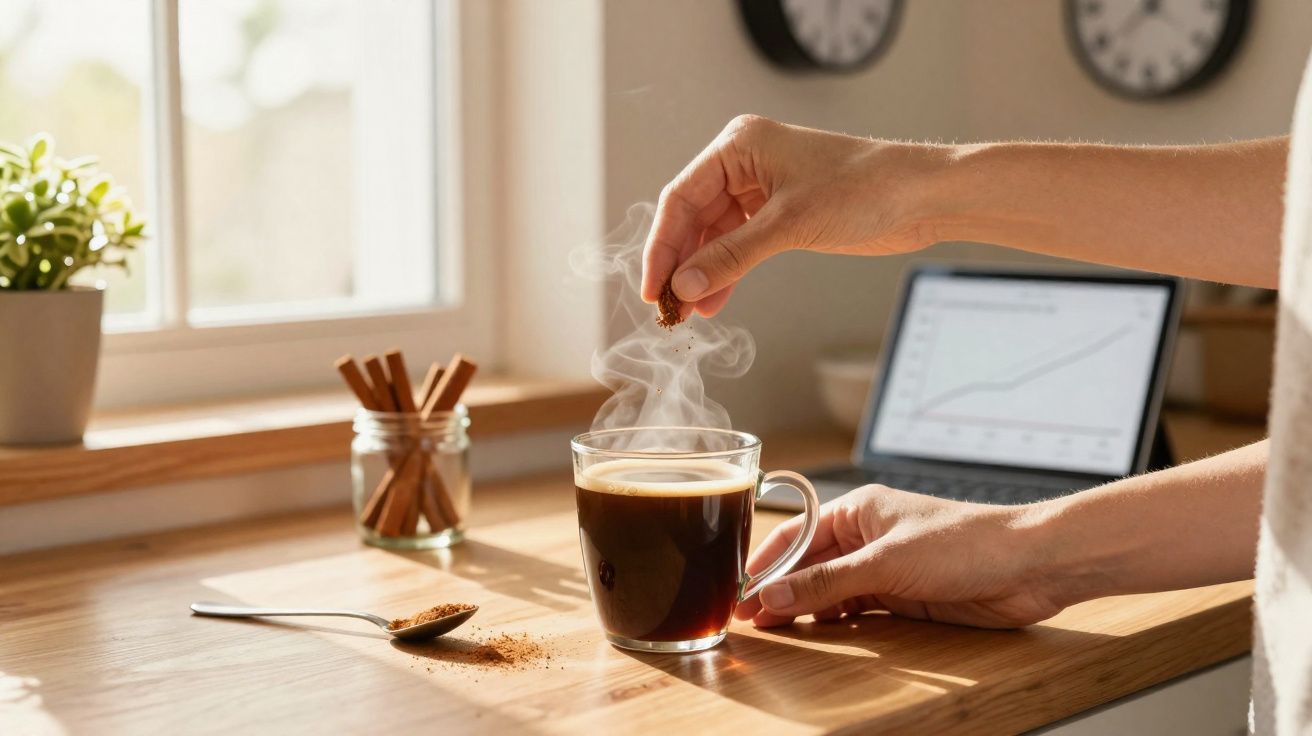
Now picture a slightly different start. Same coffee maker, same mug, same sleepy expression. Before you pour, you add a small pinch of ground cinnamon to the empty cup-about 1/4 teaspoon-and then let the hot coffee run over it. You get that warm, bakery-like aroma without adding a single gram of sugar.
You take a sip. The flavour feels rounder, gently sweet and a bit more “special”, yet you haven’t gone anywhere near the sugar jar.
Cinnamon has been researched for its effects on blood sugar, particularly in people with insulin resistance. Some studies suggest it may help cells respond more effectively to insulin and may slow how quickly carbohydrates are converted into glucose. It’s not magic, but it may be a helpful nudge.
One office worker I spoke to replaced her usual two sugars with cinnamon for three weeks and changed nothing else. Her summary was simple: “I don’t feel superhuman. I just noticed I stopped hunting for snacks at 10:30.”
In practical terms, cinnamon can support mornings in two ways. First, it gives your taste buds that perception of sweetness and warmth, making it easier to reduce sugar without feeling deprived. Second, by smoothing how quickly your drink pushes glucose upward, it can soften the spike–crash pattern.
On a blood sugar graph, a sweet latte can resemble a steep mountain peak. Coffee with cinnamon and less sugar looks more like a gentle hill. When your energy line looks like a hill instead of a roller coaster, the whole morning feels different.
It’s also worth remembering that caffeine can disguise tiredness rather than resolve it. If you’re running on too little sleep, cinnamon won’t fix that-but it can help prevent your first cup from adding a sugar-driven dip on top of an already fragile morning.
How to use cinnamon in your coffee without ruining it
There is one small catch: if you dump in a heaped spoonful of cinnamon, you can end up with something that tastes gritty and thick. Start small. 1/8 to 1/4 teaspoon of ground cinnamon stirred into an empty mug before you pour works best, because the heat helps release the flavour.
If you brew with a French press or filter coffee, you can add cinnamon directly to the ground coffee before brewing. That tends to give a subtler, more evenly distributed taste.
The next part is where many people trip up. They add cinnamon-and keep all the sugar. That’s essentially a pleasant aroma on top of the same metabolic problem. Instead, reduce your sweetener by half for a week and let cinnamon close the “pleasure gap”. If that feels fine, reduce it again.
And yes: nobody does this flawlessly every day. Some mornings will include whipped cream and caramel. That’s life. The aim isn’t perfection; it’s shifting your default coffee to something your body can comfortably “ride” for hours without crashing.
If you find cinnamon clumps or settles, try whisking with a small milk frother or stirring briskly before the first sip. You’ll keep the texture pleasant without increasing sugar.
“Once I started using cinnamon, I stopped thinking about food until lunch,” a nurse told me. “It sounds dramatic for such a small change, but my mornings finally feel stable.”
- Start small
Use just a pinch (1/8–1/4 tsp) of ground cinnamon so your coffee doesn’t turn gritty or overpowering. - Pair it with protein
Add a boiled egg, Greek yoghurt, or a handful of nuts alongside your cinnamon coffee to keep blood sugar steadier for longer. - Choose your cinnamon
Both cassia and Ceylon cinnamon work for flavour. For a daily habit, many people opt for Ceylon (“true cinnamon”) because it’s lower in coumarin.
Rethinking that first cup as a daily lever
There’s something quietly meaningful about the first coffee of the day. It’s a small signal to yourself about what sort of morning you’re setting up: rushed and jittery, or calm and steady. Swapping part of the sugar for cinnamon-and noticing how you feel at 11 a.m.-can be a simple, practical form of self-respect.
Most of us recognise that moment when you catch your reflection in the laptop screen and think, “Why am I this tired already?”
What if coffee stopped being a sticking plaster and became a tool? Not a cure-all-just one gentle push towards steadier mornings and fewer desperate snack hunts. Some people will notice a clear shift; others may feel only a slight difference. Either way, the experiment is low-cost: a spice jar, a couple of extra seconds, and a bit of curiosity.
You may find you yawn less. Or crave sugar less. Or simply that your mood doesn’t swing as sharply as your glucose used to.
This is where nutrition quietly meets everyday life-not through strict diets or complicated routines, but through a warm pinch of something in the drink you were going to have anyway. The question isn’t whether cinnamon will transform your life overnight.
The real question is: what changes in your day if your energy stops crashing before lunch?
| Key point | Detail | Value for the reader |
|---|---|---|
| Add a pinch of cinnamon to coffee | 1/8–1/4 tsp per cup, stirred in before pouring hot coffee | Easy daily habit that can smooth blood sugar spikes |
| Cut back on sugar gradually | Reduce sugar by half while using cinnamon for flavour | Less crash, fewer cravings, without feeling deprived |
| Combine with a simple protein | Pair coffee with yoghurt, eggs, or nuts | Longer-lasting energy and better focus through the morning |
FAQ:
- Does cinnamon in coffee really help with blood sugar?
Research suggests cinnamon can improve how the body handles glucose and insulin, especially in people with higher blood sugar, but it’s a support, not a cure. Think of it as a small helper, not a replacement for medical care or a balanced breakfast.- How much cinnamon should I put in my coffee?
Start with 1/8 teaspoon and increase up to 1/4 teaspoon per cup if you enjoy the taste. Too much can make your drink gritty and unpleasant, so build up gradually.- Is any type of cinnamon okay?
Both cassia and Ceylon cinnamon add flavour, but Ceylon (“true cinnamon”) contains less coumarin, a natural compound that can be an issue in very large amounts. For daily use, many experts prefer Ceylon.- Can I skip breakfast if I drink cinnamon coffee?
You can, but your body will usually do better if you add some protein and healthy fats. Cinnamon helps with blood sugar, but it doesn’t replace actual nutrients or calories.- Is cinnamon safe if I have diabetes or take medication?
Most people tolerate culinary amounts of cinnamon well, yet anyone with diabetes or on blood sugar–lowering medication should speak with their healthcare professional before using it regularly, especially in larger doses.






Comments
No comments yet. Be the first to comment!
Leave a Comment