
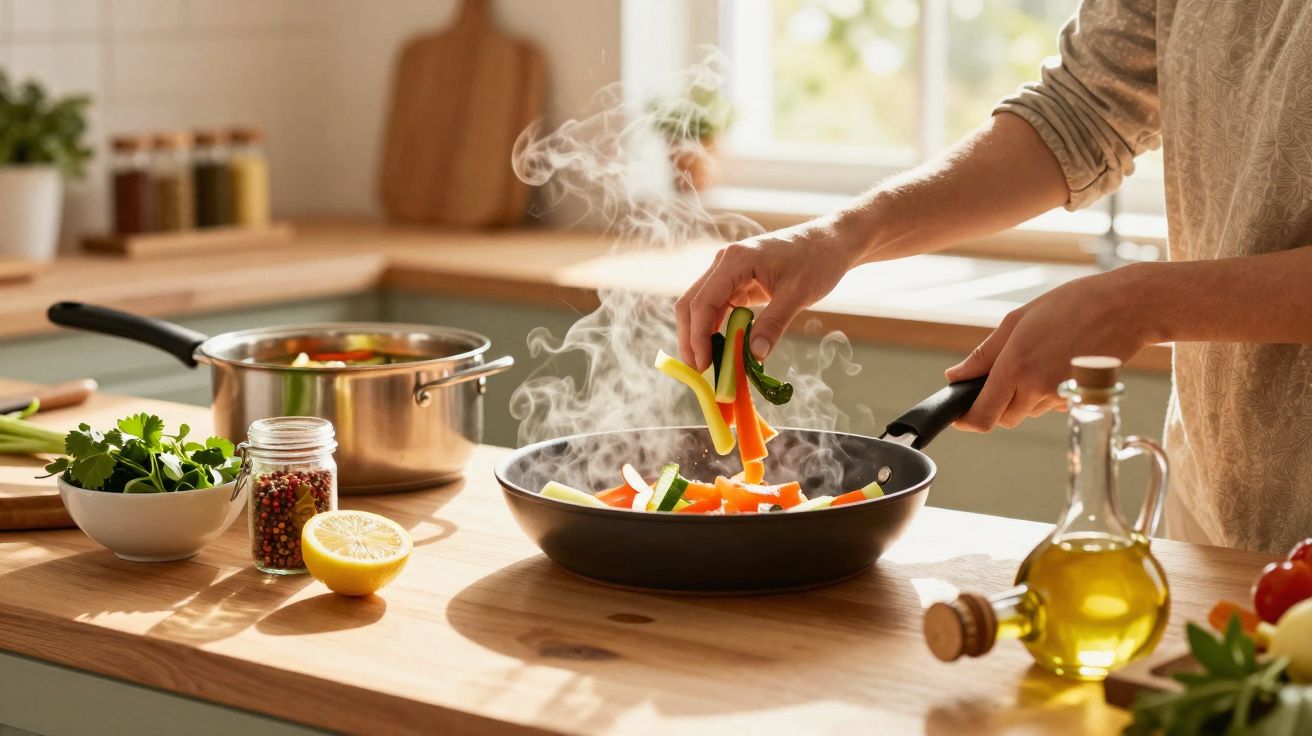
One hand is already drifting towards the olive oil bottle, more from routine than genuine appetite. You pour a generous drizzle, then another “just to be safe”. Ten seconds later, that supposedly light supper looks as though it’s floating.
And then the familiar question arrives: How have I ended up doing this again?
You were aiming for something fresh - the kind of meal that won’t sit heavily after 22:00. Yet the reflex rarely changes: fat for flavour, fat for comfort, fat because you’re exhausted and can’t be bothered to think.
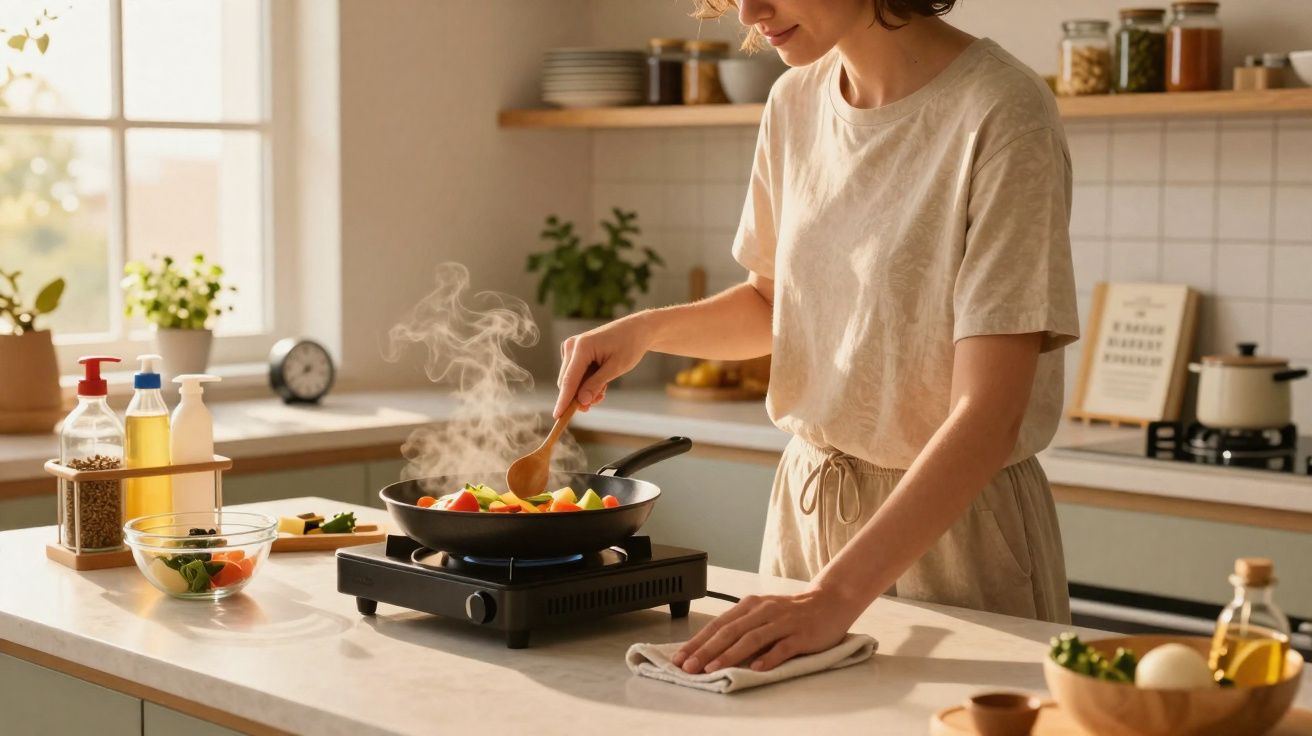
Now replay the scene with one tweak. Same frying pan, same vegetables, same hunger - just without the automatic splash of oil. The aroma still builds. The colours are brighter. And, strangely, you don’t feel as though anything is missing.
That’s when it becomes interesting.
Why we link “tasty” with “fatty” - and how to break the habit
If you watch people cook, it’s often the same pattern: pan on, protein in, a “splash” of oil that quickly turns into a puddle. A bit of salt, maybe pepper, and job done. Fat becomes the easy route - a stand-in for technique and imagination. Many of us were raised to believe that shine equals flavour, and that a dry-looking surface means something has gone wrong.
What tends not to get said is that this is learned behaviour. When food is rich, taste receptors respond, the brain’s reward circuits light up, and the experience gets stored under “good meal, good feeling”. It’s not just calories we’re drawn to - it’s association. So when we feel tired, stressed or low, our hand reaches for what feels comforting: oil, butter, cream.
One number is often enough to make people pause: one tablespoon (about 15 ml) of oil is roughly 120 calories - for something that’s basically a mouthful. Add a “little drizzle” at the beginning, then another at the end “for shine”, and you can easily hit 300 calories that barely register as taste. Restaurants do this constantly and label it generosity.
Home cooks copy the same approach, assuming it’s the only path to that deep, cosy flavour. But blind tastings often reveal something else. When a dish is built with technique rather than extra fat, many people can’t reliably identify which version is “lighter”. What they do notice is when food tastes dull, is under-seasoned, or is overcooked. Most of the time, the issue isn’t a lack of fat - it’s everything surrounding it.
So the better question isn’t “How do I eat with less fat?” It’s “How do I stop making fat do all the work?” Once that mindset shifts, cooking starts feeling experimental again. Heat, timing, texture, acids, herbs, smoke - these are the real building blocks of flavour. Oil then moves from starring role to supporting act, and meals become both lighter and more compelling.
Light cooking techniques: how to build flavour without adding a drop of fat
The most overlooked “healthy cooking” skill has nothing to do with dieting: it’s controlling heat. Roast vegetables dry on a tray at a high temperature - around 220°C - with just salt and spices, and you’ll get a transformation no spoonful of oil can mimic. The edges caramelise, moisture steams off, and the flavour intensifies. A carrot’s sweetness and a cauliflower’s nuttiness aren’t gifts from fat; they come from heat and time.
The same logic applies to meat and fish. Start with a properly heated non-stick pan or a well-warmed cast-iron skillet and allow the surface to sear on its own. Resist the urge to shuffle it around; give it time to form a crust. That browned crust is flavour. Then, instead of finishing with a butter bath, lift the pan with a splash of stock, lemon juice or soy sauce. On a busy weeknight, that’s the difference between “diet food” and a meal you’d actually want to repeat.
A straightforward way to escape the oil habit is to bring flavour in earlier. Marinades don’t need to be oily to work. Yoghurt, lemon, garlic, mustard, spices, grated onion, even blended tomato - these stick to food and season it gradually. Leave a chicken breast for two hours in yoghurt and paprika and it comes out tender, tangy and well-seasoned, even if you cook it on a dry grill afterwards.
Vegetables take to the same approach. Coat courgette with soy sauce, garlic and smoked paprika, then roast on baking parchment with no added fat. You’ll end up with bronzed, savoury slices that feel almost indulgent. Or soften onions gently with a splash of water rather than oil, letting them collapse and sweeten. As they catch slightly on the pan, deglaze with water or vinegar and keep going. That sticky, browned fond is often what your palate is truly hunting for.
A small mental switch changes everything: replace “Which fat should I use?” with “Which flavour am I aiming for?”
Want something bright and punchy? Reach for lemon, vinegar, fresh herbs.
After something deep and comforting? Use toasted spices, garlic, slow-cooked onions, a spoonful of miso stirred into broth.
Craving smoky and bold? Choose paprika, charred peppers, grilled vegetables, a dash of soy.
Once you can name the flavour, you stop reaching for oil by default. You reach for the tools that actually create the taste: acid, salt, umami, heat, texture. Oil may still appear - but in smaller amounts, as a carrier rather than the boss.
Simple, real-life ways to cook lighter without feeling punished
A practical tactic is to move fat from the cooking stage to the finishing stage. Rather than pouring oil into the pan, cook with stock, water or the ingredient’s own juices, then add a teaspoon of a flavourful fat right at the end. A few drops of toasted sesame oil over steamed vegetables can taste more powerful than a whole tablespoon that was heated from the start.
Lean into “wet” methods: steaming, poaching, simmering. On paper they can sound bland, but they become exciting when you build in aromatics. Steam fish over ginger and spring onions. Poach chicken with garlic, bay leaves and peppercorns. Simmer lentils with cumin, onion and a small spoon of tomato purée. The liquid you create becomes a free sauce - full of flavour, without needing oil.
Then add texture after cooking. Crunchy seeds, toasted spices, fresh herbs, shaved raw vegetables: these toppers give your mouth something to explore, and they make the absence of extra fat far less noticeable. A plain bowl of vegetables can feel like an afterthought; the same bowl finished with lemon zest, chopped parsley and a sprinkle of toasted sunflower seeds can pass as a proper dinner.
Many people who insist “healthy cooking is bland” are caught in two common traps. First, they hold back on salt because they assume low-fat and low-salt are the same mission. They aren’t. Second, they rely on the same two seasonings - pepper and a jar of dried herbs that should have been binned years ago. Their taste buds aren’t mourning missing fat; they’re bored.
A moment of honesty helps: nobody cooks like a test kitchen every evening. You get home shattered, you want something quick, and the oil bottle is the nearest shortcut. That’s real life. So don’t chase perfection - aim for small, repeatable shifts.
For instance, choose three “house flavours” and keep them ready: a lemon–garlic–herb mix, a smoky paprika–cumin blend, and a jar of pickled onions. These small flavour bombs can turn a basic plate of grains and vegetables into something you’d happily serve to a friend. After a few nights of noticing the difference, the fear of “missing fat” starts to loosen.
One extra practical layer: make the default measurable. Keep a teaspoon on the counter, decant olive oil into a small bottle, or use a refillable spray mister so “a drizzle” doesn’t become an unconscious pour. The goal isn’t to ban olive oil - it’s to stop using it on autopilot.
It also helps to set yourself up with fast flavour that doesn’t rely on fat: lemons, vinegars, mustard, capers, soy sauce, miso, harissa, and a couple of fresh herbs. When those are within reach, you’re far less likely to try to “fix” a flat meal with extra oil at the last minute.
“I stopped drowning everything in olive oil when I realised what I was really missing wasn’t fat - it was character,” said a nutritionist-chef who quietly changed the way her whole family eats. “Now I put my effort into seasoning, not pouring.”
There’s also an emotional truth that’s easy to ignore. After a difficult day, a glossy, oily plate can feel like a hug. Most of us know the moment when something greasy feels simpler than dealing with the fridge. The aim isn’t to eliminate that with sheer willpower; it’s to offer your brain other kinds of comfort that don’t end in a food hangover.
- Keep a “comfort soup” in the freezer - packed with vegetables and spices - that warms you up as quickly as any takeaway.
- Refresh leftovers with acid and crunch instead of cheese and cream: lime, herbs, chopped nuts.
- Use water as your cooking ally: steaming, poaching and deglazing create depth without a gram of added fat.
- Treat small, intense fats as accents: a spoonful of pesto, a drizzle of sesame oil, a little nut butter stirred into a sauce.
- Think in flavours, not rules. Rules are draining; flavours are enjoyable.
Light cooking as a long game, not a three-day challenge
Something quietly transformative happens when “eating light” stops being a short punishment and becomes simply how you cook. There’s no countdown and no “after this week I’ll go back to normal”. Your kitchen gradually shifts on its own. You buy less oil without making a fuss about it. You get through lemons and fresh herbs at a ridiculous rate. Your spice drawer starts to look like the best aisle of a small grocer.
It changes the social side too. When you cook for others and serve food that’s full of flavour without being smothered in fat, nobody leaves talking about calories. They talk about the roasted carrots with cumin and orange zest, or the broth that tasted as if it had been simmering for hours. You become the person who cooks “light, but actually good” - and that reputation tends to stick.
Day to day, the benefits often show up before any number on a scale. Fewer afternoons with that heavy-lunch haze. Evenings when a late meal doesn’t wreck your sleep. A body that feels less weighed down and more comfortable to live in. Your weight may change or it may not, but the lived experience usually improves first - and that’s what keeps people returning to these habits.
What tends to last isn’t a strict list of rules; it’s a small set of meals that become rituals: the tray of deeply roasted vegetables you slide into the oven while you kick off your shoes; the stock-based pasta that comforts without flattening you; the baked fruit with spices that replaces your old dessert on nights you want something soft and sweet. No slogans, no dramatic declarations - just a quieter way of eating that lets you enjoy flavour without paying for it twice.
| Key point | Detail | Why it matters to you |
|---|---|---|
| Cook with heat, not with fat | Roast, grill, poach and steam to concentrate flavours naturally | Eat lighter while still making meals that smell good and genuinely appeal |
| Move fat to the finishing touch | Add small amounts of fat at the end instead of cooking everything in it | Cut calories sharply without losing the sense of indulgence |
| Rely on “flavour accents” | Use acids, herbs, spices, crunchy textures and aromatic broths | Turn so-called “light” food into cooking that feels lively and satisfying |
FAQ
- Can you really cook without any added fat and still enjoy your food?
Yes - provided you lean on high-heat roasting, confident seasoning, acids (lemon, vinegar), herbs, and umami sources such as soy sauce or miso. Fat becomes optional rather than the main driver of taste.- Will non-stick pans solve everything for low-fat cooking?
They help, particularly for eggs and delicate fish, but technique still matters most: preheat properly, don’t overcrowd the pan, and use liquids to deglaze so you build flavour without oil.- Is all fat “bad” when you’re trying to eat lighter?
No. Small amounts of good-quality fats (olive oil, nuts, seeds, avocado) can support health and enjoyment. The real issue is unconscious, repeated pouring that adds up quickly.- How do I avoid that “diet food” feeling?
Prioritise bold flavour and texture: toasted spices, lots of herbs, crunchy toppings and bright acidity. Here, boredom is a bigger enemy than calories.- What’s one easy change to start this week?
Choose one daily meal and cook it with no oil in the pan, then finish with just a teaspoon of a flavourful fat plus lemon juice and herbs. Pay attention to how satisfying it can be with far less.

Comments
No comments yet. Be the first to comment!
Leave a Comment