
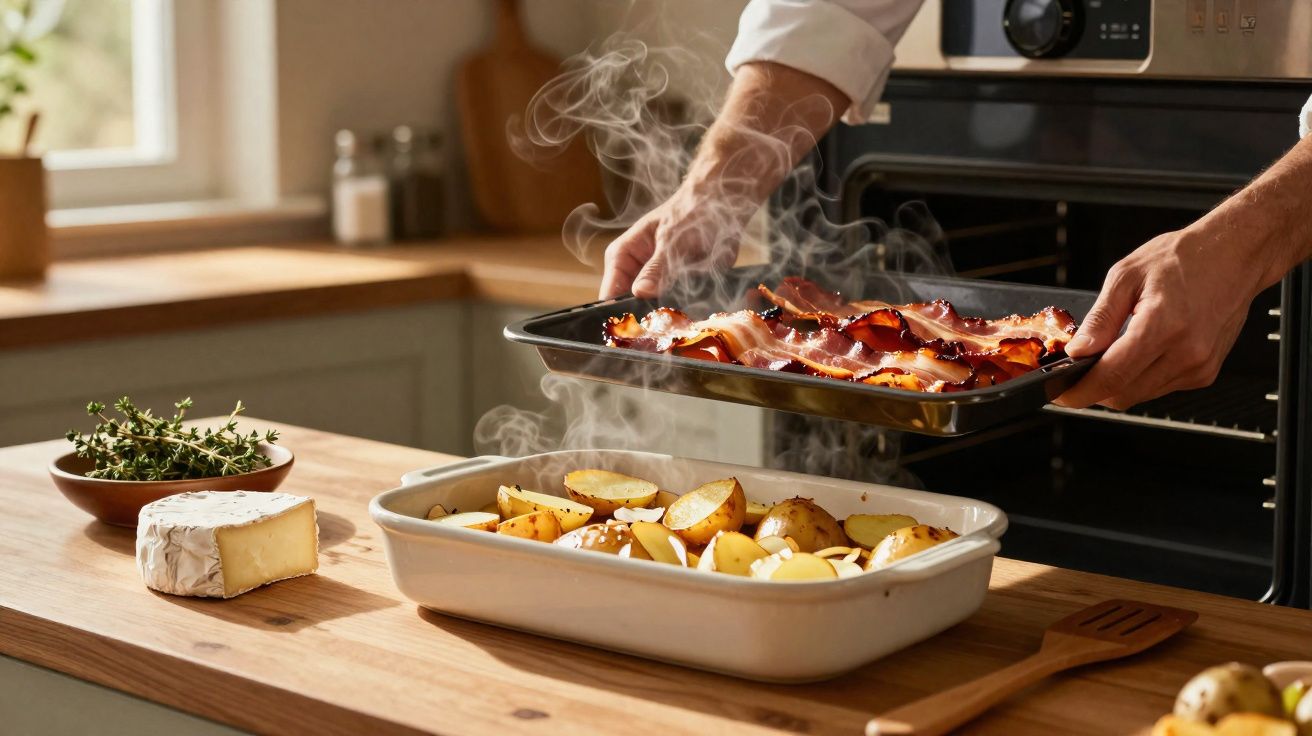
Across Alpine ski resorts and modest city kitchens alike, one unassuming ingredient often decides whether tartiflette eats like a leaden, greasy bake or lands as something deeply smoky, moreish and hard to stop at a single serving.
What makes tartiflette special (and why bacon matters)
Tartiflette, a classic from the French Alps, sounds disarmingly simple: potatoes, onions, bacon, melting cheese-most often Reblochon-baked until blistered and golden. But despite its rustic reputation, the balance in the dish is surprisingly delicate.
Cheese supplies richness and punch, potatoes provide body, and onions bring a soft sweetness. Bacon-called lardons in the traditional French version-acts as the thread that pulls everything together, adding saltiness, smokiness, chew and a touch of crispness that keeps the bake from tasting one-note.
Comforting and relaxed, or an oily brick? With tartiflette, the way you cook the bacon frequently determines which one you serve.
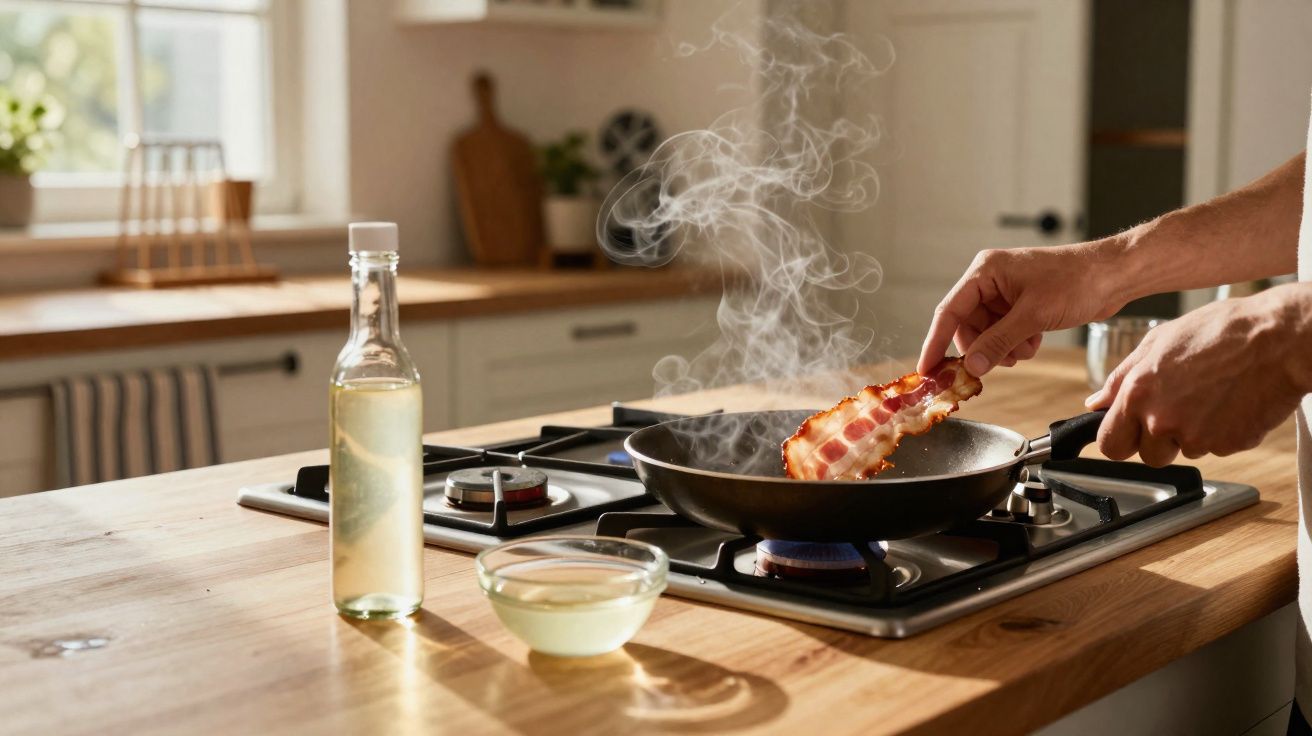
Many home cooks default to frying bacon on the hob and hoping it behaves. The results can be inconsistent: leave it too long over high heat and it turns tough with bitter, scorched edges; under-colour it and it stays pallid, leaks fat into the bake and makes everything feel heavier than it needs to.
That frustrating gap between “nearly there” and “this is exactly it” is why more cooks are switching to a quieter, surprisingly contemporary fix: roasting the bacon in the oven before it ever touches the potatoes.
Why the frying pan lets tartiflette down
Cooking bacon in a pan feels intuitive: you watch the fat render, listen to the sizzle and tweak the heat as you go. But if your goal is restaurant-quality tartiflette at home, the pan method often introduces problems you only notice once the dish is baked.
- Heat distribution is uneven in most domestic frying pans, so one side burns while the rest steams.
- You’re anchored to the hob, fiddling with the heat instead of prepping potatoes or slicing onions.
- Rendered fat tends to sit around the bacon, then gets tipped straight into the baking dish.
- Frequent stirring breaks small pieces up, so they lose their bite and disappear into the cheese.
Those issues show up later as orange-tinted pools of fat creeping up the sides, cheese that loses definition, and potatoes that slide from tender into vaguely greasy mush.
A calm upgrade: oven-roasted bacon for tartiflette
Moving bacon from pan to oven might sound like a minor tweak. In practice, it alters both flavour and texture across the whole tartiflette.
How to roast bacon for tartiflette
This approach works with thick-cut bacon rashers, lardons, or diced smoked pancetta. The essentials are even heat and enough space for hot air to circulate.
- Heat the oven to about 200°C (a fairly hot oven helps the bacon colour without drying out).
- Line a baking tray with baking parchment or plain foil to catch the fat and simplify the washing-up.
- Arrange the bacon in a single layer, leaving gaps so it roasts rather than steams.
- Roast for 10–15 minutes, checking from 10 minutes onwards. Take it out when the edges are browned but the centres still look slightly plump.
- Transfer to kitchen paper so excess fat drains before you add it to the tartiflette.
Aim for “golden edges, juicy centre”, not “bacon cooked until brittle”. That contrast keeps each forkful interesting.
Why the tray beats the pan
Roasting gives you control without constant hovering. The bacon cooks more evenly, without crowded corners that never quite catch up. Fat drips away and collects on the tray instead of surrounding the meat.
The knock-on effect is significant: well-rendered bacon tastes cleaner and smokier, so the cheese doesn’t have to battle an oily slick. The potatoes take on flavour rather than grease, and the layers stay distinct instead of collapsing into one rich-but-dull mass.
How better bacon changes the whole dish
Once the bacon is roasted properly, the rest of tartiflette tends to fall into line. Using the same ingredients, the finished bake can feel brighter, less tiring and more structured.
| Element | With pan-fried bacon | With oven-roasted bacon |
|---|---|---|
| Cheese | Can split and sit in pools of fat | Melts smoothly, flavour stays focused |
| Potatoes | Can turn greasy and heavy | Stay soft but defined, take on smoky notes |
| Overall bite | Rich but flat, similar texture throughout | A mix of soft, chewy and gently crisp |
Most guests won’t immediately identify what you changed. They’ll simply register that the tartiflette is satisfying without being exhausting-finishing a plate still leaves you wanting “just one more spoonful”, even if you know you probably shouldn’t.
Step-by-step: tartiflette built around roasted bacon (with Reblochon)
If you want a clear workflow, here’s how roasted bacon fits into a full tartiflette-whether you use Reblochon or a similar washed-rind cheese you can buy locally.
1) Get the base ready
- Parboil waxy potatoes in salted water until just tender, still slightly firm in the centre.
- Slice the onions and cook them slowly in a little butter or oil until soft and golden-avoid taking them so far they turn bitter.
- Roast the bacon on a tray using the method above, then drain it. If you’d like an extra hit of flavour, keep a spoonful of the rendered fat and use it to cook the onions.
2) Layer with purpose
Lightly grease a baking dish. Build in repeating layers: potatoes, onions, bacon, then chunks or slices of cheese. Continue until the dish is filled, finishing with cheese on top.
Some cooks add a splash of white wine or a spoonful of cream between layers. That’s down to how indulgent you want the result and how assertive your cheese is. Because roasted bacon brings less clinging fat, you have more freedom to choose without tipping the whole dish into greasiness.
3) Bake until bubbling, then rest
Bake in a medium-hot oven until the cheese has melted, the edges have caramelised and you can see small bubbles around the sides. Let it stand for a few minutes before serving so it thickens slightly and holds together better on the plate.
Give tartiflette a short rest after baking. Five quiet minutes sharpen the flavours and stop the cheese racing across the plate.
Choosing ingredients in the UK: potatoes, cheese and serving
If you’re cooking tartiflette in the UK, it’s worth treating the potatoes as more than filler. A waxy variety that holds its shape after parboiling will keep the final bake defined rather than slurry-like. Slice evenly so the layers cook at the same pace and you don’t end up with a mix of collapsing rounds and underdone chunks.
For cheese, Reblochon remains the benchmark for tartiflette, but availability can vary. If you can’t find it, look for a washed-rind cheese with a similar creamy melt and savoury depth (and consider choosing a pasteurised option if that suits your household). Whatever you use, keep the goal the same: a cheese that melts smoothly and tastes robust enough to stand up to smoky bacon and sweet onions.
To serve, a sharp green salad (think mustardy vinaigrette) helps cut through the richness. Cornichons or other pickles work brilliantly alongside too, adding acidity and crunch that the dish itself doesn’t provide.
Beyond tartiflette: a smarter way to cook bacon day-to-day
Once roasting bacon becomes your default, it rarely stays confined to one Alpine bake. The same tray method suits everyday dishes that often suffer from greasy, unevenly cooked bits of cured meat.
- Quiche Lorraine: roasted bacon keeps the custard cleaner and helps prevent a soggy base.
- Carbonara-style pasta: crisp, well-rendered pieces deliver more flavour, so you can often use less.
- Salads: warm bacon shards stay crunchy for longer and won’t flood the dressing with fat.
- Brunch eggs: you can cook a full tray for a group without fighting for pan space.
From a health perspective, it’s still cured meat, so moderation is sensible. That said, blotting the bacon on kitchen paper removes a noticeable amount of surface fat, which matters most in already-rich dishes. Because roasting concentrates flavour as moisture (and some fat) leaves the meat, you may find you can reduce the quantity slightly without feeling short-changed.
Practical tips, common pitfalls and useful variations
Two mistakes are more common than the rest. The first is overcooking: thin rashers can go from ideal to rigid in about a minute, so start watching the tray from 8–9 minutes. The second is overcrowding. If the pieces touch or overlap, they’ll steam and stay floppy.
If you’re keeping an eye on salt, smoked bacon can deliver a big hit even in smaller amounts. Balancing it with a milder cheese, or using low-salt stock when cooking the potatoes, can keep the dish in check. Some cooks blend smoked and unsmoked bacon to fine-tune intensity.
To take the tray method further, season raw bacon with cracked black pepper, thyme or a tiny pinch of paprika before roasting. The oven heat “blooms” the spices and carries that flavour straight into the tartiflette with no extra work. Another variation is swapping standard streaky rashers for thicker, slab-cut pieces, giving a meatier chew that can stand up to molten cheese.
If you like batch cooking, oven-roasted bacon stores well: roast a larger tray, cool completely, then refrigerate for a few days. It reheats quickly in a dry pan or can be added straight into an oven-baked dish. That small bit of prep can turn a midweek tartiflette, quiche or breakfast bake into a realistic option rather than a weekend-only project.




Comments
No comments yet. Be the first to comment!
Leave a Comment