
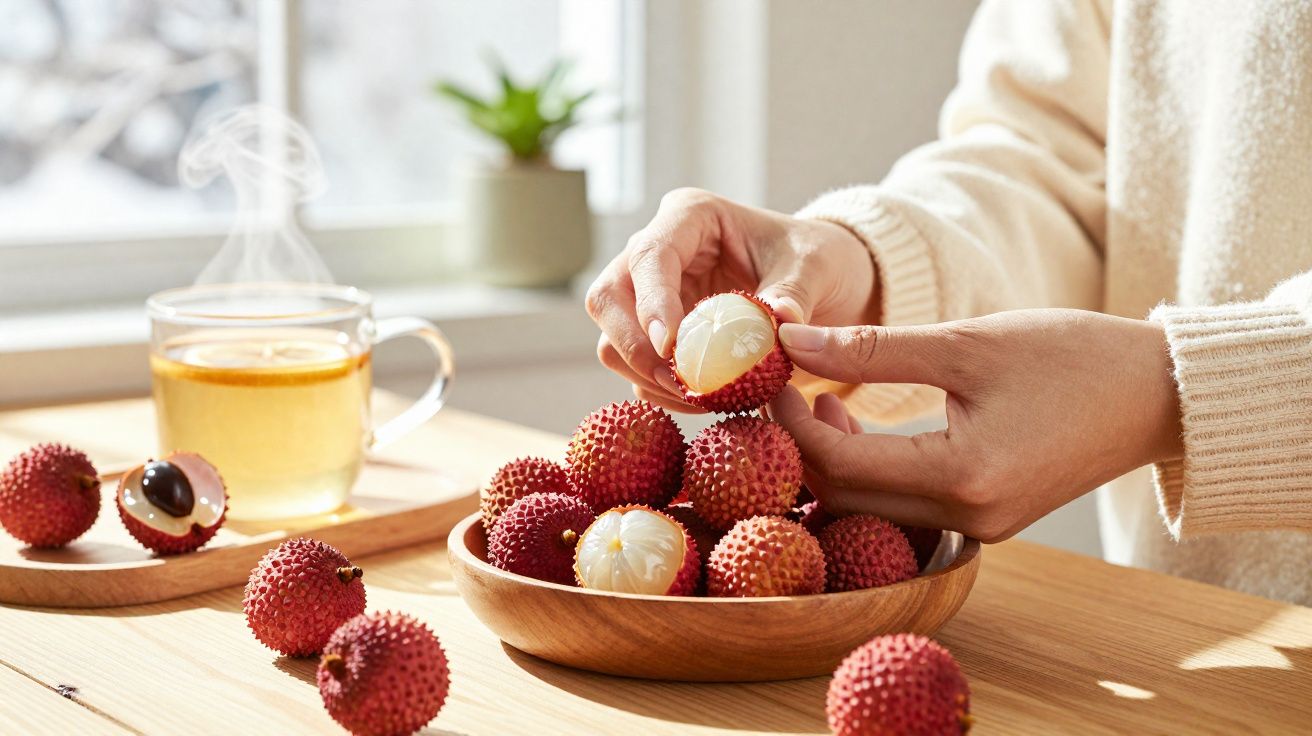
Every December, a small, pink-skinned fruit quietly appears on festive tables, wedged between the clementines and the chocolate tins.
Glossy, fragrant and slightly enigmatic, the lychee has become a low-key end-of-year favourite across Europe and the United States. Under its exotic reputation and floral sweetness, this seasonal nibble comes with a few genuine health advantages that have nothing to do with how pretty it looks.
Beneath its attractive shell, the lychee delivers hydration, vitamin C, minerals and fibre in only a small handful of fruits.
So it deserves a place on the Christmas fruit platter for more than decoration alone.
Lychees, the unexpected winter guest
In France and much of Europe, lychees have become a December staple, turning up in supermarket crates alongside pineapples and mangoes. Most are shipped in from Asia-particularly Vietnam-although some also arrive from Réunion Island, France’s overseas department in the Indian Ocean.
Fresh lychees are petite, roughly the size of a large grape, with a bumpy pink-red rind. Once peeled, they reveal translucent white flesh surrounding a single shiny brown stone. The flavour is perfumed, sweet and slightly sharp-often compared to a blend of grape, rose and pear.
One practical note for shoppers: lychees are also widely sold tinned, usually in syrup. They can still be enjoyable, but they tend to contain more added sugar and lack some of the fresh fruit’s fragrance-so if you are buying lychees for their nutrients, fresh is the better choice.
1. A light, refreshing fruit that won’t blow your calorie budget
Dietitians are generally comfortable with lychees during party season because their calorie content is fairly modest. A typical 100 g portion-about six to seven fruits-contains around 65 kcal.
Most of that energy comes from naturally occurring sugars, mainly glucose and fructose, which are absorbed quickly. If you are trying to rein in rich desserts, replacing a second slice of cake with a small bowl of lychees can noticeably reduce your overall daily energy intake.
- About 6–7 lychees = 100 g
- Energy: ~65 kcal per 100 g
- Water: high content, useful for hydration
Because lychees contain plenty of water, they feel especially juicy after salty festive foods or alcohol. That fluid helps support basic hydration, which is easily overlooked during celebrations built around rich dishes and drinks.
2. A handy boost of vitamin C in cold season
December brings cold weather and circulating viruses across much of the northern hemisphere. Lychees are not a “miracle” cure for colds, but they do provide a worthwhile amount of vitamin C.
A 100 g portion supplies close to 19 mg of vitamin C, which works out at roughly 17% of an adult’s recommended daily intake. That is about half of what you would get from the same weight of clementines, yet it still makes a meaningful contribution when combined with other fruit and vegetables across the day.
Lychee’s vitamin C supports immune defences and helps the body produce collagen, an essential protein for skin and connective tissues.
Collagen is involved in skin elasticity and wound repair. In winter-when skin is challenged by cold outdoor air and dry indoor heating-regular vitamin C from a range of foods (including lychees) can support skin health alongside moisturiser and good sleep.
3. Potassium for nerves, muscles and heart
Lychees also contribute to mineral intake, especially potassium. A 100 g serving provides around 200 mg of potassium, or about 6% of an adult’s daily requirement.
Potassium helps maintain fluid balance, supports normal nerve signalling and contributes to healthy muscle function, including the heart. When kidney function is normal, diets with a variety of potassium sources are linked with improved blood pressure control.
Lychees will not replace bananas or potatoes as key potassium providers, but they can help top up your overall intake-particularly if you already eat plenty of vegetables and simply want fruit-based variety.
4. Quick energy… with a few caveats
Lychee’s sweetness comes from its natural sugars. With around 16 g of carbohydrates per 100 g (mostly glucose and fructose), it offers fast energy. That can suit:
- a mid-afternoon slump at work when you want something lighter than biscuits
- a quick snack before a walk or a gentle workout
- a way to satisfy a sweet craving without reaching for pastries
That same sweetness is also why portion size matters. If you have diabetes or your blood sugar is unstable, treat lychees like any other sugary fruit: keep servings controlled and eat them as part of a balanced meal rather than in large amounts on an empty stomach.
Enjoy lychees in small handfuls, not by the bowlful-particularly if you need to watch blood sugar or weight.
5. Modest fibre for digestion and satiety
Despite their delicate flesh, lychees provide around 2 g of fibre per 100 g. It is not a huge quantity, but it can still support regular bowel movements and help you feel fuller after eating.
Fibre can slow sugar absorption to a degree, nourish beneficial gut bacteria and assist with appetite regulation. Pairing lychees with other fibre-rich foods-such as oats, plain yoghurt or nuts-can turn them into a more satisfying snack that keeps hunger at bay for longer.
What lychees don’t provide
Even though their flesh is pearly white, lychees are not a significant source of beta-carotene, the pigment associated with orange and yellow produce. They also contain very little fat and only moderate amounts of most other vitamins and minerals.
That does not make them nutritionally unimportant; it simply means they are best seen as a pleasant addition to a varied diet rather than a cornerstone food. Depending on lychees alone for vitamins would be no wiser than trying to live on oranges-or apples-by themselves.
How to choose and store fresh lychees
Fresh lychees remain the best option if you want to benefit from their nutrients and distinctive aroma.
Choosing good fruits
Look for lychees with:
- an unbroken shell, with no cracks or mould
- a pink-to-red colour rather than brown or grey
- a firm, slightly springy feel (not shrivelled skin)
Overripe fruit often has a darker, wrinkled rind and may taste slightly fermented. That can be unpleasant and may upset sensitive stomachs, so it is best avoided.
Storage tips
At home, lychees will keep for up to about two weeks in the fridge. Store them in the vegetable drawer, ideally in a perforated bag so a little air can circulate.
Peel lychees only just before eating or cooking to protect their juicy flesh and fragrance.
Lychees can also be frozen once peeled and de-stoned. Freeze them on a tray first, then transfer to a container. After thawing, the texture becomes softer, but they work brilliantly in smoothies and sorbets.
A simple safety reminder: the stone is not edible and can be a choking hazard-particularly for children-so always remove it before serving.
Serving ideas and pairings
Lychees are often presented plain, chilled in a bowl of ice at the end of a large meal, but they are versatile:
- stirred through a fruit salad with clementines, kiwi and pomegranate
- blitzed into a sorbet with lime juice and a little mint
- added to lightly spiced stir-fries with chicken or prawns
- mixed into sparkling water for a festive non-alcoholic drink
Their floral character works especially well with ginger, lime, vanilla and coconut. In savoury cooking, they pair neatly with white meats and delicate fish, where their sweetness can balance salt and gentle spices.
Who should be careful with lychees?
Most healthy adults can eat lychees without any particular worry, but a few people should take extra care:
- People with diabetes: keep portions small and include lychees within a meal.
- Those prone to digestive issues: large amounts may cause bloating or discomfort due to the sugars and fibre.
- Individuals with known fruit allergies: allergic reactions to lychee are rare, but any new symptoms (itching, swelling, breathing difficulty) after eating them should prompt medical advice.
Children should only be offered ripe, peeled lychees with the stone removed, and in moderate amounts-just as with any sweet fruit.
Putting lychees into a balanced day
To see how lychees might sit within a winter day’s eating, picture a simple routine like this:
- Breakfast: porridge with nuts and a sliced banana.
- Lunch: vegetable soup, wholegrain bread, a piece of cheese.
- Afternoon snack: a small bowl of 5–6 lychees with plain yoghurt.
- Dinner: grilled fish, roasted vegetables and a side of brown rice.
In this example, lychees add flavour and variety without throwing the day off balance. They provide sweetness in place of ultra-processed biscuits or chocolate bars, while the rest of the meals cover protein, fats and a broader range of micronutrients.
For anyone wondering about naming: “lychee” can mean both the fruit and the tree, which originates in southern China. You may also see the spelling “litchi”. Nutritionally, there is no difference-on labels and menus, both words refer to the same fruit.






Comments
No comments yet. Be the first to comment!
Leave a Comment