
You swing open the fridge, half-hoping something dinner-like will appear, and find a lonely half carrot, a dribble of milk, and a mystery tub you no longer fully trust. The shops are a bus ride away. Your takeaway apps are already whispering at you from your phone, with service fees baked in. Your stomach makes the first decision.
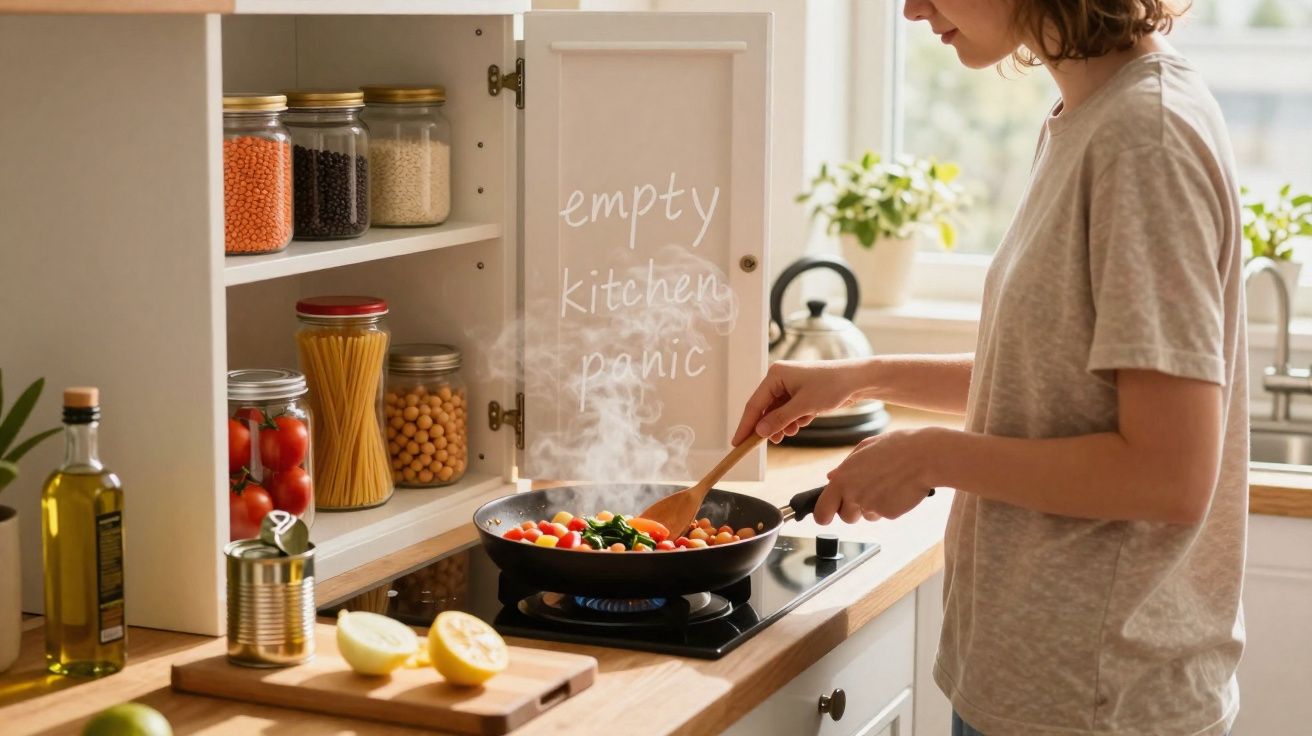
So you drift to the cupboard instead. A battered tin of chickpeas. Some pasta. A jar of peanut butter with a spoon groove carved into the top. A carton of passata you bought “for later” about three months ago. It doesn’t look like a plan. And yet, 20 minutes later, the kitchen smells like you meant to do this.
A bowl that’s steaming, colourful and properly filling. No showy ingredients, no £50 grocery run. Just what you already had. That’s the quiet superpower of pantry food: it turns “there’s nothing in” into something you genuinely want to eat. And that’s where it starts to get good.
From “empty kitchen” panic to genuinely satisfying meals
The weird magic of cooking from the pantry is how fast dread turns into play. One moment you’re scanning tins and dried bits feeling slightly beaten. The next, your brain is matching patterns: beans with tomatoes, oats with eggs, rice with anything punchy. It becomes a low-pressure puzzle you didn’t realise you could solve.
Balanced meals don’t need to look like a diagram to do their job. A tin of lentils, an onion, and a dollop of yoghurt can be as complete as a posh farm-shop basket. Once you stop seeing the cupboard as random clutter and start seeing building blocks-protein, carbs, fats, flavour-the whole kitchen feels different. You’re back in control.
A London nutritionist I spoke to recently said loads of her clients assume they eat badly because they “cook from packets”. Then she takes a look and finds tinned mackerel, chopped tomatoes, sweetcorn, kidney beans. She laughs and tells them they’re “accidentally doing it right”.
Then there’s the student in Manchester who lived on instant noodles until he started cracking in an egg, chucking in frozen peas and stirring through a spoonful of crunchy peanut butter. Overnight, a 40p snack turned into a bowl with protein, veg and healthy fat. Tiny tweak; massive payoff.
Survey data from UK households suggests the average cupboard contains enough dried and tinned food to feed everyone for at least a week. That isn’t just “emergency supplies”. That’s seven days of potential dinners you’ve already paid for, sitting quietly until you use them.
The thinking behind these cupboard “miracles” is simpler than most recipe books make out. Build meals in three parts: something to fill you, something to build you, and something to keep you going. Carbs, protein, fats. Pasta, beans, oil. Rice, eggs, cheese. Oats, yoghurt, peanut butter.
Then bring in colour and crunch from anything vaguely vegetable: tinned tomatoes, frozen spinach, the onion rolling around in the drawer. Heat, acid and salt are what take food from “fine” to “wow”: chilli flakes, vinegar, lemon juice, mustard, soy sauce. They’re not optional extras-they’re the shortcut to meals that taste like a choice, not a compromise.
When you start cooking by hand movements-a glug, a spoonful, a pinch-rather than obsessing over exact grams, you cook more often. And when you cook more often, even with basic pantry staples, your meals quietly become more balanced than most supermarket meal deals.
One extra thing that helps: treat your cupboard like a system, not a storage unit. Put newer tins behind older ones, label opened jars with the date, and keep a small “use first” zone for anything that’s been hanging around. A 30-second shuffle once a week saves money and stops good food becoming waste.
Simple formulas for pantry cooking: turning random tins into real dinners
There’s a dependable method that turns almost any cupboard into an actual dinner: pick a base, a protein and a flavour bomb. Think of it as your three-step safety net for the “what on earth do I eat tonight?” moment. It works on a Tuesday at 21:00, it works when money’s tight, and it works when you’re too tired to scroll through recipes.
Start with a base-pasta, rice, couscous, noodles, oats, bread-something inexpensive that makes the meal substantial. Then choose a protein: beans, lentils, chickpeas, eggs, tinned fish, tofu, even leftover roast chicken from the freezer. Finally, add a flavour bomb: curry paste, pesto, peanut butter, soy sauce, miso, harissa, or simply garlic and onion sizzling in oil.
Cook the base, warm the protein with oil and flavour, then bring everything together with a splash of pasta water, stock, or tinned tomatoes. It’s not restaurant technique. It’s practical food algebra that works again and again.
Here’s what that looks like on a normal weeknight. You arrive home late, open the cupboard and find: dry pasta, a tin of cannellini beans, half a jar of pesto, and a limp lemon. Ten minutes later you’re eating hot pesto bean pasta. You lightly mash the beans into the pesto with a fork, loosen it with pasta water until it turns glossy, then squeeze over lemon to lift the whole thing.
Or perhaps it’s rice, a tin of chickpeas, frozen spinach and a solitary onion. Soften the onion, add curry powder or garam masala, tip in chickpeas and spinach, then add a splash of coconut milk-or plain water if that’s what you’ve got. Spoon it over rice. Not glamorous. Completely real. A solid dinner.
Soy sauce, oats and eggs can become savoury porridge with a fried egg on top-everyday food in many Asian households, and a revelation if you’re used to sweet breakfasts. You’re looking at 10 minutes for a warm, salty, protein-rich bowl that costs less than a bus fare.
This approach works because it respects how people actually live. Most of us aren’t roasting three vegetables and toasting seeds every evening. Let’s be honest: hardly anyone truly does that every day.
Pantry staples are patient. They sit there. They don’t judge you for living on toast three nights running, then suddenly deciding to make chickpea shakshuka at 22:00. They give you routine when life is messy, and flexibility when plans collapse. You start noticing how a spoon of peanut butter makes bland noodle soup taste rich, or how a splash of vinegar wakes up a flat lentil stew.
At that point, a balanced meal stops feeling like a moral achievement and becomes a small act of self-respect. You fed yourself using what you already had. You didn’t need a ring light and a £100 organic-aisle haul. You needed a tin opener, some heat, and a bit of curiosity.
Little pantry habits that quietly change everything
One habit makes pantry cooking feel almost effortless: keep a small “flavour shelf” inside your cupboard. Not a big, intimidating collection-just five or six reliable power players you reach for without thinking. For example: soy sauce, chilli flakes, vinegar, stock cubes, garlic powder, plus a jar of pesto or curry paste.
These are the bits that turn rice and beans into a satisfying bowl instead of “punishment food”. Half a teaspoon of smoked paprika can transform tinned tomatoes. A spoon of mustard or tahini whisked into yoghurt makes a creamy sauce without using any cream at all.
Once that shelf exists, “what’s for dinner?” stops feeling like a trap, because you know any carb-plus-protein combo can be made tasty in under 15 minutes. You’re not chasing the perfect recipe-you’re using a dependable toolkit.
The most common mistake people make with pantry cooking is treating it as a last resort rather than a first choice. That’s when tins sit untouched, rice gathers dust, and you end up ordering in again. It can also trigger a guilt spiral: you buy “healthy basics” and then feel bad because you’re not turning them into quinoa Buddha bowls every night.
Be kinder to yourself. Start by choosing just two go-to pantry meals you actually enjoy. Maybe that’s tuna and sweetcorn pasta bake. Maybe it’s chickpea curry. Stock the ingredients for those two meals first, then build out from there.
Another easy trap is cutting out the tasty bits-salt, acid, fat-because you’re trying to “be good”. That’s how people end up hating beans and lentils. A drizzle of olive oil, a squeeze of lemon, a handful of grated cheese can be the difference between a miserable bowl and something that feels like care. Healthy eating you dread won’t last. Healthy-ish food you look forward to is what sticks.
“My turning point was realising a balanced meal could come from a 45p bag of lentils and a splash of soy sauce,” says Adam, a 29-year-old NHS worker in Leeds. “I stopped chasing perfect recipes and started chasing meals that felt doable after a 12-hour shift.”
For those evenings when your brain is completely fried, keep a short checklist in your head:
- Do I have a base? (pasta, rice, bread, oats, couscous)
- Do I have a protein? (eggs, beans, lentils, fish, tofu, cheese)
- Can I add colour? (tinned tomatoes, frozen veg, onion, carrots)
- What’s my flavour bomb? (soy, pesto, curry paste, garlic, herbs)
- What’s my comfort touch? (cheese, olive oil, yoghurt, nuts, seeds)
If you can answer “yes” to three of those, you’re not stuck-you’re one pan away from a meal that actually feeds you, not just fills the silence.
Pantry food as a quiet way of looking after yourself
There’s something grounding about realising your future self is already partly taken care of. Tins lined up, bags of pulses, jars of grains-less “boring” than they seem, more like promises. On long days when your head is buzzing and your energy’s low, being able to build a hot, balanced meal without leaving the house is a genuine emotional safety net.
This isn’t about performing “budget cooking” for social media, or proving a point about toughness. It’s for the evenings when you’ve got very little left to give, but you still deserve more than cereal eaten over the sink. Pantry cooking can be quietly kind like that.
On the practical side, swapping even two or three takeaway nights a month for cupboard-based dinners can take pressure off your finances. One bag of lentils can stretch into several meals. A multipack of tinned tomatoes can wait calmly for weeks, turning into soups, sauces and stews whenever you need them.
There’s also real pleasure in learning how versatile “basic” ingredients are. Oats can jump from breakfast to savoury fritters with grated carrot and egg. Tinned tomatoes can become a five-minute soup and the foundation for baked eggs with spices. Peanut butter shows up in noodles, on toast, and in a satay-style traybake with chickpeas.
On a quiet Sunday, you might batch-cook a simple lentil sauce or chickpea stew and freeze portions. On a frantic Wednesday, reheating that same tub over rice can be the reason you don’t skip dinner altogether. On a slow Saturday morning, leftover rice can become fried rice with egg and frozen peas, eaten straight from the pan.
At a deeper level, pantry cooking rewrites the old script of “there’s nothing at home”. There is. You’ve got dried, tinned and frozen food that families all over the world use daily. When you start trusting those ingredients, your kitchen becomes less of a stress zone and more of a small, practical ally.
We don’t talk enough about how emotional a cupboard can be. When life feels wobbly, knowing you can feed yourself (and the people you love) with what’s already there matters. A pot of rice and beans on a foggy evening, finished with hot sauce and topped with a fried egg, can feel like a small rebellion against chaos.
Most of us have had that moment where a simple bowl of pasta with tinned tomatoes tasted better than a £20 takeaway-purely because it was exactly what you needed right then. No performance, no pressure. Just the quiet comfort of turning “nothing” into “enough”.
If you can start seeing your pantry as a set of possibilities rather than a graveyard of forgotten tins, your whole week shifts. You may even find yourself opening those cupboard doors with a bit less dread and a bit more curiosity. And that small move-from panic to “what could this become?”-is where surprisingly good meals often begin.
| Key point | Detail | Why it matters to you |
|---|---|---|
| Base–protein–flavour formula | Choose a starch, a protein source and a “flavour bomb” to assemble a meal | Helps you improvise balanced dishes without complicated recipes |
| Mini “flavour shelf” | Keep 5–6 key condiments (soy sauce, vinegar, spices, pesto, stock cubes) | Turns basic ingredients into food you genuinely enjoy eating |
| Two favourite pantry meals | Pick and stock the ingredients for two simple recipes you love | Reduces dinner stress and cuts down on ordering takeaways |
FAQ
What counts as a “pantry staple” for balanced meals?
Think in categories: grains (rice, pasta, oats), proteins (tinned beans, lentils, chickpeas, tuna, eggs), fats and flavour (oils, nut butters, seeds, soy sauce, spices), plus tinned tomatoes and simple veg like onions or frozen peas.Can I really get enough protein from tins and dry goods?
Yes. Beans, lentils, chickpeas, tinned fish, tofu and eggs add up quickly. Pairing them with grains such as rice or wholemeal pasta gives solid, everyday protein without relying on fresh meat.How do I stop pantry meals from tasting bland?
Default to salt, acid and fat. Use stock cubes, soy sauce or miso; add vinegar or lemon; finish with olive oil, cheese, yoghurt or seeds. Small changes make a big difference.Are canned foods actually healthy?
Most plain tinned foods (tomatoes, beans, fish, vegetables) retain their nutrients well. Choose low-salt or no-added-sugar versions when possible, and rinse salty beans under water before cooking.What’s an easy pantry meal to start with?
Try this: cook pasta, warm a tin of chickpeas with garlic and chilli in olive oil, add tinned tomatoes, then toss everything together with a spoon of pesto or grated cheese. One pan, inexpensive, filling and properly satisfying.

Comments
No comments yet. Be the first to comment!
Leave a Comment