
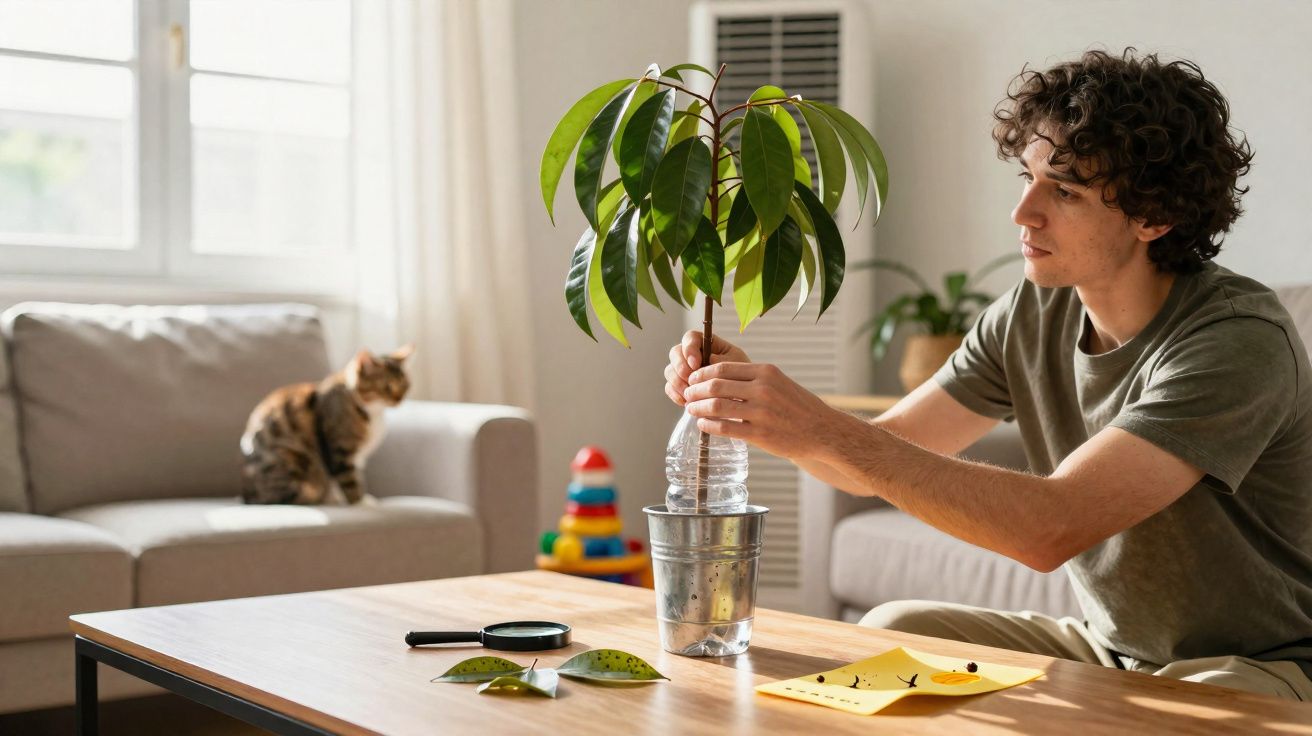
“Don’t chuck it away,” purrs the voice-over. “Grow your own tropical lychee tree at home - from rubbish.” The comments section promptly combusts: people swear they’ll try it tonight, others post proud updates of seeds sprouting on windowsills from London to Los Angeles.
A few weeks later, the glow starts to fade. Some seedlings turn pale and sulky. A few pots develop a fuzzy white coating. Some plants quietly disappear from immaculate Instagram grids. And on a plant forum, a frazzled parent asks whether lychee leaves are poisonous to cats, because the new “trash-grown tree” has become the kitten’s favourite snack.
What began as a wholesome eco-hack suddenly feels a lot less innocent.
From viral trash hack to a living time bomb?
Spend long enough on TikTok, Instagram or YouTube Shorts and you’ll meet the formula: rescue the pits you’d normally bin, rinse them, push them into compost, and voilà - “free” tropical trees. Avocado, mango, lychee, longan. The more exotic, the better. It reads as clever, virtuous, and a little defiant in a world that throws everything away.
Lychee is tailor-made for short-form video. The seed is large and pleasingly tactile. It swells, splits and dramatically reveals a sprout. Within about three weeks, a red-tinged baby stem can spear through the surface like a prop from a fantasy film. It looks rare, pricey, almost illicit. That wow-factor is irresistible to algorithms - and to anyone staring into their kitchen at 11:47 p.m. looking for a tiny hit of achievement.
What rarely survives the edit is the slow middle chapter: the delicate tropical youngster struggling in a dry flat, under weak winter light, parked beside a radiator. Or the moment fungus gnats move from the lychee pot into every other houseplant you own. Viral clips seldom include the drawn-out, slightly bleak decline. They end at the satisfying “ta‑da”.
A gardening subreddit has the familiar arc: someone posts triumphant photos of a lychee raised from supermarket fruit, then falls silent after others flag root rot risks and humidity problems in their climate. In a Facebook group, one woman admitted she binned a mouldy pot “so my kids wouldn’t watch it die”. A plant shop owner I spoke to sighed at the mention of trash-grown tropicals: in her experience, these “free trees” often arrive as stressed, pest-ridden patient zeroes, disguised as innocent repotting jobs.
There’s also an awkward gap between screen and home. A lychee filmed in a professionally lit studio, lightly misted and shot with a macro lens, is not the same as a lychee crammed onto a gloomy UK windowsill in February. When a trend travels faster than a plant can adapt, something gets lost in translation: expectations race ahead of roots, and the resulting disappointment can be quietly brutal.
Lychee trees indoors: the biology that viral clips skip
From a botanical point of view, a lychee is not a casual house guest. It’s a tree evolved for warm, humid subtropical conditions, with bright, steady light and room for a substantial root system. Kept indoors - especially in a small city flat - you’re effectively asking it to perform as a compact houseplant. It may cooperate for a while, producing glossy red-green leaves and a determined little trunk, but the long-term mismatch between climate and genetics often shows up as stunted growth, repeated leaf drop, and a plant that always seems one bad week away from collapsing.
Then there’s the romantic promise: “Grow your own lychees at home.” Most supermarket lychees come from grafted commercial varieties. The seed inside is genetic roulette. Even if your seedling survives, it may never fruit. If it does, it can take a decade or longer, and the flavour may be nothing like the fruit you ate. None of that makes the project pointless - it simply means it’s a learning exercise rather than the guaranteed harvest the videos quietly imply.
One more reality check for the UK: our indoor heating season often coincides with low light levels. Warm air plus central heating dryness can push a lychee into constant stress, even if you water “correctly”. If you decide to try, you’re not just growing a plant - you’re managing a miniature climate.
How to grow a lychee seed indoors without losing your mind (or your living room)
If you still want to save that lychee seed from the compost caddy, the smartest first step is to slow down and set it up properly.
Rinse the seed carefully. If the slick brown outer skin slips off easily, peel it away; if it clings, don’t force it. Plant the seed horizontally in a small pot with excellent drainage, and half-bury it so the top sits just below the surface. This positioning helps the new root and shoot establish without the seed sitting in a soggy grave and rotting.
Choose a light, airy mix: multipurpose compost cut with perlite, orchid bark or coarse sand. Aim for “fluffy brownie” rather than heavy clay. Water once to settle everything, then pause until the top 1 cm feels dry to the touch. A loose clear plastic bag over the pot can lift humidity, but punch a few holes so air can circulate. Keep it in bright, indirect light - near a window, not stranded on a hallway shelf.
When the first red stem appears, remove any plastic cover and nudge the pot slightly closer to the light. Avoid harsh midday sun through glass, which can scorch tender new leaves. Turn the pot every few days so the seedling doesn’t lean hard in one direction. Water sparingly and consistently. A cheap moisture meter can help, but your finger works: if the surface still feels cool and damp, wait.
Where most people stumble isn’t the seed stage - it’s the phase after the initial thrill. The sprout is exciting; the daily routine is not. Let’s be honest: almost nobody sustains perfect care every day. You forget to rotate it, then try to “make up for it” by drowning it. Or you start misting obsessively, which feels nurturing but often creates ideal conditions for fungal growth on the soil surface.
A practical UK upgrade: consider peat-free compost (now standard in many shops) and be extra alert to watering habits. Peat-free mixes can behave differently - some dry unevenly, others stay wet in the centre - which matters when you’re trying to avoid rot.
Pets, children, mould and fungus gnats: the hidden costs of “trash-grown”
If you have pets or small children, a pot can become more plaything than tree. Little hands dig. Cats decide barky mixes are a premium litter alternative. Dogs chew leaves out of boredom. Lychee isn’t known as one of the most dangerous toxic houseplants, but any non-food plant eaten in quantity can cause stomach upsets, and potting compost can harbour microbes. That’s before you meet fungus gnats - the tiny black flies that appear when organic matter stays damp for too long.
On humid days, mould can spread across the compost like thin white cobwebs. The urge is to bin everything and retreat to plastic plants. You don’t have to. Let the surface dry out, scrape away the worst of the mould, and improve airflow. Your lychee doesn’t need a sauna; it needs light, moving air, and leaves that dry quickly after watering. Think less “raising a baby tree” and more “running a small climate experiment on a shelf”.
“The biggest hidden risk isn’t toxicity or pests,” says Laura, a houseplant shop owner in Berlin. “It’s expectations. People watch a ten-second miracle and assume copying it buys the same outcome. What they’re actually taking on is a commitment.”
Once your lychee has three or four sets of leaves, treat it like the slow, temperamental housemate it is. Pot on gently into a slightly larger container, still prioritising drainage. Use a saucer, but tip away any standing water after 20 minutes. In winter, a simple grow light can make a noticeable difference in northern latitudes, and moving the plant away from radiators will reduce hot, dry blasts that crisp the leaf edges.
- Keep the compost lightly moist, not saturated - like a wrung-out sponge, not a soaking towel.
- Wipe leaves with a damp cloth every few weeks to remove dust and check for pests.
- Create a “plant quarantine corner” so new arrivals don’t introduce bugs to your lychee.
- Treat brown tips or the occasional dropped leaf as information, not a personal failure.
There’s real power in saying: I’m not doing this for fruit, and I’m not doing it for likes. I’m growing a lychee tree to learn what a tropical plant needs - and what I’m willing to adjust to meet it. That mindset shift turns a “dangerous fad” into a risky but genuinely meaningful experiment.
The fine line between eco-hack and quiet burnout
On the surface, the lychee-from-trash trend looks almost saintly: no plastic pot, no shipping box, no commercial greenhouse. Just kitchen leftovers and a bit of compost. It feels like a small rebellion against waste - transforming last night’s dessert into tomorrow’s jungle corner. For plenty of people, that first successful sprout is the gateway into gardening.
Underneath, though, the emotional arithmetic can get messy. If every home becomes a mini tropical conservatory, the mental load accumulates. Every blemish becomes a tiny referendum on your competence. Every pest outbreak feels like a moral failing. We don’t just throw away a plant; we confess about it online, half joking and half embarrassed. In a bad week, a windowsill can start to look like a row of expectations you’re struggling to meet.
Zoom out further and there’s an uncomfortable irony. Lychee, mango and other tropical fruits are largely grown in regions already dealing with climate pressure. Their seeds have travelled thousands of kilometres in refrigerated supply chains. Then we attempt to grow them again indoors using heated homes, lights, compost and plastic pots. That doesn’t erase the joy of watching something emerge from “rubbish”, but it does complicate the eco-halo around the trend.
One more overlooked angle is plant health beyond your own home. Even though you’re using a supermarket seed, indoor growing can still amplify pests (like fungus gnats) that then spread to other houseplants, friends’ cuttings, or local swaps. A bit of caution and quarantine isn’t paranoia - it’s basic plant hygiene.
Most of us recognise the moment we buy (or sprout) a plant to fix a feeling - boredom, loneliness, environmental guilt - rather than because our space is ready. Growing a lychee from trash can absolutely be a small act of hope. It can also become another quiet obligation in an already crowded life. Somewhere between those poles is the sweet spot: one tree you can genuinely learn, rather than five you gradually neglect.
Perhaps the real question isn’t “Is it dangerous to grow tropicals indoors?” but “What story are you telling yourself when you do it?” Are you collecting trophies or living companions? Chasing a harvest or building a daily ritual? Your honest answer might decide whether the next lychee seed goes into a pot - or back into the compost with a surprising sense of relief.
| Key point | Detail | Why it matters to you |
|---|---|---|
| Lychee trees are high-maintenance indoors | They need strong light, humidity and root space that most flats can’t provide long term | Sets realistic expectations and reduces frustration or plant loss |
| Trash-grown doesn’t mean risk-free | Overwatering, pests, pet chewing and mould are common side effects of viral seed trends | Helps you weigh the hidden costs before copying social media hacks |
| Intention matters more than fruit | Most seed-grown indoor lychees won’t fruit, but they can teach patience and plant care | Shifts focus from quick wins to sustainable, meaningful plant relationships |
FAQ
- Can a lychee tree grown from a supermarket seed really fruit indoors?
It’s possible in theory, but it’s very unlikely. Seed-grown lychees take many years to mature, and indoor light levels, pot size and climate usually prevent reliable flowering and fruiting.- Are lychee plants toxic for pets or children?
Lychee isn’t widely listed as a major toxic houseplant, but any ornamental plant eaten in quantity can upset stomachs, and potting compost can carry microbes. Keep it out of easy reach and supervise curious pets.- Why did my lychee seed go mouldy instead of sprouting?
In most cases the compost stayed too wet and airless. A dense mix, poor drainage, or covering the pot too tightly creates an ideal mould incubator and can suffocate the seed.- Can I keep a lychee small as a bonsai-style houseplant?
You can slow growth by pruning and limiting pot size, but the tree will still demand strong light and steady humidity. It’s generally more demanding than classic bonsai choices such as ficus or juniper.- Is it more eco-friendly to grow tropicals from trash seeds than to buy houseplants?
Growing from “rubbish” can avoid extra production and shipping, but indoor tropicals may still rely on heating, lighting and materials. Often the greenest option is fewer plants, cared for well over many years.


Comments
No comments yet. Be the first to comment!
Leave a Comment