
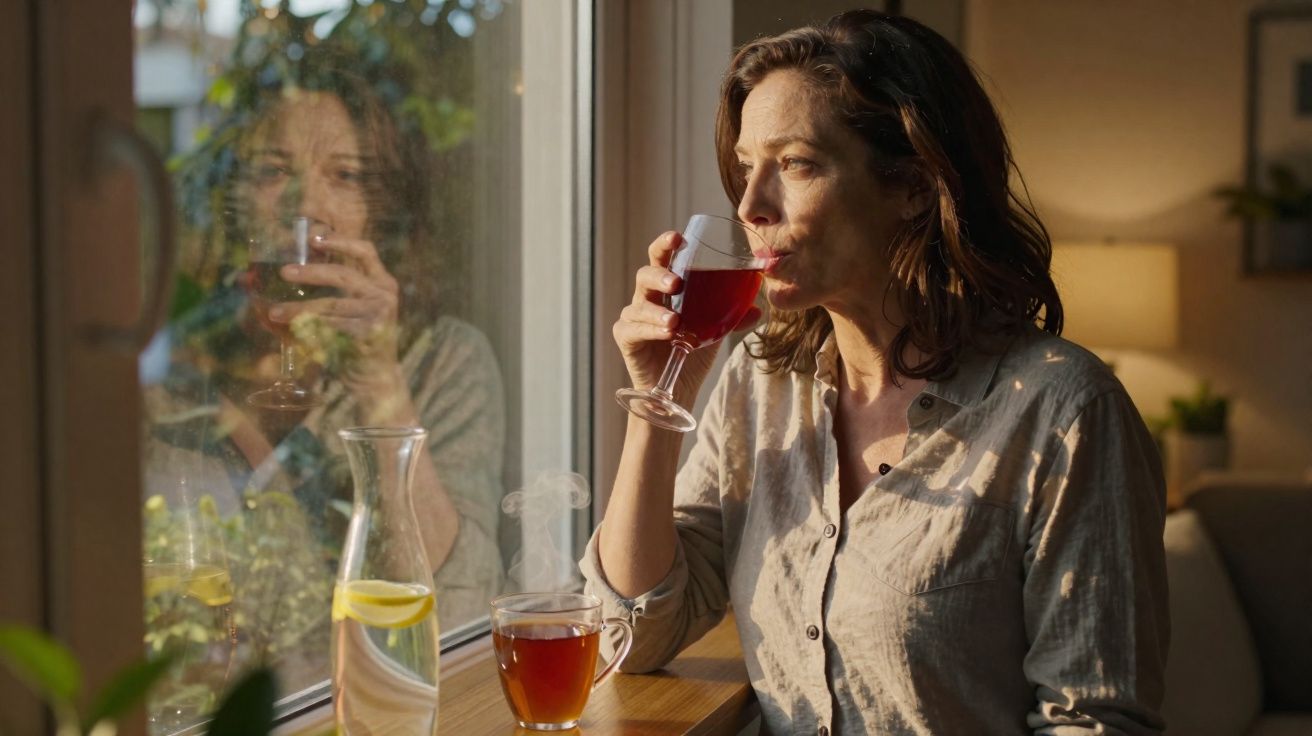
The television is murmuring in the background, your inbox is finally shut down, and the house has gone still for the first time all day.
Without really thinking, you drift into the kitchen and reach for the familiar: the same bottle, the same mug, the same “I’ve earned it” night-time drink that rounds off every evening.
A glass of red wine. A crisp gin and tonic. A rich hot chocolate. Or perhaps an oversized mug of tea that’s practically a pudding in disguise.
It doesn’t feel like a decision so much as a routine.
That first mouthful unclenches your shoulders and quietens your mind, and for a brief spell it seems as if the day stops taking its toll.
But science has started to murmur something rather uncomfortable.
That comforting evening drink may be doing the opposite of what you think it’s doing.
Slowly, quietly, cell by cell, it can nudge your body towards faster ageing-while you believe you’re winding down.
You won’t spot it in the mirror tomorrow morning.
Yet your future self might.
And that’s the bit most people rarely discuss.
Evening drink and ageing: the stealthy way your nightcap speaks to your cells
Most of us treat ageing as something that happens with birthdays, not between 21:00 and midnight on the sofa.
And yet late evening is exactly when your body receives some of its strongest “instruction signals”.
A drink that feels “gentle” or “well deserved” can start a cascade: hormones shift, blood sugar rises, and inflammation can creep up in the background.
You don’t sense any of that in the moment.
What you notice is the warm glow, the comfort, or the sleepiness.
Meanwhile, beneath the surface, your cells are tallying strain rather than savouring your evening-and that’s where the research starts waving a warning flag about what you’re sipping after dark.
Alcohol is the classic nightcap.
A large 2022 study published in The Lancet analysed the habits of more than 300,000 adults and reported that even “moderate” daily drinking was associated with higher risks of earlier disease and death.
Not the big, chaotic weekend blow-out.
The steady, predictable glass each night.
Then there are sugar-heavy evening drinks: hot chocolate pumped with syrup, milky teas with two spoons of sugar, and those “light” cocktails that are mostly sweet mixers.
Research highlighted by the American Heart Association links frequent high-sugar drinks with more wrinkles, more abdominal fat, and higher inflammation markers.
One dermatologist summed it up bluntly in clinic notes: people who drink sugary drinks late often “age from the inside out” decades before they expect.
You don’t need a lab to understand the long-game effect.
Over time it can show up as flatter-looking skin, stubborn weight gain, fatigue, and a dullness no pricey serum seems to shift.
Under the filters and flattering lighting, ageing largely comes down to how quickly cells are damaged and how efficiently they repair.
Alcohol can push the liver into overdrive, increase oxidative stress, and interfere with sleep cycles.
That fragmented sleep can then drive up cortisol-the stress hormone that’s notorious for breaking down collagen and encouraging fat storage around the middle.
Sugary drinks cause a different kind of trouble.
They lift blood sugar at the very point in the day when your body is meant to slow down, not speed up.
That sugar can bind to proteins via a process called glycation, leaving skin less supple and blood vessels less flexible.
It can feel like relaxation, while your body quietly slips into a repair deficit.
Two extra details are easy to miss. First, many evening drinks are dehydrating or mildly diuretic-alcohol in particular-so you can wake with a dry mouth, puffiness, and skin that looks less plump, even if you slept “enough”. Second, acidity and sugar late at night can be unkind to teeth, especially if you sip slowly over an hour; it’s not directly “ageing” in the collagen sense, but it does affect how healthy (and therefore youthful) you look overall.
Realistically, nobody reads a stack of studies and then transforms their evenings overnight.
Still, the pattern is hard to ignore: the clock doesn’t only tick with years-it also ticks with habits.
What to drink at night if you still want to enjoy it
The aim is not to turn your evenings into a joyless ritual of tepid water and self-judgement.
You can keep a routine, keep pleasure, and still signal to your nervous system, “We’re finished for the day.”
The key is shifting from ageing drinks to calming drinks.
Begin with limits rather than strict rules.
Choose three or four nights a week for your “proper” drink, and use the other evenings to practise a substitute you actually look forward to.
Try sparkling water in a wine glass with lime and a splash of unsweetened juice.
Or go for an herbal infusion such as chamomile, rooibos, or lemon balm-options research suggests can support better sleep and reduce night-time anxiety.
Keep the glass, the ice, the clink, the pause.
Just swap what you pour.
One common pitfall is quitting alcohol or sugary night drinks, only to replace them with huge mugs of “healthy” options that still interfere with ageing.
Strong black tea late in the evening can disrupt sleep nearly as much as a cocktail.
Plant-based “dessert” lattes drenched in syrups can spike blood sugar even if they’re dairy-free.
Most of us know that moment: “It’s fine, it’s herbal,” you tell yourself-while tipping in honey as though you’re icing a sponge cake.
Your body isn’t impressed by marketing; it responds to the dose.
Caffeine that lingers until 02:00 or a mug containing 40 grams of sugar still tells your cells the same thing: stress, not rest.
Being kind to yourself doesn’t require pretending.
If you want something sweet at night, keep it small, occasional, and not dressed up as “wellness”.
“Your evening drink sets the tone for your overnight biology,” says Dr Laura Kim, a preventive medicine specialist.
“If that drink improves your sleep, hydration and blood sugar, you age more slowly.
If it disrupts them, you age faster, even if it feels relaxing in the moment.”
- Better evening swaps
Light herbal teas (chamomile, peppermint, lemon balm), sparkling water with citrus, or warm cinnamon water with a tiny dash of milk. - Small, honest portions
If you keep alcohol, keep it to one measured drink-and not every night. If you keep sugar, keep it at teaspoon level, not “dessert in a mug” level. - Sleep first, drink second
Ask before you sip: “Will this help me sleep more deeply, or more lightly?” Skin, brain and hormones do their best repair during deep sleep. - One change at a time
You don’t need a personality overhaul by Monday. Start by changing your drink on one or two nights each week and notice what shifts in your body.
The quiet deal you’re making with your future face
There’s a peculiar moment many people hit in their late 30s or 40s.
You catch yourself in harsh lighting, or zoom in on a selfie, and something looks… changed.
Not “ruined”-just a touch more tired than you feel on the inside.
You might invest in creams, try supplements, or buy a new pillowcase.
Those can be useful, but they mostly work at the surface and tend to be defensive measures.
The real “offence”-the choices that genuinely influence future-you-often hides in small, repeated actions, like what you pour at 21:30.
Night after night.
Year after year.
Your favourite evening drink is comfort, identity, and chemistry all at once.
You don’t have to bin the comfort or the story.
But you can rewrite the chemistry.
| Key point | Detail | Value for the reader |
|---|---|---|
| Evening drinks can speed ageing | Alcohol and sugary beverages at night increase oxidative stress, glycation and sleep disruption | Helps you recognise your nightcap as a long-term ageing habit, not just a short-term treat |
| Ritual matters more than the liquid | Keeping the glass, moment and setting while swapping what you drink is easier than pure restriction | Makes change feel realistic and emotionally manageable, rather than like punishment |
| Small shifts compound over years | Cutting a few nightly “ageing drinks” each week can improve sleep, skin, energy and metabolic health | Shows you don’t need perfection to protect your future self-just steady, doable tweaks |
FAQ
- Does one glass of wine at night really age me faster?
A single glass now and then is unlikely to transform your face. The evidence links regular, daily alcohol-even at low doses-with more inflammation, poorer sleep and higher disease risk. The issue is the pattern, not the occasional drink.- What’s the least “ageing” alcoholic drink in the evening?
Biologically, any alcohol affects your system. That said, a small serving of dry red wine or a clear spirit with soda water is typically lower in sugar and calories than creamy or sweet cocktails. The most “low-ageing” option is always less often and less volume.- Are zero-sugar fizzy drinks at night a good alternative?
They avoid sugar spikes, but some studies suggest artificial sweeteners may still influence gut health and cravings. From time to time they’re a better choice than a sugary cocktail, though they’re not an ideal nightly staple.- Is herbal tea really that much better for ageing?
Unsweetened herbal teas add neither sugar nor alcohol, support hydration, and may improve sleep quality. Better sleep supports cellular repair, which is tightly linked to slower ageing.- How fast will I see a difference if I change my night drink?
Many people notice deeper sleep and less morning puffiness within 1–2 weeks. Shifts in skin texture, energy and weight distribution tend to appear more gradually over a few months of more “cell-friendly” evenings.

Comments
No comments yet. Be the first to comment!
Leave a Comment