
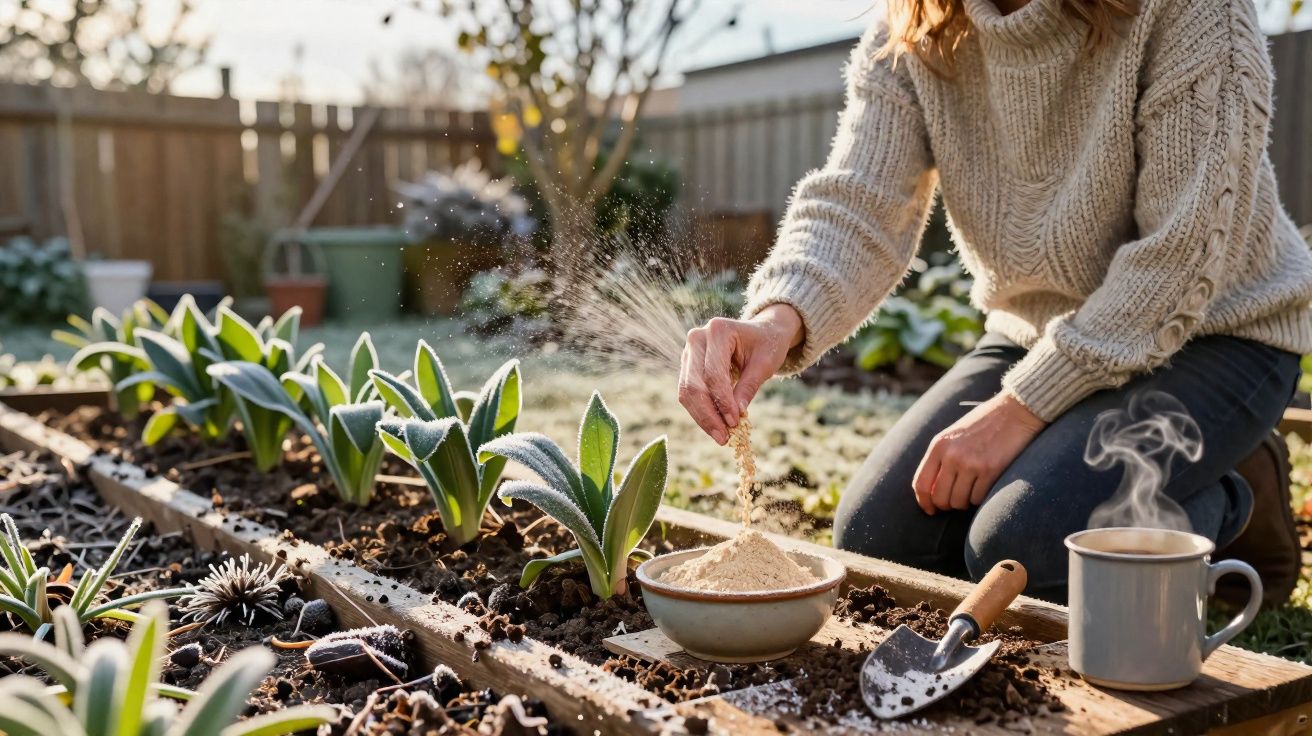
By the time I’d pulled open the back door, the garden had the look of being lightly sifted with icing sugar. It was gorgeous-and dangerous. That sort of cold doesn’t announce itself; it seeps down into the ground and can snap delicate roots as easily as dry twigs.
I did my usual circuit of the borders, braced for the standard winter losses: the dahlias, the young lavender, and my much-loved potted roses. Only this time, none of them looked ruined. No scorched-black leaves. No floppy, slimed stems. Instead, everything felt firm and alive-almost annoyingly confident-sitting in frozen air as though the night hadn’t happened.
That was the moment it clicked: something was different this year. Or, more accurately, something I’d been scattering.
The “breakfast powder” that kept my roots safe from frost
The answer isn’t a strange chemical, nor an expensive specialist bag from the garden centre. It’s a homemade blend using something many people already have in the cupboard: oat-based breakfast powder (or finely ground oats), combined with two simple garden staples-composted leaf mould and a small amount of bone meal.
I nicknamed it “breakfast powder” because it looks like muesli dust: pale, crumbly, and faintly edible-looking (even though it isn’t). I store mine in an old porridge-oats tub by the back door. When evenings turn sharp, I’ll wander out with a mug of tea in one hand and the tub in the other, then scatter the mix around plants as if I’m lightly seasoning supper.
What seems like a tiny, slightly daft habit has completely changed how my beds cope with winter.
When I first tried the frost-fighting mix (and what I noticed in spring)
In the first season, I didn’t have the nerve to use it everywhere. I picked the plants I’d lost before-ones I genuinely cared about: a row of young roses, two salvias, a pair of hydrangeas in pots, and a fig tree that was far too pleased with itself for a container that small.
That winter, the forecast couldn’t make up its mind: gentle days followed by sudden night-time plunges. We hit a stretch of nights down to -4°C. Ordinarily, that’s the sort of pattern that makes young roots sulk-or worse, rot-when soil is wet and then freezes solid. I even took “before and after” photos, certain I’d be recording a slow-motion disaster.
Spring told a different story. The plants I’d treated were the first to wake up properly, pushing out clean, sturdy growth. Next to the ones I’d left unprotected, the contrast was almost insulting. In a corner where my geraniums had turned limp and brown, the breakfast-powdered roses were already firing up bright red shoots, as if they’d spent winter at a spa.
Why this works: insulation, soil structure and slow nutrition (not magic)
There’s nothing mystical happening beneath that dusting. The mix helps because it reduces frost stress in three practical ways: insulation, structure, and slow nutrition.
First, the oat-like particles and the leaf mould form a soft, airy layer over the soil surface. Even a thin coating holds tiny pockets of air, which helps cushion plants against sharp temperature drops. The result is that the soil beneath doesn’t lurch so violently between mild and frozen.
Second, the bone meal and organic matter break down at a gentle pace, supporting the soil life that congregates around roots. As the soil ecosystem improves, the ground tends to drain more reliably while still holding the right amount of moisture-making it less prone to the waterlogged-then-icy conditions that do the real damage.
You’re not simply “shielding” the plant; you’re nudging the whole soil system towards being better prepared for winter shocks.
An extra benefit I didn’t expect: because the layer is light and breathable, it’s far less likely to create the damp, sealed conditions that encourage rotting stems-especially compared with heavy, wet mulches.
How to make and use this frost-fighting “breakfast powder” at home
The method is almost embarrassingly straightforward. In a bucket, combine:
- 3 parts fine compost or sieved leaf mould
- 1 part oat-based breakfast powder (or finely ground oats)
- 1 part bone meal (or a mild organic fertiliser)
Stir it with a trowel until the colour looks evenly mixed, then decant it into a lidded tub (an old cereal container is ideal).
On a dry day in late autumn, scatter a light ring around each plant, keeping the mix off the main stem. Picture it as giving every plant an insulated skirt rather than a thick quilt. For containers, dust a very thin layer across the whole surface-just enough to cover bare compost. You don’t need depth; the aim is breathability, not bulk.
To be realistic: nobody keeps up with this daily. I tend to do one proper round when frost first appears in the forecast, then I top up after very heavy rain-or if I’ve been fussing about in the beds and disturbed the surface.
A note on timing, drainage, and different soils (extra but worth knowing)
If your soil is heavy clay, this mix still helps-but it works best alongside basic drainage improvements. Before winter sets in, it’s worth checking that pots can drain freely (clear saucers, unblock holes) and that containers aren’t sitting directly on cold, wet paving. Raising pots on feet or bricks can make a surprising difference by reducing waterlogging.
In very exposed gardens, apply the ring a little earlier-before the first hard frost-so the soil surface is already buffered when temperatures begin bouncing around. In sheltered spots, you may find a single late-autumn application is enough unless you get prolonged rain.
Common winter mistakes this avoids
The biggest error I see each year is panic mulching: dumping thick, soggy heaps of bark or compost around plants the moment the temperature dips. A heavy, wet layer can hold moisture against stems and encourage rot instead of preventing cold damage-particularly in poorly draining ground.
Another frequent slip is focusing protection only on what you can see. People wrap fleece around foliage, then ignore the roots sitting in compacted soil that’s cycling from waterlogged to rock-hard. Roots tend to suffer more from rapid swings-mild to icy, wet to frozen-than from a bit of superficial leaf damage.
Most of us have had that March moment: you pull back what looks like a dead plant and spot one brave green shoot forcing its way through. That’s the plant quietly admitting the roots survived-only just. This mix doesn’t guarantee perfection; it simply shifts the odds, and it does it in the roots’ favour.
What a horticulturist said about the “breakfast powder” idea
When I mentioned the phrase “breakfast powder” to a horticulturist, she laughed-then agreed with the underlying logic.
“What you’re doing is copying the way a healthy woodland floor behaves,” she explained. “Thin layers, steady gentle feeding, and plenty of air. Roots don’t want to be smothered under a duvet-they want a breathable winter coat.”
A quick, practical checklist for cold days
When you’re outside with numb fingers and not much time, this is the routine in plain terms:
- Dust a light, even ring of mix around plants in late autumn.
- Reapply after torrential rain or if the surface sets into a crust.
- Prioritise young plants, shallow-rooted varieties, and anything growing in pots.
- Keep the mix away from the stem or trunk to reduce the risk of rot.
- Use it alongside sensible watering and good drainage-not as a substitute.
What this small winter ritual changes in how we face frost
Once you’ve watched plants come through a harsh frost with barely a complaint, winter starts to feel different. You stop staring at the weather app with quite so much dread. A cold warning shifts from “I’ll lose half the garden” to “Right-time to grab the tub and do the rounds”.
It also changes the mood from rescue to steady care. There’s something calming about stepping out in the dim light, sprinkling that odd little blend around sleeping plants. Frost stops feeling like a random attack and becomes a season you can, in a small way, respond to.
And then the emotional side turns up, almost without being invited. If you’ve had a difficult week, walking slowly from bed to bed-checking each plant, adding a pinch here and there-can feel like more than gardening. On a modest, muddy scale, you’re choosing attention over resignation. You’re saying: I can see what’s coming, and I’ll meet it prepared.
People who try it once often tell me it’s not only that they lose fewer plants-they feel more connected to their beds. They notice which perennials bounce back fastest, which shrubs sulk, and which pots stay too wet until they’re moved or lifted.
That’s the quiet power of a simple soil tweak: it makes you look properly.
| Key point | Detail | Why it matters to you |
|---|---|---|
| “Breakfast powder” mix | Compost or leaf mould + oat-based breakfast powder + bone meal | A low-cost, easy homemade option |
| Root protection | A thin insulating layer that steadies temperature and moisture | Fewer frost losses and stronger spring growth |
| Winter ritual | Light applications around key plants before and during cold snaps | More control and less stress when frost is forecast |
FAQ
Can I use any type of breakfast cereal for this mix?
Choose plain oat-based powders or finely ground oats with no sugar or flavourings. Sugary cereals can attract pests and do little for soil health.Does it suit every plant?
It’s most useful for perennials, roses, shrubs in pots, and anything young or newly planted. Tough, established plants may not require it, but it shouldn’t do them any harm.Is bone meal unsafe for pets or wildlife?
Bone meal can tempt dogs if it’s used heavily. Apply only a light dusting, gently work it into the surface if you have curious pets, or switch to a plant-based organic fertiliser.Can it replace fleece or other physical frost protection?
No. Treat it as support for the roots rather than a full shield in extreme weather. In severe freezes, fleece may still be sensible for tender tops and young growth.When should I start and stop using it?
Begin in late autumn when nights start hovering near 0°C. Refresh during winter after heavy rain, then ease off once the risk of hard frost has passed.






Comments
No comments yet. Be the first to comment!
Leave a Comment