
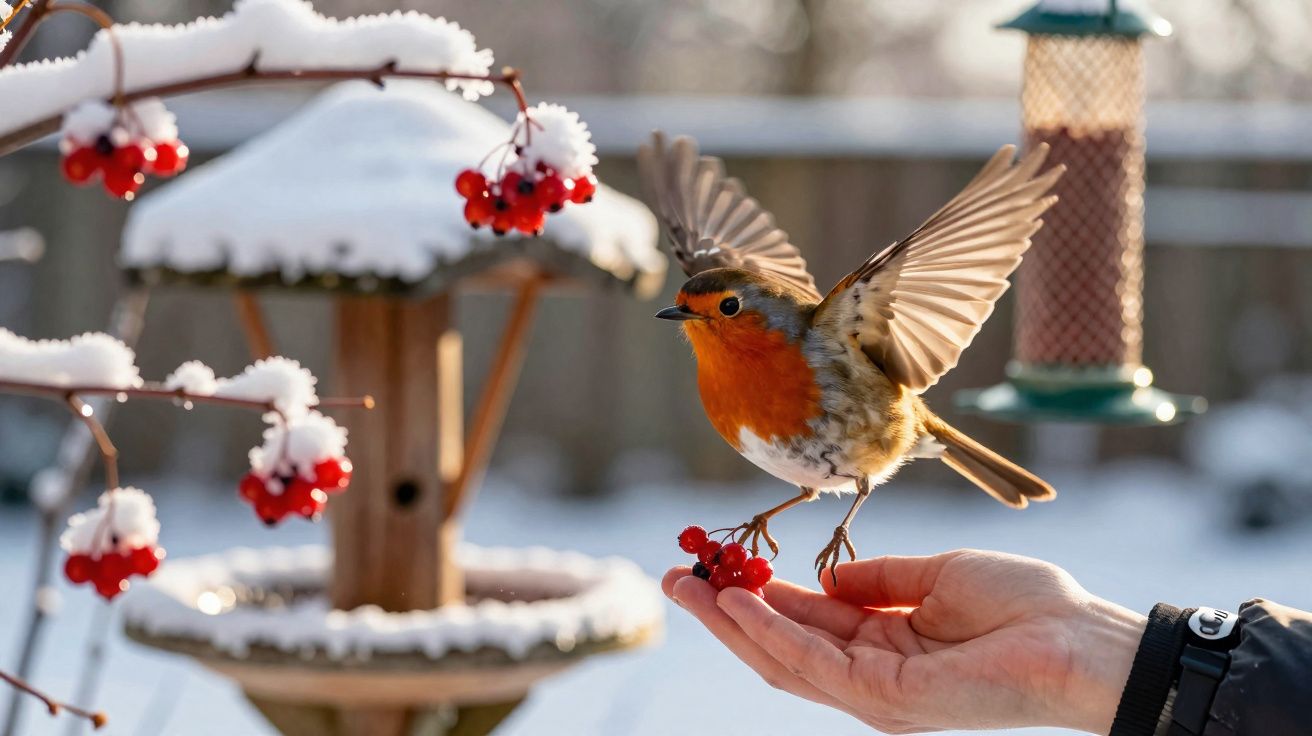
The robin drops on to the frosted lawn with a neat little hop that lands like a full stop on the hard grass. Its orange-red breast flares against the dull morning light; it tilts its head, alert and watchful. You scatter a small handful of winter berries beside the hedge - the ones a neighbour insisted were “like sweets for robins” - and almost immediately it returns, pulling at the soft fruit as though it has been waiting for dawn.
Another bird slips down from the apple tree. Then a third.
You watch them take turns on this bright midwinter snack, and a quiet uncertainty creeps in. Are you giving them a genuine leg-up through the cold, or nudging nature into something slightly unnatural?
The berries go quickly.
And the question doesn’t.
The winter fruit robins can’t resist – and why it matters
Take a walk through a typical suburban garden in January and you’ll spot it straight away: a flash of orange-red on bare twigs, like tiny glass beads set against a pale sky. Pyracantha berries, cotoneaster, holly, rowan - these winter fruits are what carry robins from one icy spell to the next. On thin, bitter mornings, when lawns set like iron and worms sit far below the surface, those berry clusters effectively become an all-you-can-eat buffet.
Robins understand the value of it. Gardeners do too. And after you’ve seen a puffed-up bird plunge into a shrub loaded with berries, it’s difficult not to wonder what role you’re playing.
A retired couple in Kent planted a single firethorn (pyracantha) along the back fence simply “to add a bit of colour”. By the third winter it had turned into a dense sheet of orange fruit. They began to notice what seemed to be the same robin turning up at first light every day, working the hedge like a tiny security patrol.
At first, it fed neatly - a berry here, a berry there. Then the weather tightened. A run of hard frosts transformed that bush into a genuine lifeline. The robin spent long hours on it, aggressively driving off blackbirds and thrushes, eating so much fruit it looked almost spherical.
The couple were thrilled, then slightly uneasy. Could one bird really get through winter on a single plant?
Robins are adaptable opportunists. Their natural winter diet is varied: spiders, beetles, small grubs, plus berries and seeds when the soil is locked solid. When we pack gardens with heavy-cropping shrubs that hold fruit well into February, we can shift that balance.
One or two native berry bushes? That’s simply nature’s larder. A fence-length wall of exotic, ultra-productive ornamentals, covered in soft fruit for months? That starts to resemble a permanent dessert trolley.
The boundary between supporting wildlife and training it to rely on one easy, dependable resource is much narrower than many of us assume.
Feeding or harming: how to offer winter fruit for robins without trapping robins
If you want to help robins through winter, the most effective approach is also the least showy: don’t put all their food in one place. Rather than relying on a single berry “machine”, build a patchwork of options - different plants and different foods that ripen, fade and disappear on slightly different schedules. Combine rowan, hawthorn and holly with a few carefully chosen ornamentals such as cotoneaster or pyracantha.
You can also put out a shallow tray of mealworms or an insect-rich crumble at ground level, positioned close to shrubs where robins already perch. That matches their usual routine: watch from cover, dart out, grab food, then zip back into shelter.
In other words, you’re not installing one irresistible fruit bar. You’re recreating the untidy, varied snack table robins evolved to cope with.
It’s tempting to keep adding the easiest calories. Extra-fat berry blends, sugary dried fruit, and heaps of soft apples left to slowly ferment in a corner are all familiar offerings. Many of us have had that moment when a timid robin appears near our feet and the urge is to spoil it outright.
That’s also where problems begin. Fruit-heavy diets can displace protein just when birds most need it, and large plantings of ornamental berries can outcompete the role of wild hedgerows that support dozens of species - not only one likeable songbird. And let’s be frank: few people scrutinise the ingredients in those bargain tubs of “winter wildlife mix” every single day.
Sometimes it helps to treat a garden less like a bird café and more like a small, semi-wild habitat. As one urban ecologist put it to me: “If your robin can move ten metres and find three different foods, you’ve got the balance right.” It’s a simple rule of thumb - and surprisingly radical.
- Plant at least one native berry shrub (hawthorn, rowan, holly) for every showy ornamental you introduce.
- Keep a few areas a bit messy so insects can overwinter there, giving robins food when berries thin out.
- Offer fruit as one element of a mix: berries plus insect-rich feeds, rather than fruit alone.
- Don’t use pesticides on or near berry plants that birds visit heavily.
- Pay attention to your robins: if they barely leave a single shrub, you may have created a monoculture buffet.
A further practical point that often gets missed is hygiene. If you do put out apples, pears or berry mixes, offer small amounts and clear away anything turning mushy. Rotting fruit can draw rodents and encourage disease at busy feeding spots. A quick tidy-up and a regular rinse of trays helps keep “helping” from becoming an unintended health risk.
It’s also worth thinking about water as part of winter support. In freezing weather, shallow dishes ice over quickly, and a lack of drinking or bathing water can be as limiting as food. A small, regularly refreshed water source (kept free of ice where possible) supports robins without pushing them towards dependence on a single sugary food.
When a winter treat becomes a tether
There’s another, quieter issue that rarely gets discussed. Robins are intensely territorial, and a thick clump of long-lasting fruit can effectively anchor a bird to a tiny part of a garden for weeks. That may sound cosy, but it can also reduce exploration, limit the testing of natural foraging skills, and shrink a robin’s working “map” of its world.
If that key shrub fails one winter - pruned back too severely, hit by disease, or stripped overnight by a sudden flock of fieldfares - the bird that built its season around it has to scramble to relearn a harder, older way of getting by. The safety net can become a trapdoor.
| Key point | Detail | Value for the reader |
|---|---|---|
| Diversify food sources | Mix native shrubs, insect-rich feed and modest fruit offerings | Supports healthier, more resilient robins |
| Avoid “single-shrub addiction” | Don’t rely on one berry-heavy ornamental as the main winter food | Reduces risk if that plant fails or conditions change |
| Think like a small ecosystem | Design the garden as varied habitat, not a single feeding station | Benefits many species, not just robins, and keeps nature’s rhythms intact |
FAQ:
- What winter fruit do robins actually like best? Robins readily take soft, small berries such as pyracantha, cotoneaster, rowan and elder, and they’ll also eat pieces of apple or pear left on the ground. Even so, they still require insects and other protein alongside fruit.
- Can too many berries be bad for robins? Yes - if fruit pushes out other foods. A berry-only diet can lack essential proteins and fats, and a huge ornamental berry crop can tempt birds away from richer habitats with a more balanced mix.
- Are ornamental berry shrubs like pyracantha “unnatural” for wildlife? Not necessarily. Many birds use them, particularly in towns and cities where hedgerows are scarce. The problem arises when gardens become dominated by these plants and lack native species and insect life.
- Should I stop putting out fruit in winter? There’s no need to stop; it’s about rebalancing. Provide small amounts of fruit alongside mealworms, high-quality seed and native planting so robins don’t end up depending on one sugary source.
- How can I tell if I’m helping or harming? Watch behaviour. A thriving robin will use several areas, keep exploring, and switch between insects, seeds and fruit. If it spends most of the day glued to one berry bush, it’s time to rethink the variety your garden offers.



Comments
No comments yet. Be the first to comment!
Leave a Comment