
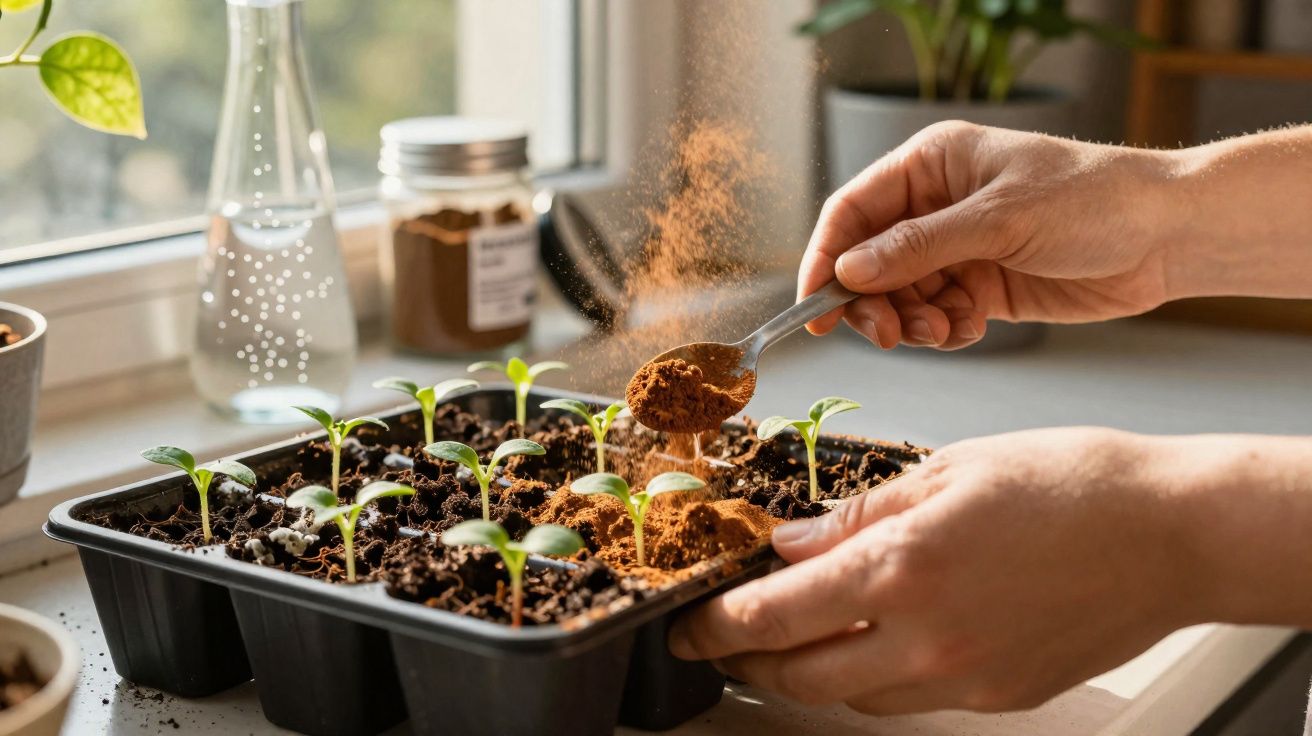
That faint, pale fluff is often the first warning sign of a quiet killer in seed trays: mold and the dreaded damping-off. Increasingly, gardeners are turning to an unexpected helper from the kitchen - cinnamon.
Why mold thrives in seed trays
The very conditions that help seeds germinate can also invite fungi. Warmth, persistently damp compost and tightly packed cells create a tiny indoor “rainforest” where mold can settle quickly. Many new growers assume the fuzz is harmless, only to find a whole tray ruined by morning.
What tends to unfold is straightforward but brutal. A thin white or grey film shows up on the compost surface or around the lower stem. Not long after, seedlings topple right at the soil line, as though cut through with invisible scissors. That collapse is known as damping-off, and once it takes hold, saving affected seedlings is unlikely.
Mold on seedling soil is rarely just an eyesore; it points to conditions that can wipe out an entire tray overnight.
Common guidance usually centres on sterile seed-starting mix, careful watering and better ventilation. All of that helps, but in small indoor set-ups it can still fall short - which is why a teaspoon of brown powder is earning attention.
How cinnamon became a seed-starting hack for mold and damping-off
For years, cinnamon has popped up in gardening forums as a folk fix. What’s shifted recently is the volume of growers - from balcony gardeners to small nurseries - reporting consistent outcomes, often backed by photos of formerly fuzzy compost looking clear the next day.
The approach is almost comically simple: dust a small amount of ground cinnamon over the surface of the seed-starting mix. There’s no mixing into the compost, no dilution and no specialist product required - it’s the same spice many people sprinkle on porridge.
The science behind cinnamon as a kitchen spice
Cinnamon isn’t only about fragrance and flavour. It contains compounds such as cinnamaldehyde and eugenol, which are well documented in plant and food research for their antifungal and antibacterial properties. These substances can interfere with cell membranes in certain fungi, making it harder for them to establish on damp surfaces.
In practical terms, that means fewer fungal spores successfully colonise the top layer of compost - the area where mold usually begins. Rather than acting like a harsh chemical fungicide, cinnamon behaves more like a mild surface deterrent that nudges conditions in favour of your seedlings.
By shifting the compost surface from “perfect fungal habitat” to a slightly unfriendly zone, cinnamon can slow or stop mold before it spreads.
A quick note on the type of cinnamon
Any standard baking cinnamon will typically do the job in this context, because the goal is a light surface barrier rather than a precise dosage. Keep it dry, store it sealed, and avoid using cinnamon that has absorbed kitchen moisture (it can clump and dust unevenly). If you’re sowing large numbers of trays, decanting into a small shaker or sieve makes application more consistent.
How to use cinnamon on seedling soil
Gardeners who get good results with cinnamon tend to follow a similar routine, even without comparing notes. The two essentials are using a light hand and applying it at the right moment.
Step-by-step application
- Wait for the early warning signs: the first hint of fuzzy growth or a suspicious pale film on the compost surface.
- Let the top dry slightly by pausing watering for a few hours and improving ventilation if you can.
- Load a teaspoon or fine sieve with ground cinnamon (ordinary supermarket cinnamon is fine).
- Hold it about 5–8 cm above the tray and tap gently so the powder falls as an even, light dusting.
- Go for a thin veil, not a thick layer that could cake over or smother small stems.
- Switch to bottom watering afterwards so you don’t rinse the cinnamon away from the surface.
Many growers notice a change by the next morning: the aggressive fuzz dries out, retreats and looks less glossy. Robust seedlings generally continue without complaint. Very frail plants - or those already infected - may still collapse, but the spread across the tray often slows dramatically.
| Action | When to do it | What to expect |
|---|---|---|
| First cinnamon dusting | At the first sign of surface mold | Mold often dries and shrinks within 12–24 hours |
| Second light dusting | 3–5 days later if conditions remain very damp | Extra suppression of fungal growth on the surface |
| Airflow adjustment | As soon as seedlings emerge | Less condensation and slower mold development |
| Watering change | After the first mold episode | A drier surface and stronger root development |
Aftercare: what to watch for
Once the surface looks cleaner, keep an eye on how quickly the compost dries between waterings. If you’re still seeing condensation on lids or the soil stays shiny-wet, treat cinnamon as a short-term aid and focus on the underlying conditions (airflow, drainage and moisture levels). A simple notebook note - date, crop, compost type and what you changed - can help you spot patterns from one sowing to the next.
What cinnamon can and cannot do
No household remedy is a guaranteed cure, and cinnamon has clear limits. It works best as part of an overall seed-starting approach, not as the only defence.
Strengths of the cinnamon dusting method
- Fast to apply, whether you’re treating one module tray or several.
- Low cost and typically already in the cupboard.
- Milder than many synthetic fungicides, which appeals to organic-minded growers.
- Buys breathing space after an accidental overwatering that triggers mold.
Where cinnamon falls short
- It cannot bring back seedlings that have already died from damping-off.
- It won’t correct persistently waterlogged compost or poor drainage.
- Overuse can be irritating in dusty rooms, especially for sensitive skin or lungs.
- It mainly works at the surface; deeper fungal issues still require hygiene, airflow and better moisture control.
Cinnamon is most effective as a quick surface measure - not a replacement for clean kit and sensible watering.
Building a mold-resistant seed-starting routine
The surge of interest in cinnamon reflects a wider move in home gardening: people want solutions that are inexpensive, low-toxicity and practical for indoor growing. Rather than assembling a shelf of specialist bottles, many are tightening up a few fundamentals.
Four habits that matter more than any spice
- Start with fresh, sterile seed-starting mix. Re-using old compost often reintroduces spores from last season.
- Water from below. Add water to the tray’s outer base, let modules wick it up, then tip away any excess.
- Keep air moving. A small fan on a low setting, angled away from trays, reduces still, damp air and condensation.
- Remove humidity domes early. After germination, vent lids gradually (crack or lift them) instead of keeping trays sealed.
Within this routine, cinnamon can fit as a preventative surface dusting shortly after germination - particularly for plants that often suffer from damping-off, including brassicas, basil and certain ornamentals.
Beyond cinnamon: other low-tech antifungal options
For growers who like testing gentle methods, cinnamon often sits alongside a small collection of low-tech tactics. None should be used carelessly, but they can provide options when indoor air turns muggy.
Common companions to the cinnamon method
- Cooled chamomile tea, used sparingly as a fine mist over young seedlings.
- Free-draining compost, which reduces standing water collecting in module corners.
- Sowing more thinly, with fewer seeds per cell so air can move between stems.
- A daily venting routine for propagators and mini-greenhouses to release trapped moisture.
Some gardeners even run simple side-by-side trials each spring: half a tray dusted with cinnamon, half left untreated. Results differ by home, compost and local conditions, but many report noticeably cleaner compost on the treated side - especially during cool, damp early spring weather.
Risks, edge cases and when to skip the dusting
Like any popular tip, the cinnamon approach can be over-applied. Too much powder can form a dry, crusty layer on small modules, making it harder for water to soak through evenly. In very dry homes, an overly dry surface can also stress seedlings with shallow roots.
If you have asthma or strong sensitivity to spices, handle cinnamon cautiously: use a sieve for controlled dusting, consider a simple mask, and avoid creating airborne clouds. Keep pets away from seed trays too - concentrated spices aren’t suitable for animals that like to nibble.
If the basics are severely off - soaked compost, no drainage holes, constant condensation - no amount of cinnamon will save the tray.
In those situations, the most reliable solution is often to start again with clean trays, fresh mix, sanitised tools and gentler watering, keeping cinnamon as a modest back-up rather than the main plan.
Why this tiny cinnamon trick resonates with modern gardeners
The appeal of cinnamon dusting says a lot about today’s gardening reality. Many people are raising lettuce and tomatoes on windowsills squeezed beside laptops, chargers and radiators. They want approaches that feel straightforward, low-risk and rooted in everyday materials.
Because a jar of cinnamon already sits in so many kitchens, using it for seedling soil feels like a small, practical act of care - bridging daily routine and plant growing in a single step. It also prompts a bigger question: what other ordinary items might have useful roles in sustainable gardening?
For beginners, this modest intervention can be the difference between abandoning seed-starting after a tray collapses and trying again with more confidence. For experienced growers, it’s simply another option - used sparingly during damp, awkward spells when indoor conditions or spring weather make mold and damping-off more likely.
The broader lesson reaches well beyond seed trays. When gardeners understand why cinnamon helps - moisture control, airflow and microbial balance - they begin to view every pot, bed and border as a living system rather than just a container of compost. That shift in thinking is likely to improve future harvests far more than any single spice ever could.



Comments
No comments yet. Be the first to comment!
Leave a Comment