
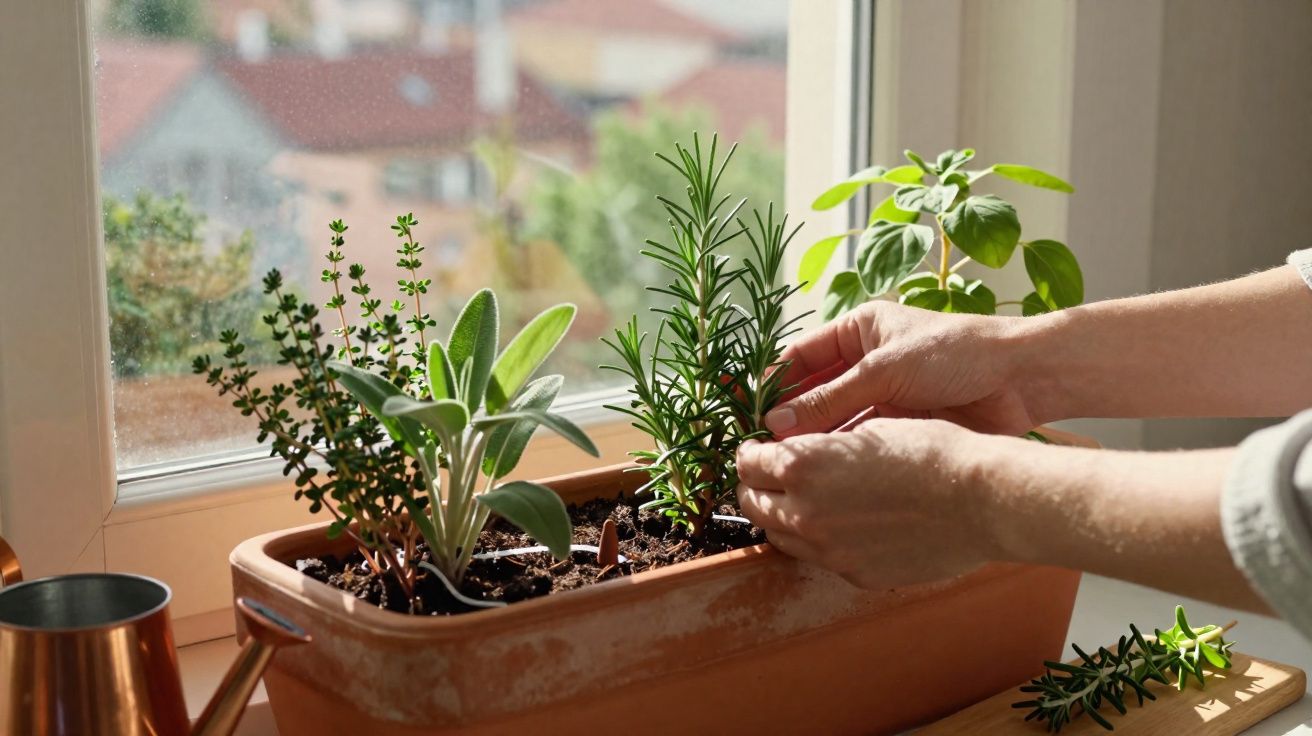
She rests her forearms on a narrow balcony rail, mug of coffee warming her hands while the traffic murmurs several storeys below. Right within reach, a slim low-water window box is crammed with thyme, rosemary, and a determined little sage that simply refuses to give up.
She clips a sprig, crushes it between her fingertips, and the scent cuts cleanly through exhaust fumes and last night’s rain. There’s no watering can at the ready, no app-controlled drip line, no fussy routine-just hardy herbs, a ledge, and the small weekday habit of adding something fresh to the frying pan on a Tuesday evening.
The “secret” isn’t extra time or special skill. It’s choosing plants that do well even when you occasionally forget they exist.
Choosing herbs that can handle your real life (low-water window box basics)
Fresh herbs are often sold as if they require constant attention: daily watering, perfect timing, and saintly patience that doesn’t fit most city lives. In practice, many familiar Mediterranean herbs evolved to cope with blazing sun, stony ground, and long dry spells. A window box on a busy street isn’t so different from a miniature hillside.
Begin with the tough, reliable group: rosemary, thyme, oregano, sage, and savory. These are the backbone of a low-water window box. Their small (often leathery) leaves and woody stems help them store moisture and limit water loss. They don’t collapse when the top 2–3 cm of compost dries out-if anything, they prefer it.
If you want a quick rule of thumb, read the plant. Fine, waxy, or narrow leaves usually need less water than large, soft leaves (basil is the classic thirsty example). And plants that build deeper, fibrous root systems cope far better with missed waterings than shallow-rooted herbs. You’re not only selecting flavours; you’re choosing built-in survival tactics.
A London balcony grower once told me he “killed” basil three times running before he gave up and planted thyme along the same sunny rail. Two months later, the thyme had flowed over the edge of the box, with tiny flowers that drew bees up five floors. He watered once or twice a week at most-sometimes less in spring.
Even a modest 60-centimetre window box, planted closely with thyme, oregano, and trailing rosemary, can produce several generous handfuls each week. No tubes, no timers-just a thorough soak when the compost feels dry to the first knuckle (around 2–3 cm down). One urban gardening survey from Berlin found balcony growers kept hardy herbs alive for almost twice as long as leafy herbs such as basil or coriander.
The biggest shift is expectation. Stop trying to grow supermarket-style basil shrubs in a wind-battered city window, and instead lean into herbs that actually enjoy being ignored a little. The whole experience changes: less guilt, more flavour.
The reasoning is almost too simple. Herbs from dry, rocky regions are built for stress, and their essential oils often intensify when they’re slightly under-watered and given plenty of sun. That “concentrated flavour” chefs rave about isn’t mystical-it’s resilience ending up in your pasta sauce.
Think of compost as your water bank. A free-draining blend-compost mixed with coarse sand or perlite-lets surplus water escape, so roots can breathe instead of rotting. Combine that with a south- or west-facing window, and you’ve recreated a compact version of a Mediterranean slope. Hardy herbs settle in, push roots down, and gradually behave less like delicate pot plants and more like small, dependable shrubs.
You’re not gaming the system-you’re working with it.
One more factor worth treating as part of the “system” is wind. High balconies and street canyons can dry compost quickly, even when the weather feels mild. If your ledge is exposed, a slightly deeper box (or grouping pots tightly together) reduces moisture loss and prevents plants rocking, which can stress roots.
Planting and watering so your herbs almost care for themselves
If you want truly lazy watering later, it starts with how you set up the box on day one. Choose a container with proper drainage holes (not just decorative dimples). Add a thin layer of clay pebbles or small gravel at the bottom, then fill with a light, well-draining potting mix designed for Mediterranean or balcony plants.
Plant a little closer than the label recommends. Denser planting shades the compost, slows evaporation, and creates that full, overflowing look that suits a narrow ledge. Position taller rosemary or sage towards the back, and let thyme or oregano trail at the front so they spill slightly over the edge. That overhang also shields the sides of the box from direct sun, helping keep roots cooler.
When you water for the first time, water properly: soak until water runs cleanly from the drainage holes. Then pause. Don’t reach for the watering can again until the surface layer has dried.
People rarely overwater out of cruelty-they overwater out of worry. One drooping leaf or a hot day, and suddenly the herbs are being drowned with kindness: a saucer left full, compost that stays heavy, cold, and sour. Then the leaves yellow from the bottom, and you decide you’ve got a “black thumb”.
Let’s be honest: almost nobody checks soil moisture with scientific precision twice a day. So build a rhythm that matches your brain, not a handbook. For example: “Water on Sundays-unless it’s rained and the compost still feels cool and slightly damp.” Simple, imperfect, and realistic.
If you’re anxious about holidays or heatwaves, a self-watering window box with a reservoir beneath the compost can act as a quiet safety net. Another low-effort fix is to cluster pots together; shared shade and a slightly more humid microclimate mean they lose less water overall.
“I stopped trying to be the perfect plant parent,” says Clara, who grows herbs outside a tiny kitchen window in Barcelona. “Once I accepted my laziness and picked herbs that could live with it, everything thrived. Now I water when I remember, and they still smell like summer.”
Treat your window box as a small ecosystem rather than a random line of pots. Tiny tweaks can significantly reduce water use. A thin mulch layer-shredded bark, fine gravel, or even dry leaves-cuts evaporation and keeps root temperatures steadier.
- Pick drought-tolerant herbs first (thyme, rosemary, sage, oregano, savory).
- Use light, free-draining compost and a pot with real drainage holes.
- Water deeply, less often, rather than giving tiny daily sips.
- Trim lightly and regularly to keep plants compact and vigorous.
- Add a thin mulch layer to hold moisture and protect roots.
A related tip that many people overlook: harvesting is part of maintenance. Snipping little and often encourages bushy growth and reduces the chance of woody herbs becoming sparse. If you end up with more than you can use, dry small bundles of thyme or rosemary indoors, or freeze chopped herbs in ice-cube trays with a little water or oil for quick midweek cooking.
Keeping flavour alive through rain, frost, and heatwaves
Year-round herbs in a window box sound idyllic-until a proper cold snap or a sudden heatwave hits your street. The trick isn’t to battle the seasons; it’s to adjust your cast of characters while sticking to the same low-water principle. Evergreen rosemary and sage can often make it through milder winters if their roots stay on the dry side and the foliage gets decent airflow.
Where winter bites harder, move the box closer to the wall or window glass for a touch of shelter, or bring individual pots indoors overnight. On truly brutal nights, a simple horticultural fleece cover can stop roots freezing solid. In summer the problem reverses: hot glass can turn window ledges into ovens. A light shade cloth-or even a sheer curtain inside-can soften the harsh midday sun so leaves don’t crisp before dinner.
Most of us have had the moment we look at a once-lush pot and realise we’ve ignored it through three deadlines and a mini heatwave. The herbs that survive that neglect become the foundation of how you actually cook. They’re the companions that cope, not the needy divas that collapse after one missed watering. That quiet persistence is exactly what makes a low-water window box oddly moving: a stubborn strip of green that stays with you, season after season.
There’s a second shift that follows when you cook from a box you don’t have to fuss over. Herbs stop being a garnish and become an ingredient used by the handful. Roast vegetables vanish under a shower of chopped thyme. A basic omelette turns smoky and savoury with fried sage leaves. Winter potatoes meet crushed rosemary and sea salt, and suddenly nobody asks where the meat is.
“Year-round” doesn’t mean constant perfection. It means a living, changing strip of flavour that adapts alongside you. In some months it’s mostly woody herbs; in others you might tuck in a low-water clump of chives, or add parsley on the shadier side to take advantage of cooler days.
You may even find neighbours start commenting. A friend leans out, pinches a leaf, and the chat shifts from rent and rush hour to, “What is that smell?” A few cuttings shared-an oregano stem here, a rescued thyme sprig there-and your discreet window box quietly redefines what a “garden” can look like in a city.
| Key point | Detail | Why it matters to you |
|---|---|---|
| Choose Mediterranean herbs | Thyme, rosemary, sage, oregano tolerate dry spells | Fewer losses and steadier harvests with minimal watering |
| Build a free-draining compost mix | Light compost + sand or perlite, and a pot with drainage holes | Prevents rot; encourages deeper, tougher roots |
| Water thoroughly, but not often | Wait until the surface dries before a generous soak | Saves time; herbs become more aromatic and self-reliant |
FAQ
- Which herbs are best for a low-water window box?
Choose Mediterranean types: rosemary, thyme, oregano, sage, savory, and hardy marjoram. They evolved for rocky, dry hillsides and cope well with missed waterings.- How often should I water in summer?
In a sunny spot, usually once or twice a week, giving a deep soak until water drains out. Skip watering if the top few centimetres of compost still feel cool and slightly damp.- Can I mix basil with these drought-tolerant herbs?
You can, but basil typically wants more water and richer compost. If you mix them, basil may sulk or the others may be overwatered. Many people keep basil in a separate pot.- Do window boxes need fertiliser for year-round flavour?
A light feed with an organic liquid fertiliser every 4–6 weeks during the growing season is plenty. Overfeeding can make herbs soft, leggy, and less aromatic.- Will these herbs survive winter outside?
In mild climates, rosemary, thyme, and sage often stay evergreen. In colder areas, protect roots from freezing with fleece, move boxes closer to the wall, or bring smaller pots indoors on freezing nights.




Comments
No comments yet. Be the first to comment!
Leave a Comment