
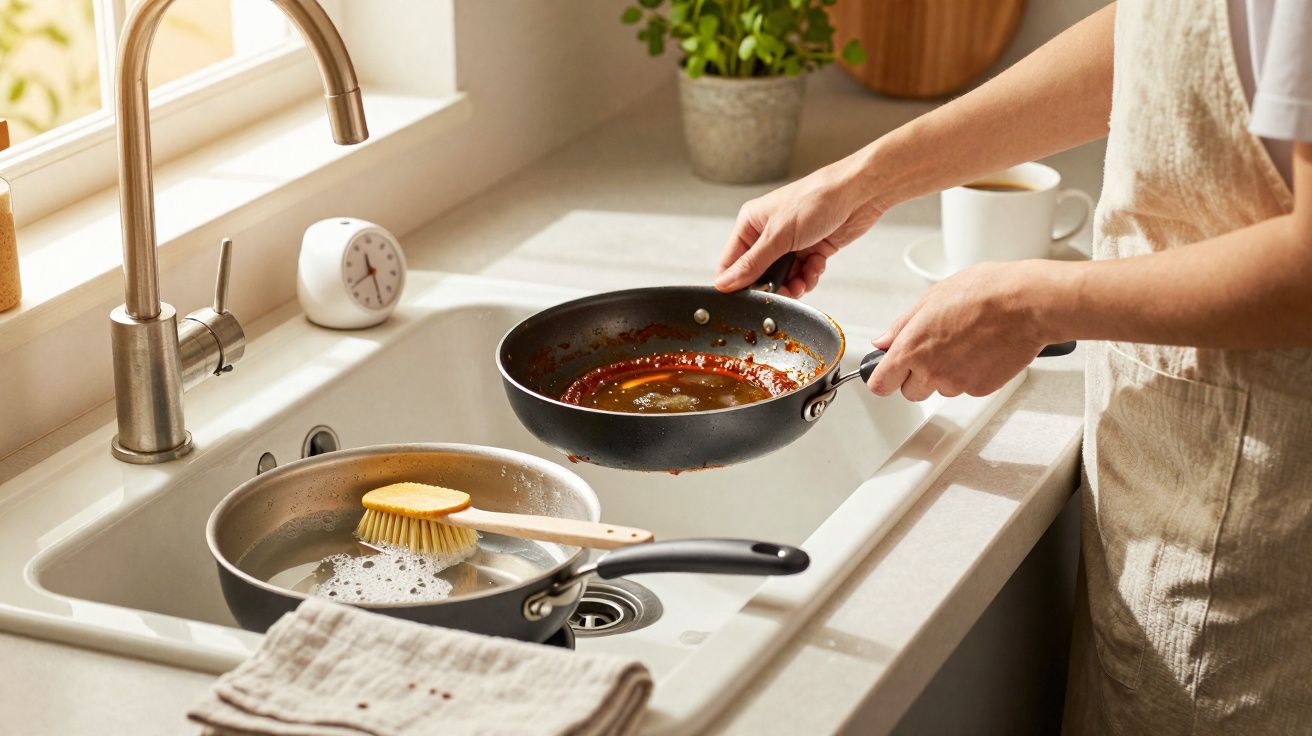
It nearly always begins the same way: dinner runs late, the baking tray is welded with cheese and tomato, plates are piled in a precarious tower in the sink, and your brain offers the comforting line, “I’ll just let them soak overnight.” You cover the chaos with warm water, add a squirt of washing-up liquid, and walk away feeling oddly dutiful-like you’ve already done half the washing up. The kitchen light goes out, and the problem is officially postponed.
By morning, the “soaking” water has turned tepid and cloudy, the sponge has a faintly boggy smell, and that baked-on crust in the dish hasn’t softened at all. If anything, it’s worse. You scrub; the residue comes away in strange stretchy layers; and the lingering aroma hits harder than last night’s garlic.
At that point, it’s hard not to wonder whether the famous soaking trick is actually a trap.
When soaking turns into a glue factory on your plates
It’s easy to believe water will behave like a magic eraser: drop everything in the sink, drown it, walk away. The snag is that plenty of food doesn’t simply sit there waiting to lift off. While you sleep, it keeps changing. Sauces continue to thicken, starches start forming a thin film, and fats cool into a waxy coating that grips every curve of the pan.
By the next day, your “helpful” soak can resemble a lukewarm broth of grease, food debris and soap that’s slowly clinging back onto your dishes. As the water level falls, the exposed edges begin to dry-and that’s where the real misery starts.
Take a lasagne dish. Fresh from the oven it’s smeared with bubbling, flexible cheese and tomato. If you rinse it straight away, most of the mess slides off with hot water and a little washing-up liquid. Leave it overnight in a shallow bath, though, and the cheese cools and hardens, then partly dissolves into the water, creating a sticky, milky film that settles back onto the glass.
Starches behave just as badly. Rice, pasta, potatoes, and crumbs from breaded chicken can turn into a paste if they sit in water for too long. That paste dries at the waterline, almost like wallpaper paste. When you scrub, it doesn’t flake-it smears-and that’s usually the moment you curse last night’s “shortcut”.
There’s also straightforward chemistry happening in your sink. Starches absorb water, swell, and can gelatinise into a smooth but stubborn layer. Proteins from meat, egg, or cheese begin to break down and can bond even more firmly to surfaces such as stainless steel. Fats, once cooled, leave behind a thin, nearly invisible film that resists a normal wipe.
Let that mixture sit for hours in a lukewarm blend of soap and food particles and you’ve effectively made a dirty marinade for your dishes. Rather than lifting residue away, the water spreads it around and helps it settle. That’s why a pan that might have taken 30 seconds to rinse after dinner can become a 10-minute scrubbing session the next morning.
Dish soaking: how to soak smartly without ruining tomorrow morning
Soaking itself isn’t the problem. Thoughtless soaking is. The biggest difference is what you do in the first 60 seconds. Before anything goes into the sink, scrape it properly with a spatula, kitchen roll, or even a piece of bread. Remove as much fat and food as you can while it’s still warm and pliable.
If you genuinely can’t face washing up straight away, fill the item with very hot water and a little washing-up liquid-just enough to cover the dirty area. Avoid a big shared bath where everything floats together and spreads grease around. Aim for a targeted soak, not a food jacuzzi.
Another common mistake is leaving dishes half-submerged. That’s how you end up with those stubborn crusty tide marks around rims, handles and edges. Either keep the dirty area fully under the water, or leave it dry. That in-between line is where residues set harder than you’d expect.
Timing matters too. For most dishes, a 20–30 minute soak is often plenty, and even tougher messes usually respond within 20–60 minutes. After that, you frequently stop helping yourself and start creating tomorrow’s work.
Realistically, nobody gets it perfect every day. You get home late, you hand the problem to “tomorrow you”, and tomorrow you resents yesterday you for it. The goal isn’t perfection-it’s limiting the damage when life wins and the sink loses.
A useful way to think about it: treat soaking as a tool, not a delay button. Decide at the start what the soak is for and how long it will be. Burnt pan? A longer, very hot soak followed by a quick scrub. Lightly oily plates? A fast rinse is often quicker-and cleaner-than leaving them overnight in murky water.
One more consideration that people overlook is hygiene. A sink full of tepid water, soap, and food residue is a comfortable environment for smells to develop and for bacteria to multiply-especially if you also leave cloths or sponges sitting in it. If you do soak, keep the water hot, keep the soak short, and don’t leave cleaning tools steeping in the same soup.
There’s also a practical, money-saving angle: soaking efficiently can reduce how many times you refill the sink and how long you run the hot tap the next day. A quick scrape and a brief targeted soak often uses less hot water overall than an all-night soak followed by heavy scrubbing and repeated rinsing.
“People assume soaking is the lazy option, but bad soaking is actually more work,” laughs a professional dishwasher I met in a busy restaurant kitchen. “The quicker we rinse, the less we scrub later. It really is that simple.”
- Scrape or wipe plates before any soak, especially cheese and starch.
- Use very hot water and a bit of washing-up liquid, not a cold, greasy bath.
- Limit soak time to 20–60 minutes for most dishes.
- Keep handles and rims either in or out of the water, not halfway.
- Empty and refresh dirty soak water instead of reusing it all night.
The small kitchen habits that quietly change your mornings
Once you realise how overnight soaking can backfire, you start viewing the sink differently. Instead of a graveyard for plates, it becomes a small system. Scraping into the bin or food waste caddy stops feeling like an extra step and starts feeling like you’re buying your future self ten minutes. Swilling a pan with hot water straight after cooking suddenly becomes a favour you send to tomorrow.
Most people know the moment: you walk into the kitchen and instantly feel the weight of the dirty dishes. Often it’s not only the mess that drains you-it’s the sense you’re always catching up. Adjusting one or two tiny habits around soaking can ease that feeling more than you’d expect.
| Key point | Detail | Value for the reader |
|---|---|---|
| Scrape before soaking | Remove fats, cheese, and starch while still warm | Less scrubbing, fewer sticky films the next day |
| Limit soak time | Use 20–60 minutes instead of all night | Prevents residues from re-drying and hardening |
| Targeted hot water | Fill only the dirty surface with very hot, soapy water | More effective cleaning and less swampy sink water |
FAQ
Does soaking dishes overnight always make them harder to clean?
Not always, but long soaking in cold or lukewarm water often gives fats, starches and proteins time to settle and dry into a fresh layer. A shorter soak in hot water is usually more effective.Is it bad to leave dishes soaking with soap all night?
Soapy water won’t harm most dishes, but it can turn into a greasy, bacteria-friendly mix. The main problem is that residues can reattach and harden, so you don’t actually save much time.What should I never leave to soak overnight?
Cast iron pans, wooden utensils, knives with wooden handles, and non-stick pans. Left in water too long, they can rust, warp, or lose their coating.How long is an effective soak for tough baked-on food?
Around 30 minutes to an hour in very hot, soapy water works for most casseroles and oven dishes. For seriously burnt patches, a second soak after scraping can be enough.Is rinsing right after eating really that big a difference?
Yes. A quick rinse while food is still soft often replaces a long soak and heavy scrubbing later. It’s one of those small actions that quietly changes the whole kitchen routine.

Comments
No comments yet. Be the first to comment!
Leave a Comment