
Same time, same routine, same hope of comfort in a mug. You pour the coffee, take a sip… and there it is again: that faint, persistent let-down. A dull edge. A lingering bitterness. Less “sunrise espresso in Rome”, more “office break-room dispenser on a grim Monday”.
You swap beans, treat yourself to a new gadget, and skim brewing hacks at 7:03 a.m. Yet the thought won’t go away: this should taste better. The aroma is gorgeous, the crema looks decent, and still something tiny feels wrong.
What if the real culprit isn’t the beans or the machine, but one quick move you make on autopilot every single morning?
The mistake hiding in plain sight: coffee water temperature and tap water
Many people assume great coffee begins and ends with the beans. So they spend more, buy “specialty”, pick origins with poetic names. That can help. But the small morning mistake that ruins countless cups happens after the beans have already made it into your kitchen.
It’s the water-more specifically, using water that’s too hot, too cool, or straight from the tap without thinking twice. One absent-minded moment with the kettle can flatten delicate flavours and amplify harsh notes. You don’t see it happening; you just drink the outcome.
Over time, each mug becomes a touch less bright and a touch more lifeless. Not bad enough to bin it. Just underwhelming enough that you stop expecting anything special from your morning brew.
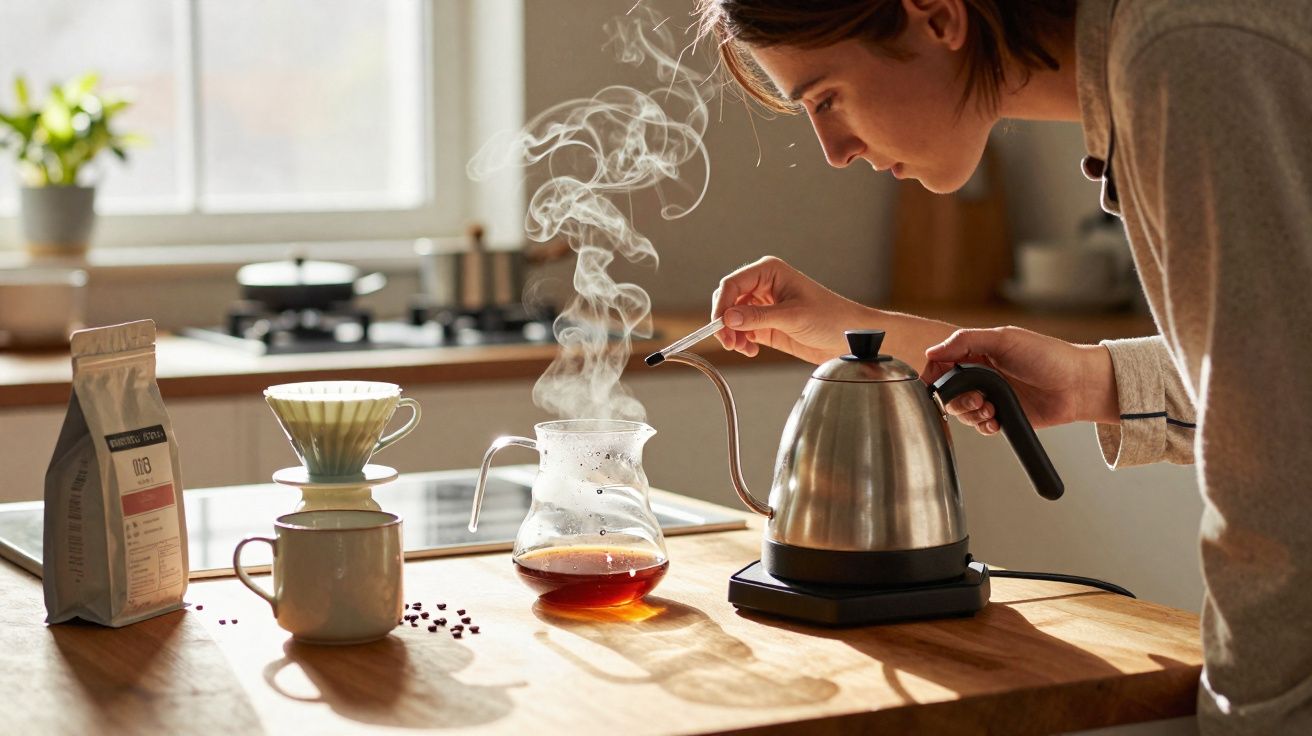
Imagine a tiny flat at 6:45 a.m.: a gooseneck kettle on the worktop, the pricey grinder a friend swore by, and beans lined up in glass jars. You’re half-awake, so you do what most people do-boil the water until the kettle clicks off, pour immediately over the grounds, and hope for the best.
Now replay the same scene with one small change: you let the water sit for 30–40 seconds. The frantic steam eases. The temperature drops slightly. You pour more slowly, with a bit of intention. Suddenly there’s sweetness where there used to be only sharpness. Same beans, same mug, same person-completely different cup.
Zoom out, and this tiny detail adds up. Research into home brewing habits has repeatedly found that most people don’t actually know what temperature they’re using; they simply “boil and pour”. That one habit quietly produces millions of mediocre coffees every morning.
When water is too hot, it drags harsh compounds out of the coffee faster than the gentle, complex flavours have a chance to show themselves. It’s like cranking the volume to maximum on the wrong song: you get more intensity, but not more quality. Over-extracted coffee often tastes bitter, thin, and even faintly ashy.
On the flip side, water that’s too cool under-extracts. The sweetness and nuance stay locked in the grounds, and the cup comes out weak and sour-as if the coffee never properly woke up. Both outcomes can happen with the same beans and the same method, simply because of a few degrees’ difference.
Then there’s water composition. Tap water that carries noticeable chlorine, or water that’s especially mineral-heavy, barges into the flavour and won’t leave. The coffee doesn’t get a fair chance. Without realising it, you’re battling your water every day-and blaming the beans.
The tiny adjustment that changes your cup
The fix is almost embarrassingly straightforward: get a bit more control over your water. You don’t need a lab bench or a fancy temperature-controlled kettle. Bring the water to a full boil, then wait 30–60 seconds before it touches the coffee. That brief pause usually puts you in the sweet spot of roughly 90–96°C.
For many home set-ups, that pause alone is a game-changer. Bitterness eases, aromas become more distinct, and the mouthfeel turns smoother and rounder. If your kettle has a thermometer, use it and aim for the range rather than guessing. If it doesn’t, just count slowly, take a breath, and watch the steam settle.
With espresso machines, the machine handles part of the temperature work, but you can still help by flushing the group head for a second or two before pulling the shot. That quick purge stabilises heat and reduces the big swings that can wreck flavour.
This is about habits, not perfection. Mornings are noisy: emails, kids, trains, weather-anything except water temperature. So the routine has to be almost idiot-proof or it won’t stick.
A simple way to make the “wait” automatic is to warm your mug first. Pour your just-boiled water into the mug to preheat it, then grind your coffee while the water cools slightly. By the time you’ve finished grinding, you’re much closer to the flavour-friendly zone.
And let’s be honest: nobody wants to stand there every day with a stopwatch in hand. Life is untidy. Some mornings you’ll rush and pour straight after boiling. That’s fine. The goal isn’t perfection-it’s shifting the average towards better coffee more often than not.
The emotional bit matters too. A small ritual can anchor the start of your day. Taking ten extra seconds to pause before you pour is like a micro-meditation-and the cup often tastes better partly because you actually paid attention.
“If someone asks me the quickest way to improve coffee at home, I don’t tell them to buy a new machine,” says a London barista with ten years behind the bar. “I tell them to treat their water with respect. It changes everything and costs next to nothing.”
Two extra upgrades that pair perfectly with better water
If you live in a hard-water area (common across much of the UK), limescale can build up in kettles and espresso machines faster than you think. That doesn’t just shorten the life of your kit-it can also nudge flavour in the wrong direction. Descale your kettle regularly and follow your machine’s maintenance schedule; a clean heating system is far more consistent at delivering the temperature you’re aiming for.
Also consider your brew ratio (how much coffee you use per amount of water). Even with ideal water temperature, too little coffee can taste thin and sour, while too much can become heavy and harsh. A reliable starting point for filter coffee is around 60 g of coffee per litre of water, then adjust to taste. It’s not about being obsessive-just giving your water and your beans a fair, repeatable framework.
A quick checklist for tomorrow morning
- Boil fresh water, then wait 30–60 seconds before brewing.
- Use filtered water if your tap water smells or tastes strong.
- Warm your mug with hot water, then empty it before pouring coffee.
- For pour-over, pour slowly in circles rather than flooding the grounds.
- For espresso, run a short flush through the machine before pulling the shot.
On a frantic Tuesday, you might do half of this. On a slow Sunday, you might enjoy all of it. Either way, once you taste what that small change does, it’s surprisingly hard to return to “boil and pour”.
Rethinking your morning ritual
There’s something reassuring about discovering your coffee disappointment isn’t because you’re “bad at coffee”, or because your beans are wrong, or because your machine isn’t fancy enough. It’s a tiny decision made on autopilot-and tiny decisions are the easiest to rewrite. Treating water with a bit more care can turn coffee from background fuel into a moment you genuinely anticipate.
This is where the ritual becomes bigger than the mug. It shifts from “I need caffeine now” to “I’m going to do this one thing properly.” You’re not converting your kitchen into a science lab; you’re simply adjusting a daily action so it matches the quiet importance it already holds. We all know that moment when the first sip sets the tone for the morning.
You may start noticing details you once missed: how different beans behave when the water is slightly cooler, how your tap water tastes after filtering, how your mood softens when you’re not swallowing bitterness. You might even find yourself explaining it to a friend, handing over a mug and admitting-slightly proudly-that you finally cracked your coffee.
And who knows: that small, invisible change you make with water might be the most satisfying upgrade you bring to your mornings this year.
Key points summary
| Key point | Detail | Why it matters to you |
|---|---|---|
| Water temperature | Let boiled water rest 30–60 seconds before pouring | Reduces bitterness, reveals aromas, improves flavour immediately |
| Water quality | Choose filtered or low-chlorine water | Avoids off-flavours and lets the coffee’s character come through |
| Simple ritual | Build in a brief pause and a moment of intentional preparation | Creates daily enjoyment without expensive kit or complicated technique |
FAQ
What’s the ideal water temperature for coffee at home?
Most experts recommend 90–96°C. Bring the water to the boil, then wait roughly 30–60 seconds before brewing and you’ll usually land in that range.Do I really need filtered water for good coffee?
Not always. But if your tap water smells of chlorine or tastes metallic, a basic filter jug can make a noticeable difference.Why does my coffee taste bitter even with good beans?
Water that’s too hot and an overly long brew can pull out harsh compounds. Letting the water cool slightly and tightening your brew time often softens bitterness.Is colder water better if my coffee tastes sour?
Usually not. Sourness often points to under-extraction-water that’s too cool and/or too quick a brew. Slightly hotter water and a bit more contact time can bring balance.Do I need a special kettle with temperature control?
No. It can help, but it isn’t essential. A short resting pause after boiling, plus a consistent routine, upgrades most home coffee straight away.



Comments
No comments yet. Be the first to comment!
Leave a Comment