
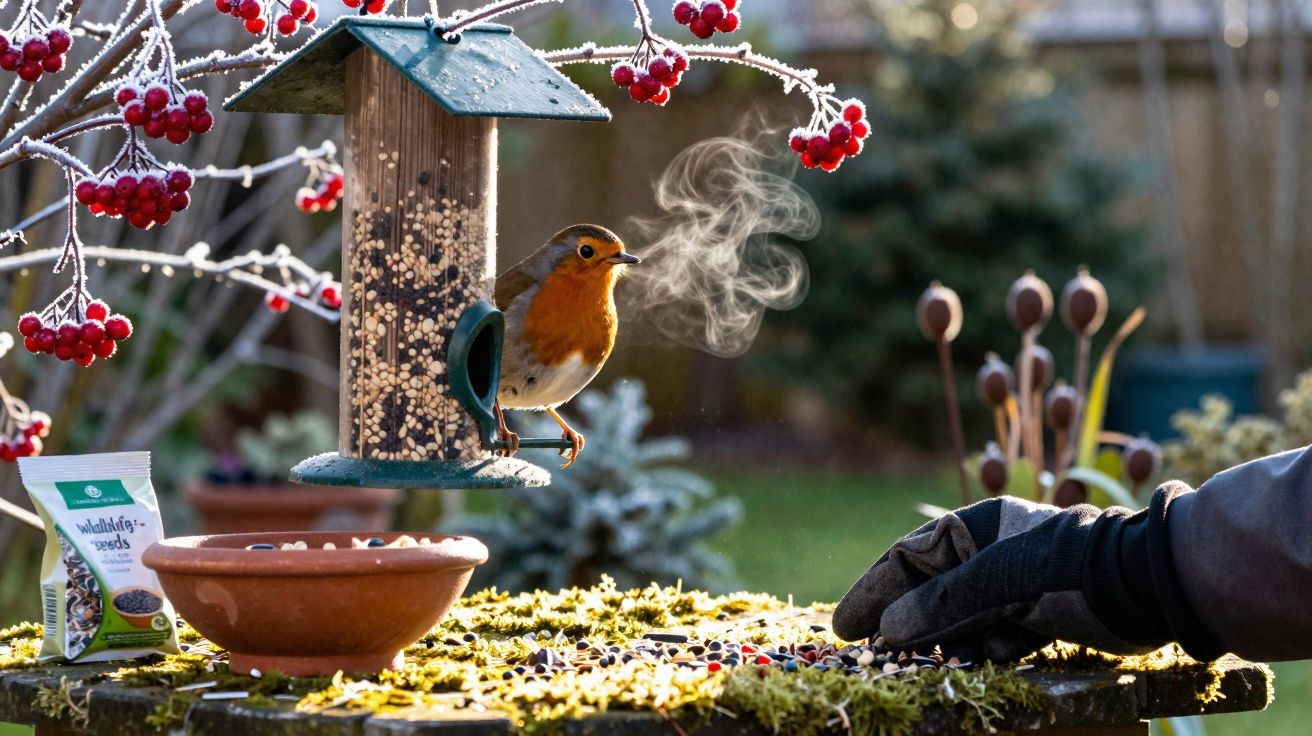
A robin drops on to the edge of a bird table with a neat, confident hop - a burst of chestnut-orange set against a pale, rinsed winter sky.
In a modest English garden, a woman in mud-splattered wellies freezes with a bowl of vivid red berries cradled in her hands. She’s certain the bird is staring straight through her. “He knows it’s me,” she murmurs, easing the berries into a terracotta dish as though she’s closing a private agreement.
Just behind her, a glossy catalogue lies open on a photograph of winter shrubs dripping with fruit, selling the promise of colour, cheer - and devoted robins from now until spring. On the fence line, a second robin snaps its wings, poised to barge in. It’s almost too picture-perfect, like a Christmas card made real.
Then a neighbour’s voice drifts over the hedge, quiet but pointed: “You do realise he isn’t faithful - he’s just hungry.”
Robins in winter: do winter berries create loyalty, or just repeat visits?
Stroll through any British garden centre in late autumn and you’ll hear the same claim delivered with a knowing smile: “Put these in and your robin will never leave.” Pyracantha, holly, cotoneaster, crab apples - all presented as if winter berries are the shortcut to a loyal garden companion.
It’s an easy story to fall for. Many of us long for the robin that seems to recognise our coat, our voice, perhaps even our mood. We hang feeders, weave wreaths with berries, and squeeze berry-laden shrubs into every spare corner, telling ourselves we’re nurturing a relationship rather than simply laying out a buffet. The marketing leans hard into that romance.
Speak to bird ecologists, though, and the legend starts to unravel. They won’t argue with the thrill of seeing that red breast turn up morning after morning - but they will tell you that “loyalty” in the bird world doesn’t look much like the version gardeners imagine.
All over the UK, robin-lovers swap stories about “their” bird. A man in Kent uploads daily clips of a robin that lands on his spade handle every afternoon at 3 p.m. A retired teacher in Manchester insists her robin taps at the patio door when the mealworms are late. Another gardener keeps a notebook calendar for “Rusty”, “Blaze” and “Dot”, convinced she can separate them by the tilt of their heads.
Garden forums echo the same advice: add more winter berries to “bond” with your robin, keep it returning, and it will treat your garden as home for good. In the stillness of winter, when everything else seems dormant, that idea is deeply soothing. One tiny bird can feel like company.
Population research paints a more matter-of-fact picture. Many robins die young - on average they live a little over a year - even though a few make it to eight or nine. Territories change, birds disappear, and new ones move in, often without us noticing. As ornithologists put it, the robin you chat to in January might not be the same one you greeted last winter: the outfit is familiar, but the individual is often different.
To see why the winter-berry myth hangs on, it helps to understand how robins really operate. They are intensely territorial, particularly in the colder months when every calorie counts. A garden packed with berries and feeders is less a love story and more a well-provisioned stronghold - something worth defending.
Winter berries certainly have a place. They supply fast energy and a bright focal point in a brown-grey season. They also pull in blackbirds, thrushes, waxwings and starlings, all after the same feast. That creates squabbles, chases and conspicuous patterns of visits - which our brains are quick to convert into “routine” and, from there, “loyalty”.
Many experts would say the faithful-robin tale is more about our interpretation than the bird’s intent. We attach meaning to repeated behaviour. We project companionship on to a creature that is, in reality, constantly balancing risk, energy and territory. Winter berries do encourage robins to show up - just not in the postcard way we’ve been sold.
What actually keeps robins coming back - and what doesn’t
Once you set the sentiment aside, the formula for frequent robin visits is straightforward: dependable food, water, shelter and a reasonable sense of safety. Winter berries are only one part of a much bigger picture. A robin will revisit any garden that reliably meets those needs - even if the planting wouldn’t win a photo competition.
On icy mornings, a supply of fresh, unfrozen water can draw birds more strongly than a whole hedge of ornamental berries. Low shrubs and thick hedges provide that vital split-second of cover from sparrowhawks between feeder and branch. Soft soil, leaf litter and a compost heap mean worms and insects - the foods robins are actually built to hunt.
The smallest, quietest decisions often do the most. Keeping a scruffy corner. Avoiding the urge to cut everything back to stubble in November. Leaving one patch where the ground stays a little wild. To a robin’s sharp, cautious brain, those signals of “safe territory” are clearer than a pristine new berry bush in a pot.
A frosty December morning in a Surrey cul-de-sac makes the point neatly. Two neighbours stand at the boundary fence. On one side: a polished show-garden of clipped shapes and spotless gravel, with three expensive holly standards heavy with berries in matching tubs. On the other: a smaller, slightly untidy plot with a rough compost heap, an old apple tree and a birdbath holding yesterday’s rain.
Where does the robin spend its time? It darts between the compost heap, the base of the apple tree and a strip of turned soil near the kale. It tests the berries with a couple of pecks, then drops straight back to the ground to forage. The gardener with the “perfect” garden looks faintly aggrieved.
Later, a local bird group records species along the street. The wilder garden shows more robin activity, more blackbirds and more dunnocks. The berry tubs make the better photograph; the messier plot tells the more accurate story. Time and again, food diversity beats décor.
Bird scientists also point out that the “berries = faithfulness” storyline muddles cause and effect. Gardens that carry good berry crops often also have richer insect life, more leaf litter and better cover. The robin’s repeat visits get credited to the bright fruits, when it’s responding to the entire ecosystem that comes with them.
There’s a simple geography problem, too. In winter, a robin’s home range can stretch across several gardens. Your berry shrub may be just one stop in a loop that includes three or four other feeders, hedges and compost heaps. Seeing the same bird at 9 a.m. most mornings can feel like devotion - but you may simply be watching one leg of its circuit.
Studies that ring robins and track sightings show individuals swapping garden edges, shifting territory lines, disappearing for weeks and then turning up again. Boundaries aren’t drawn on fences; they slide with weather, food supply and competition. Our human desire for a tidy “mine” and “not mine” doesn’t match how birds actually use space.
One more factor that often gets overlooked is pressure from pets and disturbance. A garden can be rich in winter berries and still feel unsafe if cats patrol the same routes or if feeding stations sit in an exposed, high-traffic spot. For a robin, “welcoming” is as much about cover and escape routes as it is about calories.
It’s also worth remembering that helping birds carries responsibilities. Crowded feeding can increase the risk of disease, particularly if feeders and trays are left dirty or sited where droppings build up. A thoughtful approach - rotating feeding spots, keeping equipment clean, and offering sensible quantities - supports robins and their neighbours without unintentionally creating problems.
How to welcome robins in winter without falling for the myth
If you enjoy that flash of colour on a grey day, plant winter berries - absolutely. Just don’t treat them as the whole answer. Try seeing the garden from a robin’s viewpoint: low to the ground, quick to move, always scanning for danger and the next mouthful. Design from that angle and your priorities shift.
Begin with layers: a taller tree or shrub, mid-level cover, then low plants, leaf litter and open foraging patches. Robins travel in short hops rather than long, exposed flights; they prefer stepping-stone cover. Keep at least one area “untidy” so leaves can break down and insects can flourish. A small log pile tucked by a fence becomes a natural hunting zone.
Blend natural foraging with targeted support. Offer soft fruit, seed heads and berrying shrubs, and supplement with mealworms (live, or dried and soaked in water), suet and high-quality seed mixes. Choose foods that are energy-dense, easy to grab and quick to eat. Regularity matters more than excess: small amounts often will outdo a huge spread once a fortnight.
Many well-intentioned gardeners make the same missteps. They focus on red berries, then heavily prune hedges in late autumn, stripping away cover just as conditions become toughest. Or they scrub and refill feeders in April, forget about them for months, and then expect birds to queue up at Christmas.
Others place everything in one exposed, decorative spot in the centre of a patio “for the view”, forcing robins to sprint across open ground like tiny targets. Some hang fat balls in flimsy nets that can snag claws and beaks. Some scatter cheap bread over frozen lawns - poor nutrition for most songbirds, and more likely to tempt rats than robins.
Let’s be honest: almost nobody manages the perfect daily routine. The ideal cleaning schedule, the textbook feeding plan, the impeccably timed pruning - real life interrupts. That’s fine. Robins don’t require perfection; they respond to dependable patterns. A steady rhythm of fresh water, decent food and places to hide will beat a once-a-year showpiece every time.
An urban ecologist in Bristol summed it up sharply:
“Robins aren’t attached to you - they’re attached to the habitat. Create the right setting and they’ll keep turning up.”
It can sting, but it’s also liberating. You don’t need the “correct” shrub from a glossy brochure to win a robin’s affection. You need to think bigger and with less self-consciousness: make a corner of the world that works for wildlife, and robins will very likely be part of it.
To keep things practical, here’s a simple winter checklist:
- Keep one birdbath free of ice by adding hot (not boiling) water on frosty mornings.
- Leave at least one leaf pile or log stack undisturbed until spring.
- Provide high-energy foods (suet, mealworms, sunflower hearts) in small amounts, frequently.
- Avoid hard trimming of hedges and dense shrubs between November and February.
- Plant a mix of native shrubs - not only imported ornamentals - to support both berries and insects.
The emotional reward is still there. On a dark weekday morning, watching a robin hop confidently across a patch you’ve shaped not for display but for life feels different: less like “owning” a pet, more like being quietly accepted by a wild neighbour.
Why the myth still matters - and how it can change the way we garden
There’s a reason the faithful-robin myth won’t go away. It speaks directly to the winter loneliness many people carry: short days, long evenings, the curtains drawn before you’ve properly finished the afternoon. A small bright bird that seems to “choose” you cuts through that feeling in a way that facts rarely can.
On a cold weekday, when headlines feel heavy and the garden is all bare stems and wet soil, that quick arrival on the fence can feel like a gentle knock at the door. We assign intention to instinct, and sometimes that story is exactly what gets us through January.
Understanding what’s really going on doesn’t flatten the magic - it adds depth. The robin isn’t returning out of personal devotion; it’s returning to a pocket of land you’ve kept usable through the lean months. The winter berries, the leaf litter, the unfrozen water, the decision not to pave over every scrap - these choices add up to a different kind of welcome.
So perhaps the myth simply needs rephrasing. Not “plant winter berries and the robin will love you”, but “care for your patch and the robin will keep checking in”. That shift is important. It turns a cosy Christmas-card fantasy into a long-term practice of shared survival, nudging us away from decoration and towards ecology - from ownership and towards stewardship.
Next time you tip a handful of berries into a dish and that familiar red breast appears, you’ll know what it is: not a feathered vow of loyalty, but a small wild heart making a sensible call - that today, on this bit of earth, the odds look slightly better.
| Key point | Detail | Why it matters to you |
|---|---|---|
| The “loyal berry” myth | Winter berries don’t “attach” a robin to one garden; they mainly draw birds in as a food source | Helps you see why marketing promises don’t match bird behaviour |
| What truly matters | Cover, water, insects, regular food and plant diversity matter more than appearance | Lets you attract more robins without overspending on decorative plants |
| A shift in perspective | Treat the robin as a sign of a healthy ecosystem, not “your” faithful bird | Adds meaning to winter gardening and encourages sharing and stewardship rather than simple display |
FAQ
Do winter berries really make a robin stay in my garden?
They can make your garden a more appealing feeding stop, but they don’t create emotional loyalty. A robin will include your garden within its territory if the overall habitat suits it - not purely because of berries.How can I tell if it’s the same robin visiting every day?
Unless the bird has been ringed and tracked, it’s very hard to be sure. Robins look extremely similar, and different individuals can use the same perches and routes, creating the impression of one faithful visitor.What food is best for robins in winter?
Mealworms (fresh, or dried and soaked), suet, sunflower hearts and soft fruit are all good options. Provide small amounts regularly, and keep feeders reasonably clean to reduce disease risk.Are berry shrubs still worth planting?
Yes. They offer natural food, shelter and winter colour, and they support a range of species. Just treat them as one element within a broader habitat, not a magic loyalty potion for robins.Why does my neighbour see more robins than I do?
They may offer better cover, richer soil life, or a more consistent feeding routine. Small differences - such as leaving a messy corner or topping up water daily - can be enough to sway a robin deciding where to spend its energy.





Comments
No comments yet. Be the first to comment!
Leave a Comment