
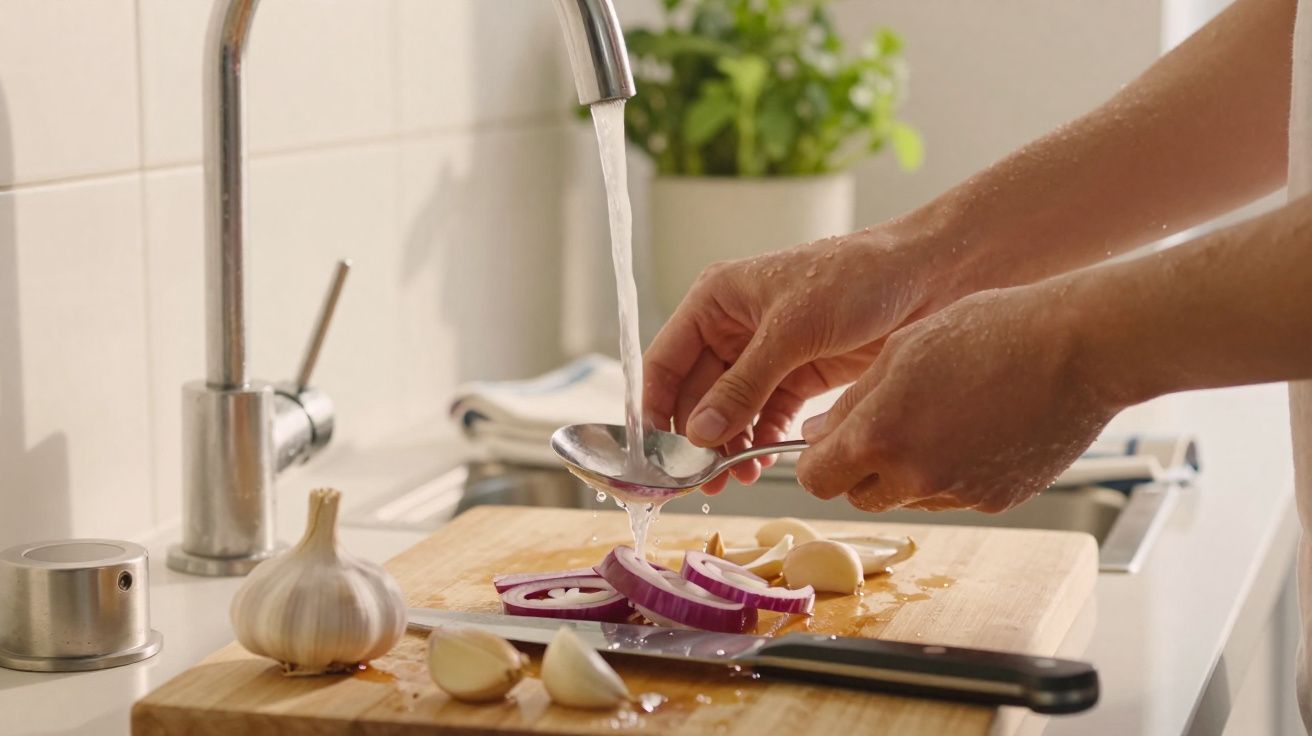
The chopping board looks like a crime scene: onion skins scattered across the worktop, a slick of olive oil, and a knife left beside a heap of finely minced garlic. The kitchen smells fantastic. Your hands, however, smell as though you’ve just introduced yourself to a whole garlic bulb. You wash once, then again, reach for washing-up liquid, rinse, scrub, rinse again. You check. The odour is still there-persistent and frankly a bit insulting.
You pat your hands dry on a tea towel, trying not to dwell on tomorrow morning’s meeting or tonight’s date. That unmistakable whiff sits on your fingertips and under your nails as if it pays rent. You open the cupboard, hunting for anything that might help, and your eyes land on a plain stainless steel spoon.
What happens next feels oddly like a parlour trick-until it works.
Why a stainless steel spoon beats even the strongest garlic and onion smell
The first time someone tells you a spoon can remove garlic and onion smell, it sounds like the sort of “nan’s secret tip” that arrives via a dubious group message. Stainless steel-seriously? Still, desperation makes you practical. You turn the tap to cold, take a stainless steel spoon, and rub it between your wet hands as though it were a small metallic bar of soap.
Water runs over your knuckles while the spoon slides around your fingertips and along the edges of your nails. You’re amused, unconvinced, and doing it anyway. Then you stop, rinse one last time, and smell your hands. That sharp, sulphurous garlic note has dropped away. You try again, properly this time. It’s not being covered up. It’s gone.
Standing there with cutlery in hand, you realise a simple spoon has just outperformed expensive citrus-scented washing-up liquid. That’s when the trick graduates from “fun myth” to “non‑negotiable routine”. Because once you’ve proved it to yourself, you stop relying on soap and hope.
The “kitchen miracle” explained: sulfur compounds meet stainless steel
Here’s what’s actually going on. When you slice garlic or onions, the blade ruptures their cells and releases sulfur compounds. These tiny molecules are highly reactive, and they readily cling to skin, nail beds, and any slightly textured surface. That’s why plain water barely touches the problem, and why soap can sometimes feel as though it merely dilutes the smell and shifts it around.
Stainless steel has a useful surface chemistry. Under cold running water, odorous sulfur compounds can react at the metal surface-binding to it or breaking down-rather than staying attached to your skin. As you rub, more of those molecules transfer from your fingers to the spoon, where they’re neutralised and washed away.
It isn’t magic or mysticism; it’s chemistry doing its work in an ordinary sink while you’re still in your T‑shirt and slippers. The spoon doesn’t add fragrance. It simply offers those stubborn garlic and onion molecules a better place to latch on to than you.
How to use a stainless steel spoon to erase garlic and onion smell (step-by-step)
It’s almost comically straightforward:
- Turn on the cold water so it runs steadily (no need for a high-pressure blast).
- Take a clean stainless steel spoon and hold it as you would a small soap bar.
- Under the running water, rub the spoon across every area that handled garlic or onions.
Give extra attention to: - Fingertips (especially where you pinched cloves) - The sides of each finger - Palms - Creases around the joints - Around the cuticles - Under the nails (as much as is comfortable)
In most cases, 30–60 seconds does the job. Then rinse, dry with a clean tea towel, and move on.
Pressure and technique don’t need to be elaborate-think gentle, thorough contact between metal and skin. You can use soap either side of the spoon method. Many people prefer: quick soap wash to remove grease and food residue, then the spoon under cold water to tackle the lingering odour, followed by a final rinse.
Common reasons the stainless steel spoon trick “doesn’t work”
A few small missteps can make a good method seem useless:
- The water is too warm. Hot water can open pores and encourage odour compounds to sink in. Cold water keeps the smell compounds nearer the surface, where the steel can “catch” them.
- You wait too long. If you chopped garlic an hour ago, then got distracted, the smell has had time to settle-especially under nails. The trick can still help, but it’s most impressive immediately after prep.
- The utensil isn’t plain stainless steel. A gold-coloured, coated, painted, or heavily plated teaspoon won’t behave the same way. You want ordinary, uncoated stainless steel-the everyday spoon you’d eat yoghurt with.
Stainless steel “soap bars”, sink alternatives, and the deluxe version
Some cooks buy dedicated stainless steel “soap bars” from kitchen shops. In practice, your spoon is usually just as effective. The shaped bar can feel nicer in the hand, but the key is still the same: contact between skin, cold water, and stainless steel.
If you don’t have a spoon to hand, you can sometimes get a similar effect by rubbing your hands against a stainless steel sink or tap under cold running water-again, the surface contact is what matters.
For a more intensive routine (useful if you cook with alliums constantly), some people combine methods: - a brief rub with coarse salt and a drop of lemon juice (to exfoliate and cut oily residues), - followed by the stainless steel spoon technique under cold water.
That “deluxe” approach can be especially helpful when the smell is sitting under the nails.
A small ritual with a big social payoff
There’s also a simple human benefit: the stainless steel spoon trick gives your cooking session a clear ending. Hands done, smell gone, day reset. You can go from chopping six cloves of garlic to holding a coffee mug ten minutes later without wondering what message your fingertips are broadcasting.
Everyone knows the regret of that “one extra clove” when your hands still pong while you type, put in contact lenses, or brush a child’s hair. In that moment, a spoon by the sink becomes a quiet ally. It doesn’t judge your love of bold flavours-it just removes the evidence.
Not every kitchen hack survives contact with a rushed weeknight. This one tends to last because it’s quick, costs nothing, and is already in your cutlery drawer. No bicarbonate of soda, no speciality scrubbers, no gimmicks.
“I genuinely thought my colleague was winding me up when she mentioned the spoon trick. Then I tried it after chopping onions for a quiche and… the smell had simply vanished. Now I’m mostly annoyed nobody told me sooner.”
Skin care note: avoiding dryness while removing odours
If you cook frequently, repeated washing can leave hands dry or irritated-especially in winter. Because the stainless steel spoon method works under cold water and doesn’t rely on harsh cleaners, it can actually reduce how much strong soap you feel you need. After you’ve finished, a light, fragrance-free hand cream can help protect the skin barrier without reintroducing strong scents that might clash with food.
Food hygiene and practicality: keep the tool clean
Treat the spoon like any other kitchen utensil: start with a clean one, and give it a quick wash afterwards if you’ve handled it with food residue on your hands. The method is about odour compounds on skin, not about sanitising-so standard hand-washing rules still apply if you’ve been handling raw meat, fish, or eggs.
A simple routine that quickly becomes habit
Once you’ve seen a stainless steel spoon act like an eraser for garlic and onion smell, it slips seamlessly into your kitchen choreography: prep, cook, wash, spoon, done. Nothing dramatic-just one small step that makes the rest of your day feel easier and less self-conscious.
You may even find yourself more generous with strong flavours, because you’re no longer thinking, “Do I really want my fingers to smell like this all evening?” A bit of cold water and a piece of steel removes that mental barrier.
Next time you cook with garlic or onions, go straight to the sink and use the spoon immediately. Then notice how it feels to step away: hands clean, smell gone, ready to shake hands, hold someone close, or simply pick up a book without a second thought.
| Key point | Detail | Value for the reader |
|---|---|---|
| Stainless steel neutralises odours | Sulfur compounds from garlic and onions react on the steel surface under cold water | A fast, effective way to remove stubborn kitchen smells from hands |
| Use cold water and plain steel | Cold keeps smell compounds nearer the surface; uncoated stainless steel “catches” them | Better results without extra products |
| Simple routine after cooking | Quick soap wash, spoon rub, final rinse | Easy habit that fits naturally into everyday cooking |
FAQ
- Does any metal spoon work, or does it have to be stainless steel?
Plain stainless steel works best. Coated, painted, or silver-plated utensils may not give consistent results.- Why does the water have to be cold?
Cold water helps keep the smell compounds on the surface of the skin, where they can react with the steel rather than sinking in.- Can this trick remove fish or bleach smells too?
It’s most effective on sulfur-based food odours such as garlic, onions, and some fish. For strong chemical smells, use normal soap and ensure good ventilation.- Should I use soap before or after the spoon?
Either works. Many people prefer soap first to remove grease, then the spoon under cold water to neutralise what remains.- Is a stainless steel “soap bar” better than a spoon?
It may feel more comfortable to hold, but the effect is essentially the same. A regular stainless steel spoon is usually enough.






Comments
No comments yet. Be the first to comment!
Leave a Comment