
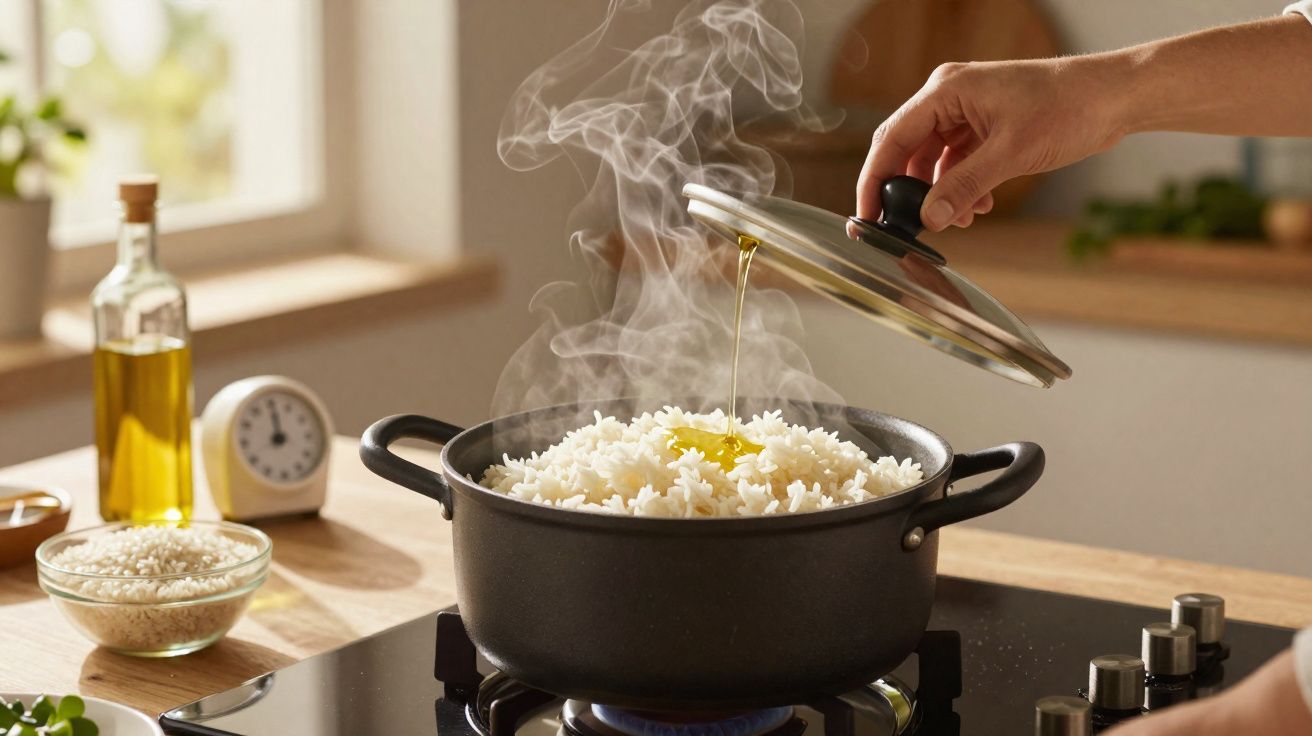
It’s such a small, almost thoughtless move: a quick drizzle of oil into the pot, as casual as an extra twist of the salt mill. Two seconds later, you tell yourself you’ve cooked in a properly “chef” way.
Then the rice turns out wrong. Sometimes it looks glossy but feels oddly slick on top; other times it’s bland in the middle. The grains either cling together in heavy clumps or split apart like they never belonged in the same pan. You check the recipe again-water ratio: fine. Cooking time: fine. Yet something clearly went off-course.
Very often, the problem started in that tiny moment with the oil bottle. Get the timing wrong and you change the texture of the rice completely. Occasionally it improves things; more often it quietly spoils the pot. For home cooking, oil timing is one of the hidden reasons rice either works beautifully or falls flat.
Why adding oil at the wrong moment ruins rice texture
You can usually spot it as soon as you lift the lid. The surface looks shiny, almost silky, but the steam smells a bit muted. When you fork through it, the grains don’t fluff-they slide around each other. They aren’t necessarily overcooked; they just feel… separated.
That tends to happen when oil goes in too early. Instead of helping, the fat forms a thin film around the grains and interferes with what the water is meant to do. The taste and texture you end up with later often trace back to that quiet, easy-to-miss decision at the start.
Picture a well-meaning “foolproof rice” tip on a busy weeknight: a generous glug of oil poured straight into cold water, dry rice added, heat turned up. It smells pleasant-slightly like popcorn. But on the plate, the grains look distinct yet somehow empty, like quick-cook rice that never properly took on water.
Compare that with what you’ll see from a street vendor in Lisbon or Bangkok. Plain rice is cooked with just water and salt-no oil. The grains come out tender and moist, forming soft clumps you can still separate with a fork. Only after cooking do they hit a hot pan with oil, aromatics and seasoning. Same ingredient, used a few minutes later, entirely different result.
The reason is straightforward kitchen science. Rice needs direct contact with hot water so each grain can hydrate and the starch can do its job. If you coat dry rice with fat too soon, some starch is effectively protected from the water. Less water gets in, less starch releases to gently bind the grains, and you’re more likely to get rice that’s slightly dry, a bit rubbery, and reluctant to absorb seasoning.
Oil added at the wrong time behaves like a raincoat in a downpour: water runs around the grain rather than soaking through it. If you add salt and aromatics into the same pot, the effect can be even more disappointing-flavours stay in the liquid instead of moving into the rice. Everything looks fine in the pan, but the forkful tells the truth.
The right time to add oil when cooking rice (and how to fix a pot that’s gone wrong)
For everyday steamed or boiled rice, oil generally belongs after the rice has cooked, not before. Let the grains fully take up water first, then use fat as a finishing touch. In other words: treat oil like a dressing, not a barrier.
A simple approach that works with most white rice, jasmine rice and basmati rice:
- Cook the rice with water and salt only.
- When it’s done, take it off the heat and let it rest, covered.
- Lift the lid, add 5 ml (1 teaspoon) of neutral oil or a small knob of butter, then fluff gently with a fork.
The remaining steam helps spread the fat lightly so you get a touch of sheen and softness without sabotaging hydration.
If your rice has already turned into a sticky, heavy mass, the common impulse is to pour in oil and stir hard. That usually makes things worse: the grains break, the starch turns pasty, and you end up with a greasy glue. A better rescue is gentler:
- Tip or spread the hot rice onto a wide tray.
- Let excess steam escape for a minute or two.
- Drizzle a small amount of oil and loosen carefully with a spatula.
You’re aiming to separate and dry the surface slightly, not to mash the rice into itself.
Oil timing in rice: when “oil first” is actually correct (pilaf and beyond)
Pilaf-style rice is the important exception. For pilaf, you deliberately toast the grains in a small amount of oil at the start to deepen flavour and keep the finished texture a touch firmer. The timing still matters, though: you then add enough hot stock and cook long enough for the grains to hydrate properly.
What trips many home cooks up is borrowing the pilaf method for everything. They add oil to cold water for plain white rice, or overdo the oil when cooking basmati for an ordinary curry. The bowl can look “restaurant-style” from a distance-separate grains-but it eats dry and feels oddly hollow.
Nobody cooks rice perfectly every day, measuring every millilitre of oil and timing every second on the hob. The point isn’t perfection; it’s knowing where the tipping point is. A small amount of oil might not cause trouble if your water ratio and timing are spot-on. Problems begin when a drizzle becomes a pour-and when oil arrives too early.
A useful rule of thumb is to decide what job the rice has on the plate:
- Need fluffy, absorbent rice to soak up stew, stock or sauce? Skip oil during cooking and add a little at the end.
- Want firmer, lightly nutty grains as a side for grilled meats? Toast the dry rice briefly in a little oil, then add hot water or stock and cook as usual.
As one home cook put it to me in a tiny London kitchen, hovering by a fogged-up window:
“The day I stopped pouring oil into the water like my uncle taught me, my rice finally started tasting like the photos in cookbooks.”
That sort of small change genuinely makes weekday cooking easier. You waste fewer pots, stop blaming the brand of rice, and stop undermining a good curry with a bland, slippery side. On busy evenings, a reliably good bowl of rice can feel like the thing holding the whole meal together.
Two extra details that improve rice (even when oil timing is right)
Rinsing and resting are often the missing steps. If you want lighter, less sticky grains-particularly with basmati rice-rinse until the water runs clearer to remove loose surface starch. Then, once the rice is cooked, let it rest off the heat for 5–10 minutes. That short rest helps moisture redistribute so the texture is more even before you fluff and add any oil or butter.
Heat control matters more than most people think. Rice that sticks or scorches at the bottom is usually a sign of heat that’s too high, a thin pan, or an inaccurate water ratio-not a lack of oil. A heavy-based pan, a tight-fitting lid, and lowering the heat once it reaches a simmer will do more for your results than adding fat to the water.
Here are a few quick reference points to keep by the hob:
- Classic steamed rice: water + salt only; add oil at the very end if you want a bit of shine.
- Pilaf: toast rice in a little oil first, then add hot stock.
- Fried rice: cook rice without oil, cool it, then use oil generously in the pan.
What changes when you get oil timing right in rice
Once you start paying attention to when you add oil, homemade rice becomes oddly dependable. The swing between sticky chaos and dry, clumpy disappointment narrows. You also begin to notice what different types of rice “ask” for: basmati rice wants space, jasmine rice suits a softer cling, and risotto rice needs patient stirring for its creamy finish.
Something else shifts too: rice stops being an afterthought and starts feeling like part of the main event. Friends ask why it tastes lighter yet more satisfying. Children go back for “a bit more rice” rather than leaving it untouched. Online it sounds minor; on a Tuesday at 8 pm, it changes the mood at the table.
There’s real satisfaction in how much control you gain. Add oil a moment too early and the rice can turn slippery and distant. Add a spoon at the right time and it all clicks. That tiny adjustment can feel like discovering a hidden setting in a routine you thought you already knew.
Next time you reach for the bottle, pause for half a second. Are you making plain rice, pilaf, or rice destined for fried rice tomorrow? Decide whether oil belongs at the start, at the end, or in a hot pan later. It’s a small choice, but it’s exactly the sort of detail that turns “just rice” into something people remember.
| Key point | Details | Why it matters to readers |
|---|---|---|
| Oil in the water vs. oil after cooking | Adding oil directly to the cooking water coats the grains and reduces how much water and flavour they absorb. Stirring in 5 ml (1 teaspoon) of oil or a small knob of butter after cooking adds sheen and softness without blocking hydration. | Helps you avoid bland, slippery rice and get fluffy grains that actually taste of stock, spices or sauce. |
| When to toast rice in oil | For pilaf and some Middle Eastern and Mediterranean dishes, rice is briefly toasted in a little oil before adding hot stock. This builds flavour and keeps the grains slightly firmer while still letting them cook through. | Shows you when the “oil first” technique is useful, instead of copying it blindly and spoiling plain steamed rice. |
| Oil and fried rice texture | For fried rice, cook the rice plain, cool it, then fry it in hot oil with aromatics. Oil belongs in the pan at this stage-not in the original cooking water-so the grains fry and crisp rather than steam. | Makes leftover rice a reliable fast dinner instead of a soggy stir-fry that sticks to the pan. |
FAQ
Should I add oil to the water when cooking plain white rice?
For everyday white rice or jasmine rice, it’s usually best to skip oil in the water. Cook with just water and salt, then add a small amount of oil or butter at the end if you want a little gloss and softness.Why does my rice turn out greasy when I use oil?
Greasy rice is often the result of using too much oil too early. The grains get over-coated, don’t absorb water properly, and the extra fat sits on the surface instead of blending through.Is it wrong to toast rice in oil before adding water?
No-this is exactly right for pilaf-style dishes and some Mexican and Middle Eastern recipes. Keep the oil modest, then add enough hot stock so the grains still cook fully.How much oil should I use at the end of cooking rice?
For about 200 g uncooked rice (roughly 1 cup), 5 ml (1 teaspoon) of neutral oil or a small knob of butter is usually enough. You want a light coating, not a visible layer of fat.What about rice sticking to the bottom of the pan?
Sticking is more about heat level, pan quality and water ratio than oil. Use a heavy-based pan, turn the heat down once it starts simmering, and avoid stirring while it cooks.



Comments
No comments yet. Be the first to comment!
Leave a Comment