
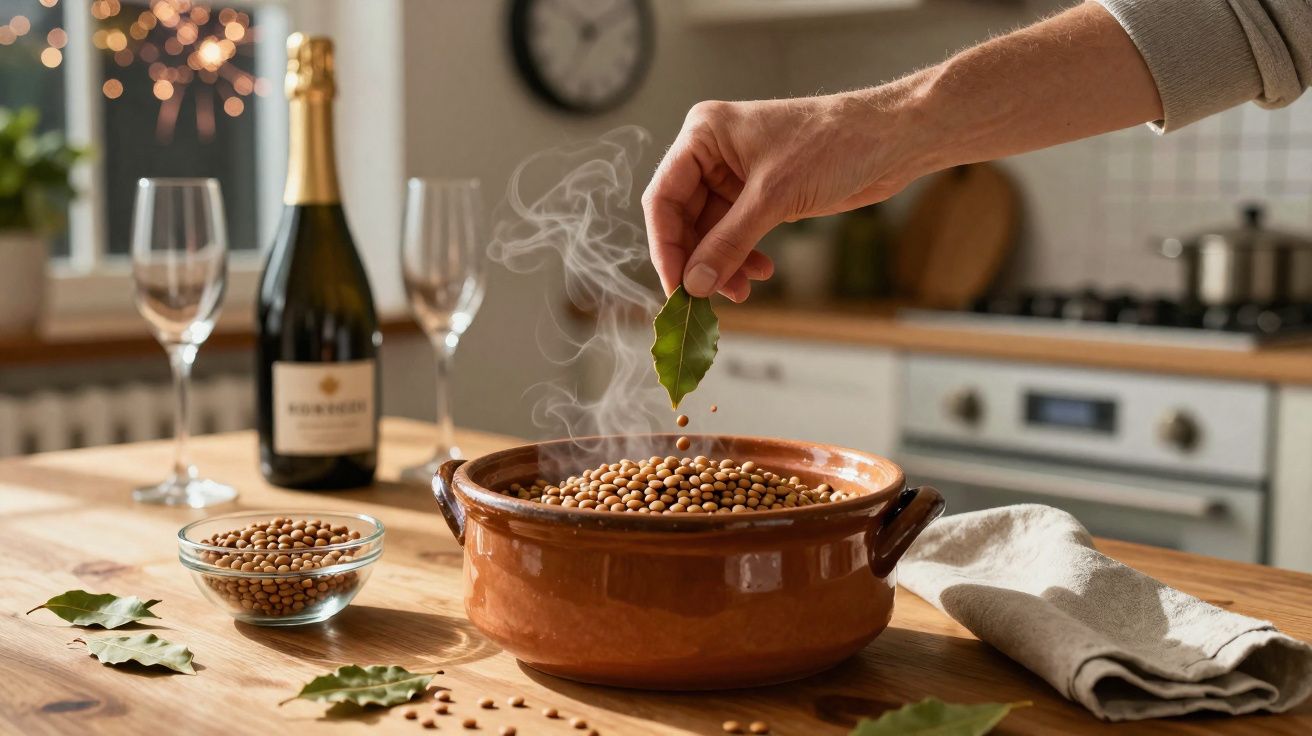
New Year’s Eve lentils are meant to bring luck, yet the wrong saucepan or a hurried simmer can have guests holding their stomachs long before the countdown.
All over Italy, a modest bowl of lentils served on 31 December carries hefty hopes: prosperity, wellbeing and, ideally, a peaceful night’s sleep. In practice, that last promise can fall apart when celebration food, big portions and rushed cooking collide.
Why New Year’s Eve lentils dominate the Italian new year table
In many Italian households, lentils arriving as midnight approaches are not a random accompaniment - they are a ritual. Their small, round, flattened shape has traditionally been compared to coins, signalling savings and the wish that the coming year won’t empty your wallet.
Lentils also have a practical backstory. For generations, farmers and working families relied on them as an inexpensive winter staple. With time, the everyday ingredient gained symbolic power: eating at least a spoonful at New Year became a discreet financial wish, as if you were crossing your fingers with a fork.
Many Italians still lean into the superstition, saying each lentil on the plate represents a coin you could earn over the next year.
The idea has travelled well beyond Italy, particularly among food-loving households that enjoy beginning the year with something meaningful and reasonably nutritious. However, “healthy” and “symbolic” can clash if the dish leads to intense bloating, cramps or a night spent wide awake.
The health side of lentils: powerful, but not always gentle
Dietitians regularly point to lentils as a smart choice, and the reasons are clear. A normal portion provides a dependable mix of plant protein, complex carbohydrates and steady-release energy. For anyone reducing meat, lentils often stand in for minced meat or long-braised beef in cold-weather meals.
Lentils also supply:
- Lots of fibre, supporting regular bowel movements.
- Iron and folate, associated with energy levels and immune function.
- Potassium and magnesium, minerals involved in blood pressure regulation.
- Plant compounds with mild antioxidant activity.
Problems tend to start when high fibre meets a sensitive gut. Lentils contain fermentable carbohydrates that gut bacteria readily break down. That fermentation produces gas, which in some people feels like swelling, tight pressure and an uncomfortably distended abdomen.
A bowl of “good for you” lentils can feel like a punishment when the cooking ignores digestion - especially on a night already loaded with alcohol and rich food.
Clinicians who specialise in digestive health often note that the body can adjust when lentils appear frequently in someone’s diet. The real shock is when they show up once a year in an oversized festive serving, cooked quickly, with no preparation to lighten the gut’s workload.
Choosing the right lentils for a calmer 31 December
Not all lentils behave the same way in the pot. Small varieties such as French green lentils hold their shape and suit stews, while red lentils soften rapidly and can turn creamy, which some people find heavier. If you’re cooking for a mixed group, picking a variety that stays intact with a gentle simmer can make portions easier to judge and easier to digest.
It also helps to plan for timing. Cooking lentils properly takes patience more than effort, and building in that simmer time reduces the temptation to crank up the heat - a common route to split skins and a stodgy texture.
The quiet hero in the pot: why bay leaves matter
Italian cooks rarely simmer lentils in plain water. Bay leaves almost always go in. Fresh or dried, they add a deep, savoury fragrance. Beyond taste, tradition credits bay with carminative qualities - helping the body release trapped gas and easing spasms in the digestive tract.
Scientific evidence on bay leaves is still limited, but laboratory and animal research has linked the essential oils to mild anti-inflammatory and digestive effects. Even without definitive human studies, bay leaves encourage slower, more aromatic cooking, which alone tends to suit lentils better.
Adding two or three bay leaves won’t eliminate gas entirely, but it can steer the dish towards a calmer, gentler outcome.
That long, steady simmer allows flavours to develop while softening the lentil skins and reducing some of the compounds that can upset the intestines. Many families quietly agree that the years someone forgets the bay leaves are often the years of restless, bloated nights.
How Italians cook lucky lentils without misery
A classic new year lentil stew
Across Italy, the same basic method appears again and again, with local adjustments. A typical New Year version begins with finely chopped onion softened in olive oil, sometimes alongside carrot and celery. Rinsed lentils are stirred in, followed by passata or chopped tomatoes, water or a light stock, plus a couple of bay leaves.
The pot is then kept at a gentle simmer - a steady bubble rather than a raging boil, which can burst lentils and turn them into mush. Salt is commonly added towards the end, once the pulses are tender yet still intact, because salting too early can make them firm up.
In some homes, the stew is served with slices of cotechino or zampone - rich cured pork sausages that underscore the celebratory mood. Other tables keep it lighter, offering lentils alone or alongside leaner grilled meats, particularly for younger diners or those watching their diet.
From cosy stew to bright salad
New Year lentils don’t have to be heavy. A growing number of cooks turn them into a warm or cold salad instead. Lentils are simmered patiently with bay leaves (sometimes with a chunk of onion), then cooled slightly before being mixed with diced raw vegetables, herbs, citrus juice and cheese.
A typical “day-after” salad might include:
- Cooked lentils, with the bay leaves removed.
- Thinly sliced red onion and celery.
- Cherry tomatoes or roasted peppers.
- Cubes of feta or another salty cheese.
- Lemon juice, olive oil and black pepper.
This approach extends the New Year tradition beyond a single sitting and spreads the fibre across several smaller portions, which many stomachs tolerate more easily.
Techniques that slash the risk of a bloated night
Digestive discomfort isn’t unavoidable. People who cook lentils often tend to follow a practical, informal set of habits that noticeably improves how the dish sits. If you have guests with sensitive digestion, these details can be the difference between lucky lentils and a punishing start to January.
| Step | How it helps digestion |
|---|---|
| Soaking (where applicable) | Helps soften the skins and reduces some gas-forming compounds before cooking. |
| Slow, gentle simmer | Limits splitting and gluey textures, which many find harder to digest. |
| Adding bay, cumin or fennel | Traditional herbs and spices that may reduce gas and cramping. |
| Rinsing after cooking | For salads, rinsing off some surface starch can make the dish feel lighter. |
| Moderate portions | Keeps fibre intake reasonable, especially late at night. |
Soaking matters less for small types such as French green or red lentils, though some digestive specialists still recommend a brief soak followed by a rinse for very sensitive people. Pouring away the soaking water means some fermentable sugars never make it into the finished dish.
On New Year’s Eve, offering a ladle of lentils as a symbolic side - rather than a mountain - can spare guests hours of abdominal pressure.
Timing plays a part too. Serving lentils earlier in the evening, instead of right before midnight, gives the body more time to begin processing the fibre before people go to bed.
Where tradition meets modern gut science
The New Year lentil ritual now sits within a culture increasingly focused on gut health. Many guests arrive already thinking about FODMAPs, microbiomes and food intolerances. For some, lentils are no longer a neutral staple but a “handle with care” ingredient.
Bay leaves fit neatly into this newer awareness because they’re part of a wider Mediterranean habit: pairing potentially challenging foods (beans, cabbage, rich meats) with herbs and spices that folk practice associated with digestion. Rosemary with lamb, fennel with pork, bay leaves with pulses. The research is still developing, but the pattern is remarkably consistent.
For hosts, that context supports smarter menu planning. A New Year spread that includes a small lentil dish with bay leaves, a lighter fish course and plenty of water is a different experience from a line-up of sausages, creamy sides and sugary cocktails. The first keeps the tradition alive without pushing stomachs to the limit.
Practical extras for a calmer new year dinner
Outside the cooking pot, a few small choices can shape how lentils feel on a party night. People prone to bloating often do better with gentle movement after eating; even a short walk between the main course and the midnight prosecco can help digestion get going.
Alcohol - particularly sparkling wine - can increase gas and pressure. Swapping every other glass of bubbly for still water, and limiting fizzy soft drinks, reduces the overall “air load” in the gut. Offering fruit, herbal tea or a simple fennel seed infusion later in the evening can also soothe guests who feel their waistband tightening.
If someone falls in love with the ritual, nutritionists often suggest making lentils a regular part of the weekly menu rather than a once-a-year surprise. Smaller servings through the colder months help the digestive system adapt, reinforcing lentils as a symbol of steady, sustainable abundance - not a dramatic, gas-filled event.




Comments
No comments yet. Be the first to comment!
Leave a Comment