
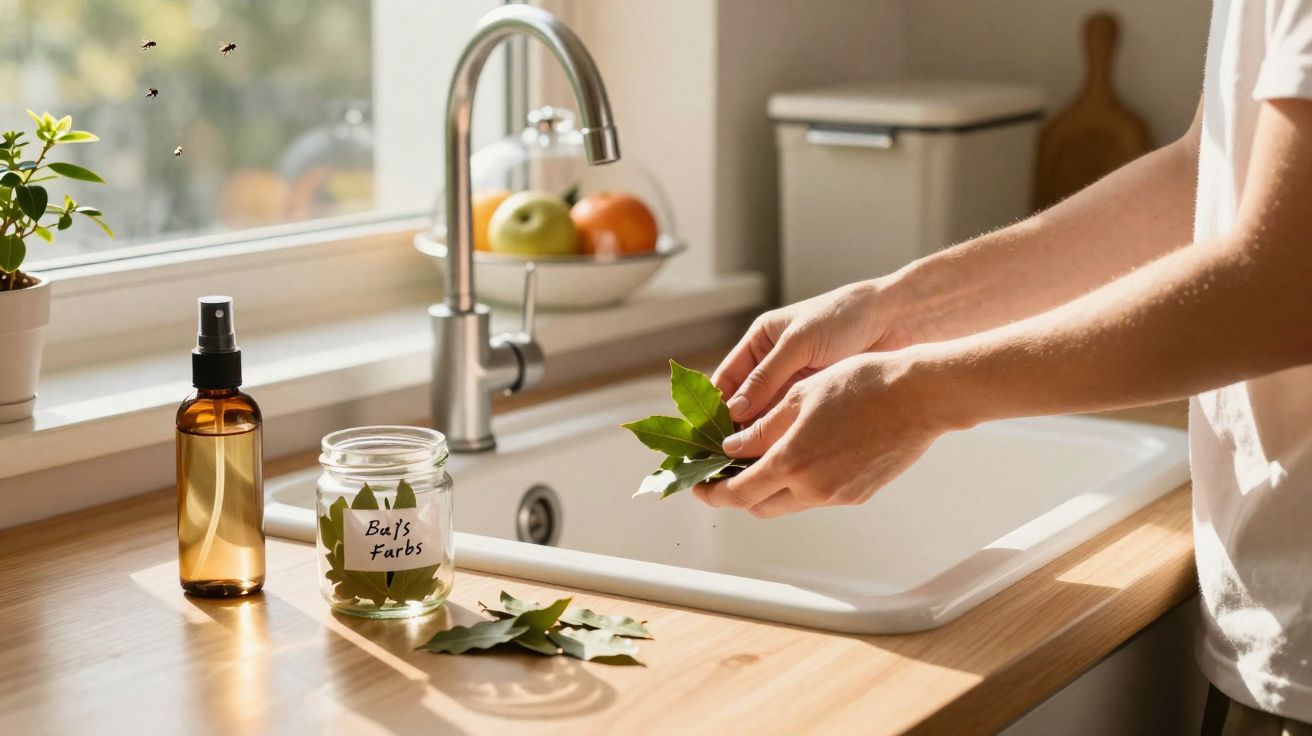
Warm days, open windows - and suddenly the kitchen feels like a miniature airport for buzzing visitors that refuse to move on.
As the temperature climbs, flies find their way in through the smallest gaps, hover over food and touch down on almost every surface. It is common to reach for chemical sprays in a hurry, even though aerosols can aggravate throats, irritate skin and cause problems for pets. A calmer option exists, and it often starts with an everyday herb kept near the hob: bay leaves.
Flies are more than a nuisance; after visiting bins, drains and animal droppings, they can carry bacteria onto worktops, plates and food.
Why flies rush into our homes as soon as it gets warm
In summer, flies are drawn to the same basics we enjoy: warmth, light and easy meals. A fruit bowl with slightly overripe produce, a recycling bag with residue, or a kitchen bin left a day too long can be all it takes to invite them in.
Once indoors, they multiply quickly. Under favourable conditions, a single female can lay hundreds of eggs - which explains how a handful of sluggish flies in May can become a stubborn swarm by July.
Because of these risks and annoyances, many households are turning to gentler approaches that protect cooking areas without loading the air with synthetic products.
The surprise ally: bay leaves to repel flies in the kitchen
Most people know bay leaves for stews and soups, but they do more than add flavour. Bay contains aromatic compounds including cineole and eugenol, which create its distinctive, slightly medicinal scent.
People often find that aroma pleasant or comforting. Flies, however, tend to react the opposite way: they dislike the smell and will avoid places where it is strongest.
Placed thoughtfully indoors, bay leaves can form a simple natural barrier that nudges flies away from food-prep and eating areas.
How to use bay leaves around the house
You do not need any special tools. Fresh or dried bay leaves both work, although the scent differs slightly between them. For best results, place them where flies commonly pause or where food aromas build up:
- Along window sills where flies bask in the sunshine
- Beside fruit bowls and bread bins, where sweet smells linger
- Around the sink area and close to drains
- Behind doors or along the threshold of patio doors
- Inside cupboards, or on top of kitchen units
Group several leaves together so the scent is strong enough to register. To stop them shifting when windows open and close, pin them in place under a small stone, a magnet or even a clean jar lid.
When to refresh bay leaves (so they keep working)
Bay’s effectiveness depends on its aroma, which fades over time. As a rule of thumb, replace dried leaves every 1–2 weeks in busy areas (such as window sills and near bins), and sooner if the kitchen is hot or very well ventilated. If you can barely smell them when you stand nearby, flies are unlikely to notice them either.
Store spare leaves in an airtight jar away from heat and sunlight to keep their scent for longer.
Bay leaves against ants and other insects
The same scent compounds that deter flies can also discourage ants, some pantry moths and certain beetles. For people who would rather avoid insecticides in food storage areas, bay leaves are sometimes used as a preventative measure.
If ants are moving across the floor in a neat, organised trail, try interrupting the route with a line of bay leaves. They often turn back and begin searching for an alternative path.
A straightforward row of bay leaves can disrupt an ant trail and help stop a problem before it spreads.
This works best at the earliest signs of activity. If you are dealing with a full infestation, you may still need professional treatment alongside hygiene and sealing measures.
Boosting bay’s repellent power: practical tricks
A single leaf tucked in a corner will not change much on its own. Small, consistent steps are what make bay leaves genuinely useful, and there are a few low-tech ways to intensify the effect.
Crushing, simmering, and making a simple spray
Bay releases more scent when its surface is broken. Many people get better results by tearing or lightly crushing leaves between clean fingers before placing them.
For awkward spots, a homemade spray can help:
- Bring water to the boil in a small saucepan.
- Add several bay leaves and simmer for a few minutes.
- Let the liquid cool completely.
- Strain through a fine sieve into a clean spray bottle.
Lightly mist window frames, near rubbish bins, under tables or into corners where flies tend to rest. Reapply regularly, especially after cleaning or after airing the house for long periods.
A bay-leaf spray is useful for reaching high frames, dark corners and tight gaps where flies perch between flights.
Combining bay with other aromatic plants
Bay leaves work well alone, but pairing them with other strong-smelling herbs creates a more complex scent barrier. Popular choices include:
| Plant | Main scent notes | Common targets |
|---|---|---|
| Bay leaf | Warm, resinous, slightly medicinal | Flies, ants, some pantry insects |
| Lavender | Floral, clean | Moths, flies, some mosquitoes |
| Mint | Cool, sharp | Ants, flies, some spiders |
| Basil | Herbal, lightly peppery | Flies, mosquitoes near windows |
Small pots of these herbs on window sills, patios or balconies add fragrance and provide fresh leaves for cooking. Dried bunches can also be hung in kitchens or pantries to support bay leaves placed on surfaces.
Stopping an invasion before it starts
Even the best natural repellent performs better when you remove what attracts insects in the first place. Flies use smell to locate food, moisture and safe breeding spots inside the home.
Daily habits that keep flies away
Simple routines can make your kitchen far less appealing:
- Cover food promptly after serving, especially sweet dishes and meat
- Empty kitchen bins frequently and keep lids closed
- Wipe worktops soon after cooking and clear away crumbs
- Rinse bottles, cans and jars before putting them into recycling
- Check fruit bowls daily and remove any items starting to soften
Fewer food smells, cleaner surfaces and strategically placed bay leaves combine to make a home that flies struggle to settle in.
Physical barriers: when herbs need extra support
In some areas - particularly near farms, stables, rivers or standing water - the number of flies can remain high all season. In those situations, herbs are most effective as part of a wider plan.
Mesh window screens let you ventilate without inviting insects indoors. At patio doors, bead or fabric curtains can reduce fly entry further, especially when paired with herb pots positioned near the doorway.
An extra step many kitchens overlook: managing food waste
Food waste is one of the strongest attractants, particularly in warm weather. If possible, use a small sealed caddy for scraps, empty it daily and rinse it out. Keeping compost containers clean and lidded reduces odours that can draw flies from outside, making your bay-leaf strategy noticeably more effective.
Health, safety and what bay leaves cannot do
For anyone concerned about aerosols around children, older relatives or animals, bay leaves are generally a low-risk choice. They have a long history as a cooking ingredient, and using whole leaves around the home typically stays within safe limits.
However, bay essential oil in concentrated form can irritate skin and eyes and should not be applied without proper dilution. Pets may chew dried leaves, so it is sensible to place them where animals cannot easily reach.
“Natural” is not automatically harmless in every form, but whole bay leaves used around the home are far removed from the concentrations found in industrial extracts and oils.
Bay leaves also have clear limits. If you are dealing with heavy infestations, foul drains, or problems such as dead animals in roof spaces, herbs will not address the underlying cause. They can reduce pressure and support better hygiene, but they do not replace professional pest control when it is needed.
Going further: scent management as a home strategy
Bay leaves sit within a broader approach that uses smell to influence insect behaviour. Rather than killing pests outright, the aim is to make key areas less attractive and guide insects elsewhere - an approach that suits households trying to minimise toxic products, particularly in kitchens and bedrooms.
It can help to think in terms of “smell zones”: keep strong food odours brief and contained, while maintaining longer-lasting background scents from herbs, routine cleaning and fresh air. By refreshing bay leaves (and companions such as mint, lavender or basil) and reducing the odours that lure flies in, you control the invisible signals that tell insects whether your home is worth entering.





Comments
No comments yet. Be the first to comment!
Leave a Comment