
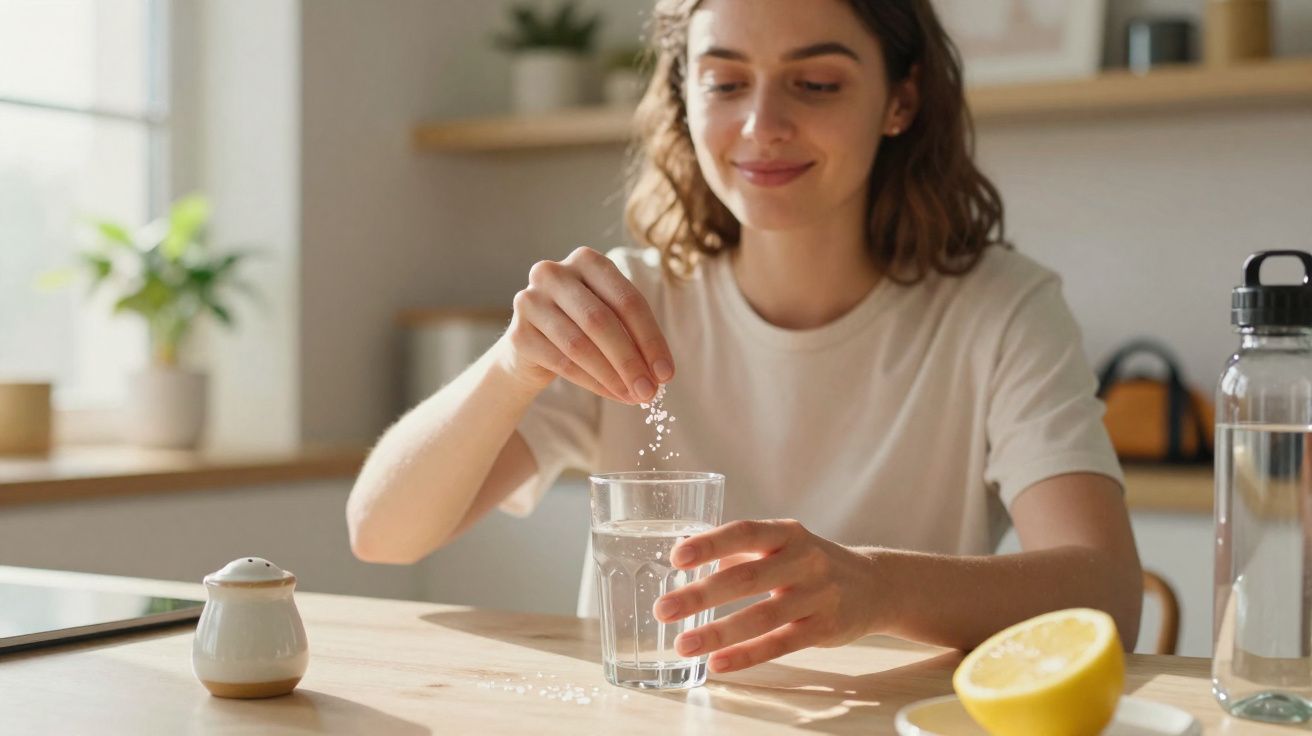
It was sometime between the second and third top-up of my reusable bottle on a packed commuter train that it dawned on me: something wasn’t working. I was ticking every box - clear skin, “eight glasses” in the bag, a smug little pastel flask parked beside my laptop - but I still had a low-grade headache and that dry, cotton-wool mouth you’d expect after a long flight. The friend sitting opposite, a nurse who’s dealt with more dehydrated people than I’ve had hot dinners, watched me down about half a litre and said, almost offhand, “You do realise that’s basically just going straight through you?” She then fished a tiny pot from her bag, tipped a few grains of salt into her water, gave it a shake, and passed it over like a quietly impressive party trick. It tasted almost identical. I didn’t feel identical. That was the moment I started questioning what we’re missing when we talk about hydration.
The lie of the “just drink more water” era
We’ve been sold a neat, shareable rule for years: drink more water. Keep a bottle on your desk, hit a daily target as if it’s a step count, and assume you’ve “done” health for the day. It photographs brilliantly - gleaming carafes, time markers marching down the side, ice cubes clinking like a wellness advert. And yet plenty of us still spend the day feeling oddly tired, headachy, light-headed or bloated, while proudly hauling around 2-litre bottles like trophies. If the maths were that simple, it would add up better than it does.
The problem is that your body doesn’t just require water; it needs water held in the right balance with minerals. Every nerve signal, every muscle contraction, every heartbeat relies on tiny electrical charges. Those charges depend on electrolytes - with sodium playing a starring role - to function properly. Pouring in lots of plain water without enough minerals doesn’t always mean you’re hydrating; sometimes you’re just diluting what your body is trying to keep steady. It’s a bit like cranking the volume up while quietly unplugging half the cables behind the telly.
Here’s the uncomfortable bit: you can technically drink “enough” water and still be underhydrated at a cellular level. That’s the zombie zone where you’re nipping to the loo every half hour, your urine is pale enough to feature on a hydration chart, and yet your head feels foggy and your energy falls off a cliff mid-afternoon. To protect the balance of your blood, your body often gets rid of the excess rather than pulling it deep into your tissues. So you drink more, and the loop continues.
Pinch of salt hydration: why sodium and electrolytes matter
Salt has long been cast as the modern dietary villain. We hear about blood pressure, processed snacks, and ready meals crammed with it. But once you step away from the scaremongering headlines, the story becomes more precise. Sodium - a key component of salt - isn’t a “nice to have”. It’s fundamental for fluid balance, nerve function, muscle control, and the fine-tuned exchange that happens across every cell membrane. Remove too much, or lose it too quickly, and the whole system starts to lose rhythm.
Add a very small pinch of salt to your water - genuinely just enough that it hardly tastes different - and you give your body something practical to work with. In basic physiology, water follows sodium. With a little more sodium available, your gut can absorb water into the bloodstream more effectively, and your cells are more likely to retain that fluid instead of sending it straight to your bladder. This isn’t about drinking brine; it’s about nudging your drink’s chemistry closer to what your body actually runs on.
Sports science has used this principle for ages. Oral rehydration solutions for athletes - and for children who are dehydrated - include water, sodium, and a small amount of sugar to speed absorption. What we’re talking about here is the everyday, gentler version of that same idea: a pinch of decent salt in a glass or bottle, enough to support hydration without turning your lunch into a seaside experiment. It’s a shift away from “more water is always better” and towards “smarter water does more with less.”
What you’re likely to notice
When you try it, the effect often isn’t fireworks - and that’s the point. You may find you’re not constantly sprinting to the toilet, or that the early-afternoon slump feels less like trudging through wet sand. Your mouth may feel less parched and the pressure behind your eyes may ease. It’s not a fizzy, caffeine-style lift; it’s more like the lights coming properly back on. As if your body finally understood the water was meant to stay, not pass through on a day trip.
That tired, dizzy, vaguely “off” feeling might be low sodium
Most of us know the sensation: you stand up quickly and the room takes a beat too long to catch up. Or you head out for what should be a straightforward walk or gym session and feel strangely wiped out, even though you slept and ate perfectly well. Those hazy, not-quite-right days can have dozens of causes, obviously. But mild sodium depletion - especially if you sweat a lot, exercise regularly, or spend the day constantly sipping water - is more common than many people assume. It doesn’t need to look like a dramatic marathon collapse; it can be a slow, quiet leak.
Sweat is salty for a reason. Whenever you exercise, rush for the train, sit in a warm office, or have a slightly anxious day where your heart won’t quite settle, you lose sodium as well as fluid. If you only replace the fluid - “drink more plain water” - you’re topping up half the equation. Over time, that can show up as wired-but-tired energy, calf cramps at night, or a faint sense of being a bit hollowed out. The body is brilliant at compensating… until it can’t, and then it tends to start with whispers.
If we’re honest, hardly anyone measures how much they sweat, how salty their meals are, and how much water they drink each day. Most of us operate on thirst and vibes. A pinch of salt in your water is a simple, low-effort way to quietly replenish dwindling sodium before it drops too far. It’s not about trying to “biohack” yourself into superhero mode; it’s about recognising hydration is chemistry, not just quantity.
How to do it without making your water grim
Before you start flinging handfuls of table salt into your bottle, pause. This is about tiny adjustments, not a brackish disaster. A sensible starting point is a small pinch - what you can pick up between thumb and forefinger - added to a large glass or a standard 500–750 ml bottle. Stir or shake until it dissolves, then take a sip. If you can clearly taste salt, you’ve overdone it. Ideally it should taste almost the same as normal water, perhaps just slightly softer or “rounder”.
Many people prefer a mineral-rich salt such as sea salt or Himalayan salt, partly for trace minerals and partly because the flavour can feel less harsh than heavily processed table salt. You don’t need anything exotic or influencer-approved, but you might find you like the taste more. Some people add a squeeze of lemon or a dash of orange juice, effectively making a simple homemade electrolyte drink. There’s something satisfying about the tiny ritual - pinch, swirl, citrus, sip - a bit of kitchen alchemy that makes you feel quietly more in charge of your own energy.
One extra note that often gets missed: electrolytes aren’t only about sodium. Potassium and magnesium also contribute to how you feel, especially if you’re active. If you’re eating mostly fresh food, you’ll often get these through everyday choices - potatoes, bananas, beans, yoghurt, nuts, leafy greens - without needing to turn your kitchen into a supplement lab. The pinch-of-salt approach works best as part of that bigger picture, not as a standalone fix for an otherwise unbalanced diet.
When it tends to help most
A pinch of salt in water earns its keep at certain times. First thing in the morning is a big one: you’ve breathed out moisture all night and might have slept with your mouth slightly open, so you’re often more dehydrated than you think. A lightly salted glass can wake your brain up faster than coffee alone. It can also be useful before or after a workout, on hot days, while travelling, or after a night of slightly too much wine and not enough sense.
It can feel unexpectedly steadying during stress, too. When your heart is racing, your palms are damp and your thoughts are like a browser with 37 tabs open, sipping slightly salted water can feel grounding. Some of that may be the ritual; some of it may be your nervous system appreciating the return of minerals it’s been burning through. You’re giving your body the raw materials to regulate itself, not just adding more liquid to an already swirling system.
But wait - isn’t salt “bad” for you?
The link between salt and blood pressure isn’t imaginary. If you have hypertension or kidney problems, if you’re taking certain medications, or if you’ve been told by a clinician to limit sodium, this is not something to do casually. And the modern ultra-processed diet genuinely is overloaded with hidden salt - particularly in ready meals, takeaway food, crisps and sauces. That’s a different situation from someone who eats mostly real food and adds a literal pinch to their water.
Context matters. If your day already includes salty snacks, packet soups, instant noodles and cured meats, adding more salt to your water is unlikely to be a sensible move. But if you mainly eat fresh food, cook at home, train a few times a week and rarely rely on ready meals, you’re probably not living in the “salt overload” world that public health messaging is aimed at. For that sort of lifestyle, a pinch here and there can sit within a balanced hydration strategy. If you’re unsure, talking it through with your GP or a dietitian will always beat an internet hack.
It’s also worth being clear about boundaries: this is not a challenge to see how much salt you can “get away with”. It isn’t a stunt, and it doesn’t replace medical care. It’s a gentle tweak for people who suspect their “just drink loads of water” habit isn’t doing what they hoped. Think of it less as a hack and more as a small correction - aligning your drink with how human physiology actually works, rather than how hydration memes claim it does.
As with anything, your body will usually give feedback. If salted water makes you feel worse, unusually thirsty, or simply “not right”, stop and reassess. The goal is subtle support, not pushing through discomfort. And if you’re managing a health condition, pregnancy, or anything that affects fluid balance, it’s sensible to get personalised advice rather than relying on general rules.
Hydration that fits real, messy, human life
There’s a specific kind of shame that clings to wellness habits. You scroll past glowing people with gigantic glass bottles and think, Brilliant - I’m failing at water as well. You vow to track every sip, refill on schedule, and create cucumber-infused masterpieces in the fridge. Then life happens: children, deadlines, delayed trains, and a mysterious wet patch in your bag from a leaky lid. The grand plan shrinks to “grab a drink when I remember”.
A pinch-of-salt approach fits that reality better. You don’t need an app, a spreadsheet, or a neon jug with hourly targets printed down the side. You need a bottle, a small pinch, and a bit of curiosity. Hydration stops being another chore and becomes a tiny daily experiment: does this leave my head clearer, my energy steadier, my mood less frayed? Some days you’ll remember; some days you won’t. Life carries on.
The quiet pleasure of feeling properly hydrated
When it works, it’s rarely dramatic. You look up and realise it’s 4 pm and you haven’t had that strange mid-afternoon crash. Your thoughts feel more connected, less like static. Your muscles feel slightly less tight, your skin a touch less dull. Thirst becomes a gentle nudge rather than a desperate, panicky demand. It’s all wonderfully unspectacular - which is exactly why it’s easy to dismiss until you notice the difference and don’t really want to go back.
The smallest things are often the ones that quietly reshape your days. Not a 30-day cleanse or an elaborate supplement stack, but a pinch of salt between your fingers, dissolved into something you were already doing anyway. It’s inexpensive, straightforward, and you can try it for a week and listen to what your own body says rather than what any expert insists. Maybe you’ll feel nothing and move on. Or maybe your boring old glass of water will finally do its job properly - and you’ll feel a little more like yourself again.
And there’s a peculiar comfort in that: the idea that feeling more human might be hiding in something as ordinary, small and overlooked as the salt at the back of the cupboard.




Comments
No comments yet. Be the first to comment!
Leave a Comment